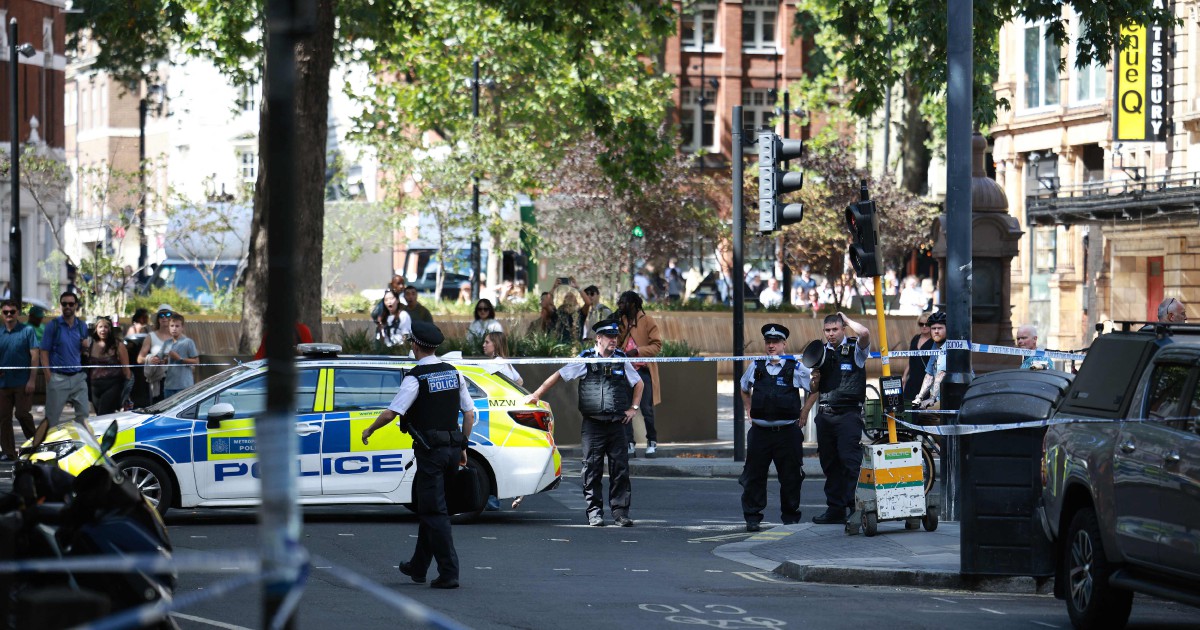
A woman was taken into custody following a violent stabbing incident that left four men injured in Covent Garden, one of London's most prominent tourist destinations, on Wednesday. The Metropolitan Police responded to reports of the attack in this high-traffic central location and quickly apprehended the suspect. Authorities are treating the incident as potentially connected to mental health circumstances, though investigations remain ongoing.
Covent Garden is one of the capital's most visited areas, drawing millions of tourists annually to its market stalls, restaurants, theatres, and street entertainment venues. The district's prominence as a cultural hub and shopping destination means incidents here receive significant public attention and can raise concerns about safety in centrally located public spaces. The timing of the attack in such a busy zone underscores the unpredictable nature of street violence in major urban centres.
The nature of the victims' injuries has not been fully disclosed, though all four men required medical attention following the incident. Police did not immediately provide details about the severity of wounds or the current condition of those affected. Such attacks involving multiple victims typically prompt rapid deployment of emergency services and heightened police presence in the affected area.
Mental health considerations in crime investigations have become an increasingly important focus for law enforcement across major cities. When authorities classify an incident as potentially mental health-related, it often indicates that the suspect's state of mind at the time of the offence may have been compromised, rather than suggesting premeditation or targeted violence. This distinction can influence how investigations proceed and ultimately how cases are prosecuted through the courts.
The swift arrest suggests effective police response protocols in central London, where officers maintain visible presence across major commercial and tourist areas. The ability to apprehend a suspect quickly in a crowded public space indicates both operational efficiency and the density of surveillance and policing resources in the capital's core districts. Such rapid interventions are crucial for preventing further harm and securing public confidence in law enforcement capacity.
Incidents of this nature raise broader questions about public safety in European capitals that welcome substantial tourist traffic. London, like other major metropolitan centres, must balance accessibility and openness with security measures that protect both residents and visitors. Each violent incident prompts scrutiny of existing safety protocols and whether additional precautions are warranted in high-footfall zones.
For Malaysian travellers and residents, London remains generally considered a safe destination despite occasional high-profile incidents. The vast majority of visitors experience their trips without incident, and the city's emergency response systems are among the most developed globally. Nevertheless, awareness of surroundings in busy tourist areas and adherence to standard urban safety practices remains advisable for all visitors to major international cities.
The police investigation will likely explore several dimensions: the circumstances immediately preceding the attack, any prior contact between the suspect and victims, the suspect's background and mental health history, and whether social services or mental health authorities had previously engaged with the individual. Understanding these factors helps authorities identify whether systemic gaps existed in support or intervention pathways that might have prevented the violence.
Mental health incidents involving violence, while statistically uncommon relative to the total number of mental health crises, attract considerable public and media interest because they often seem preventable through better support systems. This case may contribute to ongoing discussions in the United Kingdom about mental health service capacity, particularly community-based interventions and crisis support availability. These debates have significance across developed nations, including those in Southeast Asia working to improve mental health infrastructure.
The broader London context matters here as well. The capital has experienced fluctuating crime rates over recent years, with certain categories of violent crime receiving particular attention from policymakers and the public. Individual incidents, particularly those occurring in high-profile locations, can temporarily elevate public anxiety even when statistical trends suggest relative stability. Police communications emphasizing both the incident's resolution and its classification help manage public perception and prevent disproportionate alarm.
For business operators and venue managers in areas like Covent Garden, security implications of such incidents are significant. Enhanced staff training in emergency procedures, improved communication protocols with police, and potentially upgraded security infrastructure may be considered in response. The hospitality and retail sectors take such incidents seriously as they affect visitor confidence and business operations, particularly in the crucial tourism season.
The investigation's outcome will be closely watched by mental health advocacy organisations, law enforcement agencies, and policy discussions around both public safety and mental health service provision. How authorities handle the case, from charging through trial if applicable, will send signals about how the system addresses violence connected to psychological distress. These broader implications extend beyond London to influence debate and practice across the United Kingdom and beyond.

