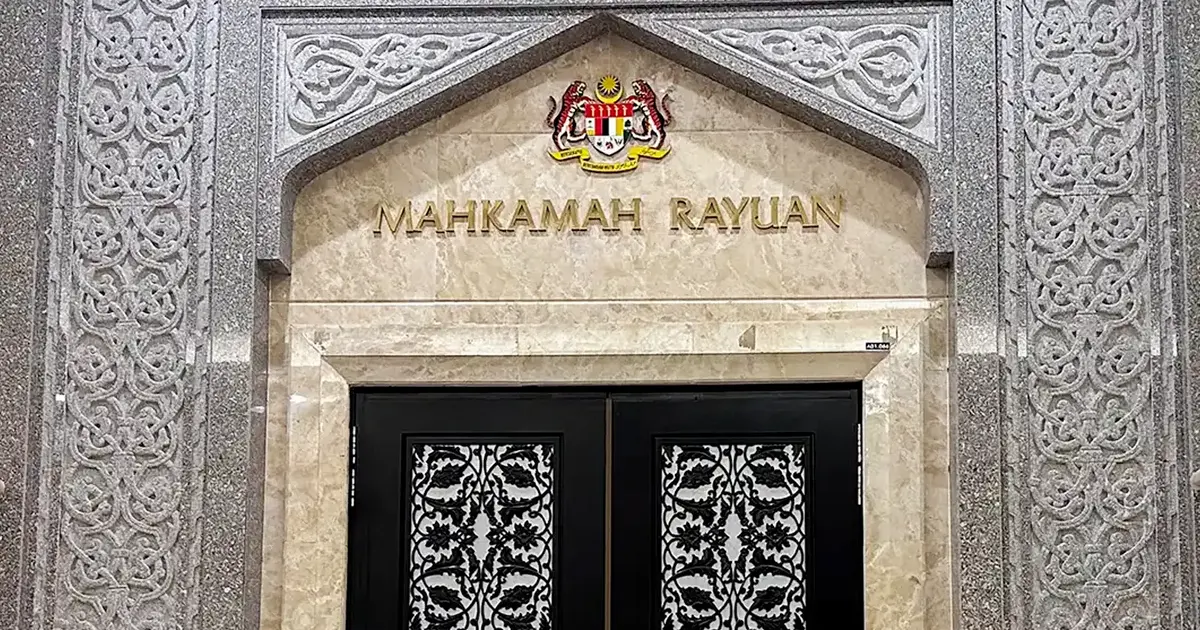
The Court of Appeal has ruled against four sisters seeking compensation for damage allegedly inflicted on their ancestral property in Pedas, determining that the women had not adequately proven the identity of those responsible for the unauthorised trespass and drainage construction. The appellate judges found the evidence presented fell short of establishing who had carried out the works that the sisters claimed caused severe erosion to their land, thereby weakening the foundation of their legal claim to recover damages.
This outcome represents a significant setback for the family, who had pursued the matter through multiple levels of judicial review in hopes of protecting their inherited estate. The decision hinges on a critical procedural requirement in property damage litigation: the burden of proof that rests with the plaintiff to demonstrate not merely that harm occurred, but precisely who inflicted it. Without establishing clear liability, the court reasoned, no defendant could be held accountable regardless of whether damage was demonstrably real.
Property disputes involving ancestral or inherited land carry particular weight in Malaysian society, where family holdings often represent generations of accumulated wealth and cultural significance. Cases of this nature frequently arise when boundary disputes escalate or when third parties undertake development or infrastructure work adjacent to residential properties without proper authorization or notification to neighbouring owners. The Pedas area, situated in Negeri Sembilan, has experienced considerable development pressure in recent years, potentially creating friction between landholders intent on preserving their plots and developers or contractors seeking to execute projects.
The sisters' inability to identify the responsible party suggests several underlying complications with their case. Either the perpetrators operated under ambiguous circumstances—such as work contracted through multiple intermediaries—or the sisters lacked adequate documentation, witness testimony, or physical evidence linking specific individuals or entities to the disputed activities. Drainage works particularly can be contentious when executed by local authorities, private contractors, or even neighbouring property owners, each potentially claiming different jurisdictional authority or necessity for such interventions.
For Malaysian property owners, this judgment underscores the critical importance of maintaining meticulous records when disputes emerge. Documentation such as photographs with timestamps, written complaints to relevant authorities, surveys conducted by licensed professionals, and witness statements from independent parties can substantially strengthen claims. Additionally, lodging formal complaints with local councils or district offices creates an administrative trail that may prove invaluable in court proceedings.
The erosion problem referenced in the case likely resulted from altered water flow patterns caused by the drainage construction, a common consequence when drainage systems are installed without proper engineering consideration of neighbouring properties' topography. Such technical matters often require expert testimony from civil engineers or environmental specialists to establish causation, and the sisters may have faced challenges in producing such evidence or in demonstrating that professional opinion conclusively linked the drainage works to the erosion damage.
This case also reflects broader challenges within Malaysia's property law framework, where establishing clear liability in environmental or structural damage cases remains complex. Unlike cases involving direct physical injury or obvious trespass, damage arising from construction or drainage activities requires proving both the causal link between the defendant's actions and the harm, and the defendant's legal obligation to prevent such harm. The appellate court's decision suggests the sisters' evidence did not meet this standard.
The ruling has implications extending beyond the individual family. It sends a signal to Malaysian landowners that disputed construction or drainage matters require immediate, documented response. Owners who observe potentially damaging works on neighbouring properties should photograph evidence, record dates and times, gather witness contacts, and file formal complaints with municipal authorities—creating a contemporaneous record that strengthens future litigation should damage become apparent.
For developers and contractors operating in residential areas, the judgment may offer some reassurance regarding liability exposure, though it should not be interpreted as a licence to disregard neighbouring properties. Engineering standards and planning guidelines exist partly to prevent precisely the type of erosion damage mentioned in this case. Contractors remain obligated to conduct work in accordance with professional standards and to minimize impact on surrounding lands.
The decision also highlights the advantage of pursuing disputes promptly and comprehensively at the trial stage. By the time cases reach appellate courts, opportunities to present additional evidence or call crucial witnesses diminish significantly. The sisters' failure to prove responsible parties' identities at trial apparently created a deficit that appellate judges could not remedy through higher-level review.
Moving forward, property owners in Pedas and similar communities may wish to organize neighbourhood watch systems focused on documenting unauthorized construction activities. Early identification and reporting of who is conducting work—including contractor names, company registrations, and supervisory personnel—can prevent the identification problems that apparently undermined the sisters' case. Many councils now maintain records of approved development projects, providing another resource for establishing whether specific activities had proper authorization.
The case ultimately demonstrates that successful property damage litigation requires a multifaceted approach combining technical evidence of harm, clear identification of responsible parties, and documentation establishing legal breach. While the sisters' fight to protect ancestral land reflects values deeply held in Malaysian culture, the courts require concrete proof meeting established legal standards before awarding compensation.

