The Jeram Padang state seat has crystallised into the sole four-way contest across the Jempol constituency in the upcoming 16th Negeri Sembilan State Election, according to the returning officer who confirmed nominations on July 18. This unusual configuration stands out in a field where most other state seats are witnessing either three-cornered fights or straight contests, marking Jeram Padang as a distinct battleground in the electoral landscape of this east-coast state.
Returning officer Amino Agos Suyub made the announcement after the nomination closure at the Jempol District and Land Office Hall at 10 am. The four candidates vying for the seat represent a diverse cross-section of Malaysia's political spectrum, each bringing distinct constituencies and policy platforms to the contest. The complexity of having four major players in a single state seat has historically made such contests unpredictable, with vote-splitting potentially reshaping traditional political dynamics in the locality.
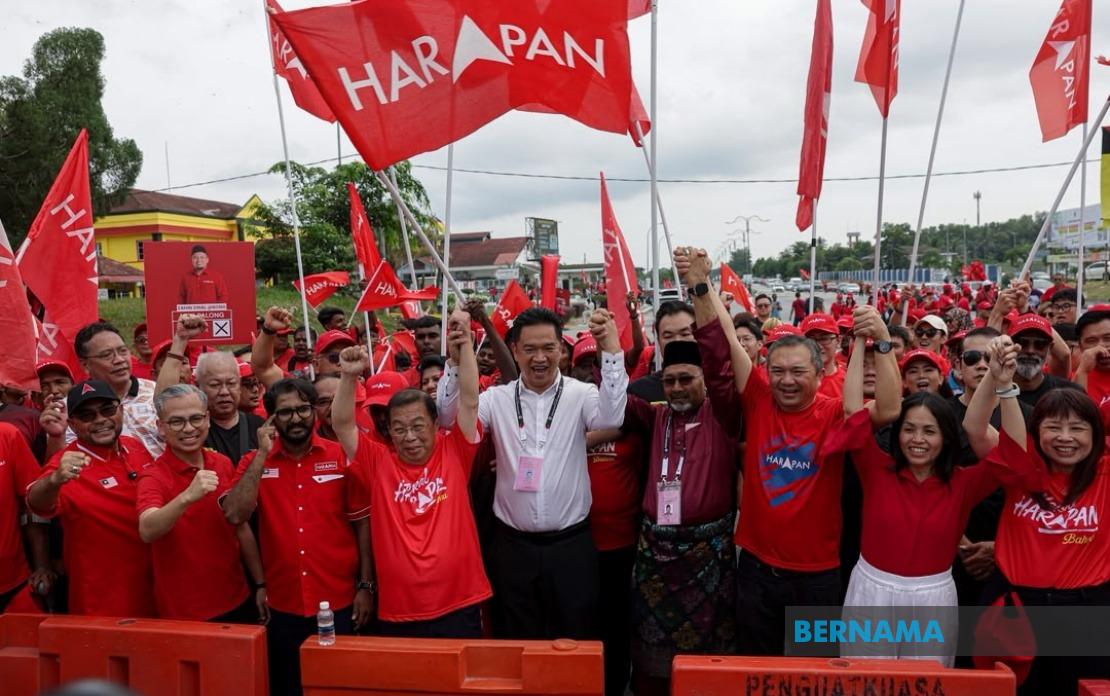
Packatan Harapan fielded G. Manivannan as their contender, supported notably by PH Communications director Datuk Seri Fahmi Fadzil during the nomination filing. Manivannan submitted his nomination papers at 9.17 am, making him the third candidate to register. His entry into the race signals the coalition's intent to contest this traditionally complex constituency and appeal to voters seeking a change from incumbent representation.
Incumbent Datuk Mohd Zaidy Abdul Kadir carries the Barisan Nasional standard into this contest, arriving last to file his nomination at 9.20 am. His status as the sitting representative provides him with the advantage of incumbency and existing grassroots networks, though the four-way split may fragment the support base he previously enjoyed in a more straightforward electoral scenario.
The entry of R. Sri Sanjeevan representing Parti Pribumi Bersatu Malaysia introduces another significant faction into the Jeram Padang equation. Bersatu's emergence as an independent political force across multiple constituencies in Negeri Sembilan demonstrates the party's strategic push to expand its parliamentary and state assembly footprint in peninsular Malaysia. Sri Sanjeevan filed his papers at 9.09 am, positioning himself among the earlier candidates to complete the nomination process.
Perhaps most notably, Dayana Dal's candidacy under the banner of Parti Orang Asli Malaysia (Asli) represents a watershed moment for indigenous representation in Negeri Sembilan's electoral framework. As the sole Orang Asli candidate contesting the Jempol constituency seat, her presence in the Jeram Padang four-way race could potentially mobilise indigenous voters and raise awareness of Orang Asli-specific policy concerns within the state assembly. Dal submitted her nomination at 9.12 am.
Elsewhere across the Jempol constituency, electoral configuration takes on different shapes reflecting localised political dynamics. The Serting state seat presents a three-cornered contest featuring Pakatan Harapan's Yaacob Mahmood squaring off against incumbent Mohd Fairuz Mohd Isa from Perikatan Nasional and Bersatu's Muhammad Noraffendy Mohd Salleh. The PN incumbent's participation underscores the coalition's continued relevance in Negeri Sembilan despite recent political turbulence at the federal level.
The Palong constituency similarly reflects a three-way battle, pitting incumbent Datuk Mustapha Nagoor of Barisan Nasional against PH's Muhammad Zahin Zinal Abidin and Bersatu's Rebin Birham. This configuration demonstrates how different seats within the same state constituency experience varying levels of political competition, suggesting distinct local issues and voter preferences across geographically proximate areas.
Contrasting sharply with the competitive intensity seen in Jeram Padang, Serting and Palong, the Bahau state seat appears destined for a bilateral contest. Incumbent Teo Kok Seong of the Democratic Action Party, flying the Pakatan Harapan colours, will face off against MCA's Chong Fui Ming representing Barisan Nasional. This straight fight scenario potentially simplifies voter choice and may result in higher turnout dynamics compared to more fragmented contests.
The Negeri Sembilan state election represents a significant test of political preferences in a state that has historically served as a barometer for peninsular Malaysian politics. The diversity of contest configurations across the Jempol constituency—from four-way battles to bilateral fights—reflects broader patterns of political fragmentation and coalition dynamics playing out across the country following recent years of political realignment.
The Election Commission has designated July 28 for early voting, allowing eligible voters including members of the security forces and public servants assigned elsewhere to exercise their democratic franchise ahead of the main polling day. The main election is scheduled for August 1, providing voters across all constituencies including the contentious Jeram Padang seat approximately two weeks to evaluate candidate platforms and campaign messages.
The Jeram Padang four-cornered contest holds particular interest for political analysts tracking how Bersatu's independent trajectory continues to fragment traditional opposition and ruling coalition support bases. Similarly, Asli's participation through Dayana Dal offers insights into whether indigenous-focused political mobilisation can gain electoral traction in state-level contests, potentially influencing how Malaysian political parties approach minority representation and targeted community engagement in future electoral cycles.

