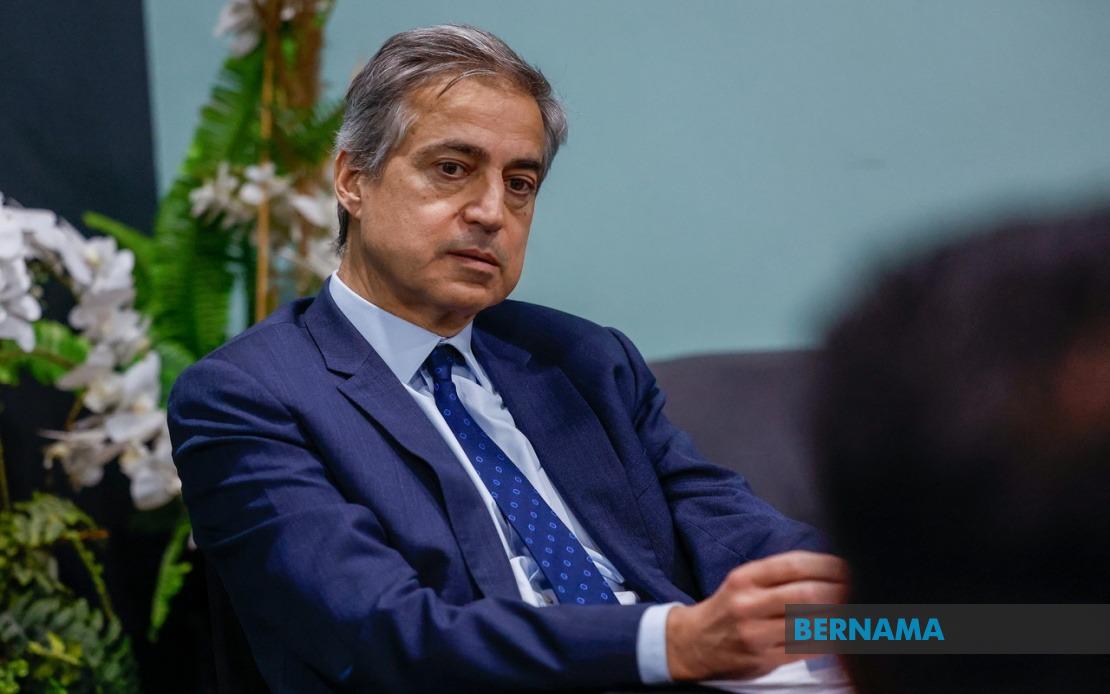
France and Malaysia are moving to deepen their partnership across multiple fronts, with French Ambassador Marc Abensour emphasizing the two countries' shared commitment to fostering cooperation in an era marked by geopolitical tensions and diverging interests. Speaking at the French National Day reception held at his residence in Kuala Lumpur on Tuesday evening, Abensour underscored the significance of bilateral engagement as a counterweight to global fragmentation, describing the France-Malaysia relationship as a practical demonstration of bridge-building between nations.
The economic dimension of the bilateral relationship has shown particular vigour in recent years. Trade flows between the two countries expanded by 11 per cent over the previous 12 months, reflecting growing commercial ties that span multiple sectors. More tangibly, approximately 600 French companies have established operations across Malaysia, collectively providing employment to over 30,000 local workers and contributing substantially to the country's economy. This presence underscores France's confidence in Malaysia as a destination for business and investment, extending beyond traditional resource-based sectors into services, technology, and manufacturing.
Malaysia's standing in France's global investment strategy further illustrates the depth of economic ties. The country ranks as the world's 10th-largest destination for French foreign direct investment, a position that reflects both Malaysia's attractiveness as an investment hub and the strategic importance France assigns to its Southeast Asian presence. This ranking places Malaysia ahead of many developed nations and highlights the region's growing centrality to French corporate expansion plans, particularly as European companies diversify their Asian operations beyond China and established markets.
Beyond commerce and investment, the relationship draws considerable strength from cultural and educational exchanges. French language education in Malaysia continues to flourish, with more than 3,700 individuals pursuing French-language certification annually. This places Malaysia third across Asia in terms of French-language learners, surpassed only by India and China—both far larger and more populous nations. The scale of this linguistic engagement reflects growing interest in French culture and demonstrates Malaysia's openness to European educational standards and cultural perspectives.
People-to-people connections form the backbone of sustained diplomatic relations, and the vibrant character of French-Malaysian exchanges suggests a foundation for long-term partnership that transcends governmental cycles and economic fluctuations. The breadth of engagement—spanning education, commerce, tourism, and cultural pursuits—creates multiple channels through which ordinary citizens and business professionals develop familiarity with one another's societies. This interpersonal dimension makes bilateral relations more resilient and less susceptible to short-term political disruptions.
The occasion of the French National Day celebration itself carried symbolic weight, gathering approximately 800 participants including senior government officials, diplomats, and ambassadors representing numerous countries. Federal Territories Minister Hannah Yeoh's presence as the guest of honour signalled Malaysia's recognition of the event's importance and reflected the respect accorded to France within Malaysia's diplomatic circles. The diversity of attendees underscored the cosmopolitan character of Malaysia's capital and the broad appeal of Franco-Malaysian cooperation across different sectors and communities.
The blending of French and Malaysian cultural elements at the reception—combining French cuisine with a Malaysian durian-tasting booth—served as a metaphor for the complementary nature of the bilateral relationship. Rather than attempting to impose cultural homogeneity, both nations celebrate their respective traditions while finding common ground on practical matters of mutual interest. This approach to cultural diplomacy reflects a mature partnership unburdened by historical grievances or competing ideological claims.
For Malaysia, the French partnership carries particular relevance amid Southeast Asia's complex geopolitical positioning. As the region navigates relationships with distant powers including the United States, China, and European nations, developing strong ties with established democracies like France provides Malaysia with additional diplomatic flexibility and economic options. France's emphasis on building bridges in a fragmented world resonates with Malaysia's own commitment to maintaining balanced foreign relations and fostering multilateral cooperation through forums such as ASEAN.
The timing of this bilateral emphasis also reflects broader European strategic interests in Southeast Asia. As tensions between Western powers and China intensify, and as questions surrounding Taiwan and maritime security dominate regional discourse, France and other European nations are investing increased diplomatic and economic effort in Southeast Asian partnerships. These efforts aim to preserve space for European influence and values in a region increasingly shaped by Chinese economic and military capabilities.
From Malaysia's perspective, deepening ties with France offers tangible benefits including investment capital, technology transfer opportunities, and access to European markets and expertise. The presence of 600 French companies employing tens of thousands of Malaysians demonstrates that this partnership translates into concrete economic gains rather than remaining purely rhetorical. Educational opportunities for Malaysian students in French institutions further enhance human capital and create networks that sustain bilateral relations across generations.
The French National Day commemoration of the Storming of the Bastille in 1789 carries enduring significance in international relations, symbolizing principles of liberty, equality, and fraternity that France projects as universal values. Malaysia's enthusiastic participation in celebrating these ideals—despite differences in political systems and governance approaches—reflects a pragmatic approach to international relations that emphasizes shared interests and mutual respect rather than imposing ideological conformity.
Looking forward, the trajectory of France-Malaysia relations appears oriented toward expansion and deepening across existing areas of cooperation. The announced intentions to strengthen bilateral ties arrive at a moment when both nations confront external pressures and internal challenges that benefit from strong international partnerships. For Malaysia, the French relationship complements existing ties with other European powers and provides additional ballast in navigating the region's complex diplomatic landscape as larger powers vie for influence and alignment.

