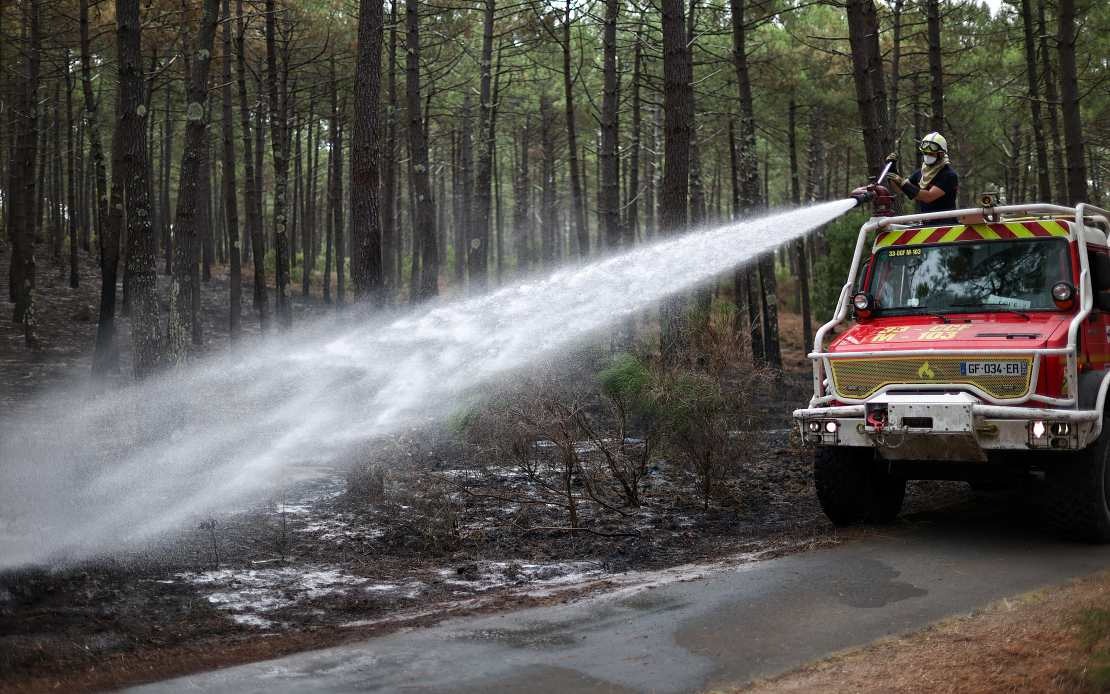
French Interior Minister Laurent Nunez revealed Friday that authorities have arrested 308 individuals tied to wildfires engulfing the country since the fire season commenced, marking what he characterised as an unusually high figure. The announcement underscores the scale of the crisis facing Europe's second-largest economy as summer temperatures soar across the continent, straining emergency services and communities from the Atlantic coast to the Alps.
The majority of those detained face suspicion of deliberately starting fires, representing approximately 66 percent of total arrests. This deliberate element transforms the wildfire narrative from purely a climate and environmental disaster into a criminal justice concern, prompting heightened scrutiny of arson prevention measures and prosecution strategies. Among the arrested individuals, 33 have experienced more serious consequences, either remaining in custody awaiting trial outcomes or having already received judicial convictions for their alleged involvement.
A significant clarification emerged when the Interior Ministry specified that 127 of the detained individuals were minors, raising broader questions about juvenile involvement in wildfire incidents and the social circumstances driving such dangerous behaviour. This demographic revelation suggests that authorities must address underlying causes beyond mere criminal intent, potentially encompassing issues of youth supervision, community engagement, and educational initiatives about fire safety. The inclusion of so many young people in arrest figures points to a challenge extending beyond law enforcement into prevention and social policy domains.
The most destructive blaze consuming southwestern France's Gironde department has devastated nearly 42,000 hectares of forest and agricultural land, equivalent to approximately 103,784 acres. Nunez reported that while the fire has achieved a degree of stability, full containment remains elusive, with scattered hotspots continuing to demand extinguishment efforts from firefighting teams operating under exhausting conditions. The persistence of these active zones reflects the volatile nature of summer wildfires in Mediterranean climates, where wind patterns and terrain complexity can reignite dormant areas unexpectedly.
As containment progressed across the affected region, local authorities implemented a phased return strategy for displaced populations. The Gironde prefecture authorised approximately 84,000 additional residents across nine municipalities surrounding Bordeaux to reoccupy their homes, representing a substantial movement of people as the immediate danger subsided. This logistical operation demonstrates the administrative complexity underlying wildfire response, requiring coordination between prefectures, municipal governments, and civil protection agencies to ensure safe reintegration while maintaining vigilance against flare-ups.
Nunez's Thursday statement to French broadcaster BFMTV conveyed cautious optimism, suggesting that "the worst may be behind us" as conditions continued improving. However, he simultaneously cautioned residents and officials against complacency, emphasising that remaining alert remains essential given the unpredictable nature of wildfire behaviour. This balanced messaging reflects the delicate equilibrium French authorities must maintain—projecting confidence to reassure frightened populations while ensuring resources stay mobilised for potential deteriorations.
The national meteorological service Meteo-France maintained an orange alert status across 29 departments, indicating elevated wildfire risk despite recent improvements in the Gironde sector. This widespread alert coverage highlights that France's wildfire challenge extends far beyond a single crisis point, representing instead a systemic vulnerability across multiple regions to seasonal fire conditions. The orange classification signals heightened danger without reaching the maximum red alert threshold, suggesting authorities view the situation as serious yet manageable through continued vigilance and resource deployment.
For Southeast Asian observers, particularly Malaysian stakeholders following transboundary environmental crises, France's experience offers instructive parallels and contrasts. Malaysia and the region regularly grapple with seasonal haze and wildfires, predominantly originating from agricultural land clearing rather than criminal arson. The French situation, with its significant arson component, suggests alternative vulnerability vectors that transcend natural disaster frameworks. The involvement of juvenile perpetrators likewise underscores cross-cultural challenges in youth engagement and risk behaviour that merit regional dialogue and comparative policy analysis.
The arrest figures and arson prevalence also illuminate how climate stress intersects with social instability to create compounded crises. While extreme heat and drought conditions provide accelerants for fire spread, human agency—whether criminal or negligent—remains decisive in ignition events. This interplay demands integrated responses combining environmental management, law enforcement capability, and social programmes addressing underlying motivations for destructive behaviour, lessons applicable across developed and developing nations confronting similar pressures.

