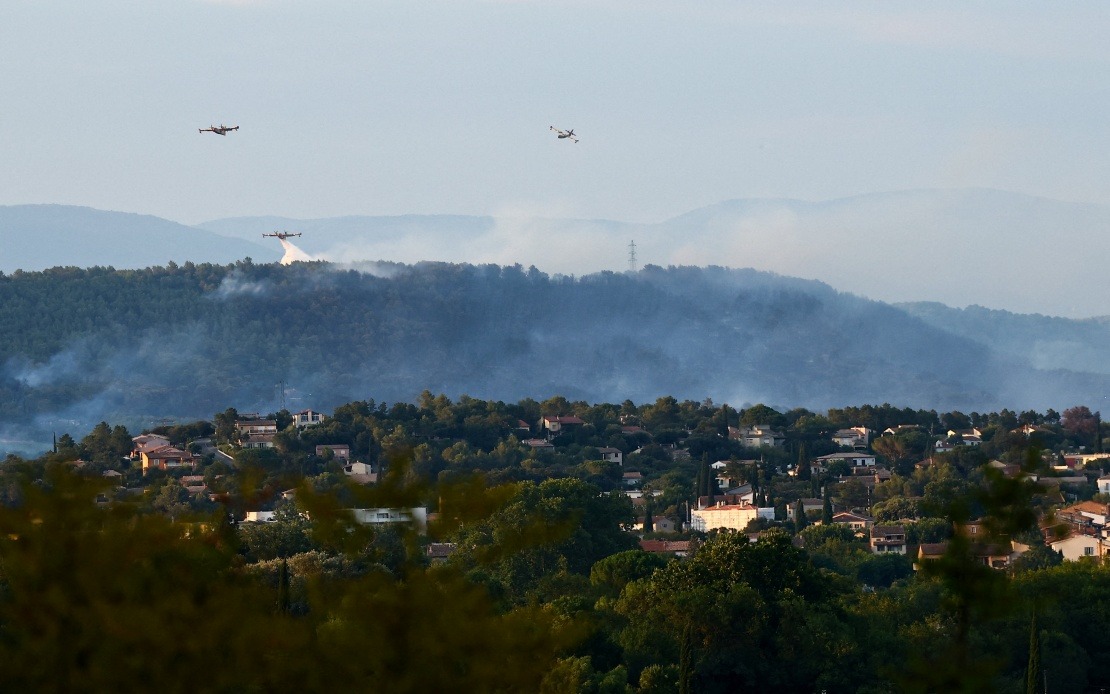
France is grappling with an environmental catastrophe of historic proportions as wildfires continue to ravage the nation at an alarming pace. Interior Minister Laurent Nunez disclosed on Monday that nearly 40,000 hectares of forests and vegetation have been destroyed since the beginning of 2026, marking a dramatic escalation in fire-related damage across the country. The scale of devastation reflects not merely an isolated incident but a systemic crisis driven by climatic extremes that meteorologists and climate scientists have long warned about.
The cumulative destruction figure represents a staggering increase compared to the previous year, according to Nunez, who emphasised that the crisis shows no signs of abating. New fires continue erupting daily across French territory, overwhelming firefighting resources and rescue personnel. This relentless cycle of ignition suggests that the underlying environmental conditions—rather than isolated weather events—have fundamentally shifted in favour of fire propagation. The minister's observation underscores a troubling pattern that extends beyond France's borders, as heat-driven ecological stress increasingly characterises the Mediterranean and Central European regions.
President Emmanuel Macron has characterised this summer's fire situation as unprecedented in the post-World War II era, a statement that carries significant weight given the continent's documented history of environmental crises. The frequency and intensity of these blazes represent a departure from historical norms, indicating that climate change is not merely a future concern but an active driver of current disasters. For Malaysia and Southeast Asia, France's experience serves as a cautionary narrative. Tropical nations with dense forest coverage face proportionally greater vulnerability to similar phenomena should regional temperature and precipitation patterns shift unfavourably.
The meteorological backdrop to France's crisis reveals the severity of atmospheric conditions. The national meteorological service issued weather warnings across 72 of France's 96 departments in late June, the highest number on record for such alerts. This near-universal coverage demonstrates that the heat emergency transcends regional boundaries and affects the entire nation systematically. Temperatures approached 40 degrees Celsius in many areas, with certain regions recording even more extreme values. Such conditions dramatically accelerate vegetation drying, reduce soil moisture, and create ideal circumstances for rapid fire propagation.
The relationship between exceptional heat and wildfire proliferation is scientifically well-established. When ambient temperatures soar to such levels, vegetation loses moisture rapidly, becoming increasingly combustible. Simultaneously, lower humidity levels in the atmosphere reduce the moisture content in plant matter, transforming forests into tinderboxes awaiting ignition sources. In France's case, this convergence of climatic factors has created a cascade effect where each fire suppresses resources needed to combat subsequent outbreaks, effectively overwhelming emergency response systems.
For Southeast Asian nations, particularly Malaysia with its substantial tropical rainforest ecosystems, the French precedent carries instructive value. While Malaysian forests currently benefit from equatorial climate patterns that generally provide adequate moisture, the broader warming trend could gradually shift these conditions. Already, seasonal variations in rainfall patterns have been observed across the region, and isolated drought periods have triggered forest fires in Indonesia and Malaysia in previous years. The 2026 French experience demonstrates how quickly environmental conditions can deteriorate when heat stress becomes chronic rather than episodic.
The economic and environmental implications of France's wildfire crisis extend far beyond immediate property damage and resource destruction. Massive carbon emissions from burning forests contribute to atmospheric CO2 concentrations, further accelerating climate warming in a feedback loop that intensifies future fire risk. Ecosystem degradation reduces biodiversity, compromises air quality, and destabilises regional carbon cycles. For a nation dependent on agriculture and forestry, the loss of nearly 40,000 hectares represents decades of growth destroyed in a single season.
French authorities face mounting pressure to enhance fire prevention and suppression infrastructure even as existing systems strain under current demand. However, structural improvements in firefighting capacity cannot address the root cause: the underlying climatic shift toward conditions that favour ignition and rapid fire spread. This reality shapes policy discussions across Europe and increasingly influences international climate negotiations, where France has historically played a leading advocacy role.
The broader regional context within Europe reveals that France's crisis is not isolated. Other Mediterranean nations and Central European countries have simultaneously experienced elevated fire activity and heat stress. This geographical distribution suggests that the phenomenon reflects large-scale atmospheric patterns rather than localised anomalies. For Malaysia and Southeast Asia, monitoring European fire seasons serves as an early warning system for potential regional vulnerabilities. Climate scientists have long predicted that tropical regions will experience different manifestations of climate change than temperate zones, but the fundamental risk of increased heat stress affects all latitudes.
Looking forward, France's experience in 2026 will likely inform emergency preparedness frameworks across Europe and internationally. Resource-sharing agreements, early warning systems, and cross-border firefighting coordination may become increasingly necessary as fire seasons potentially intensify in coming years. Southeast Asian nations should consider whether similar preparatory measures would benefit their own vulnerable ecosystems, particularly given transboundary fire risks in regions like Borneo and Sumatra where fires can spread across national boundaries and affect multiple countries simultaneously.
The human dimensions of France's wildfire crisis—displacement, economic disruption, health impacts from poor air quality—add moral urgency to climate adaptation discussions. As nations witness environmental disasters with direct impacts on citizen welfare, political pressure to address climate change intensifies. Malaysia, as a tropical developing nation with significant forest cover, occupies a unique position in global climate negotiations, simultaneously vulnerable to warming effects while holding responsibility as a steward of biodiverse ecosystems that benefit global climate stability.

