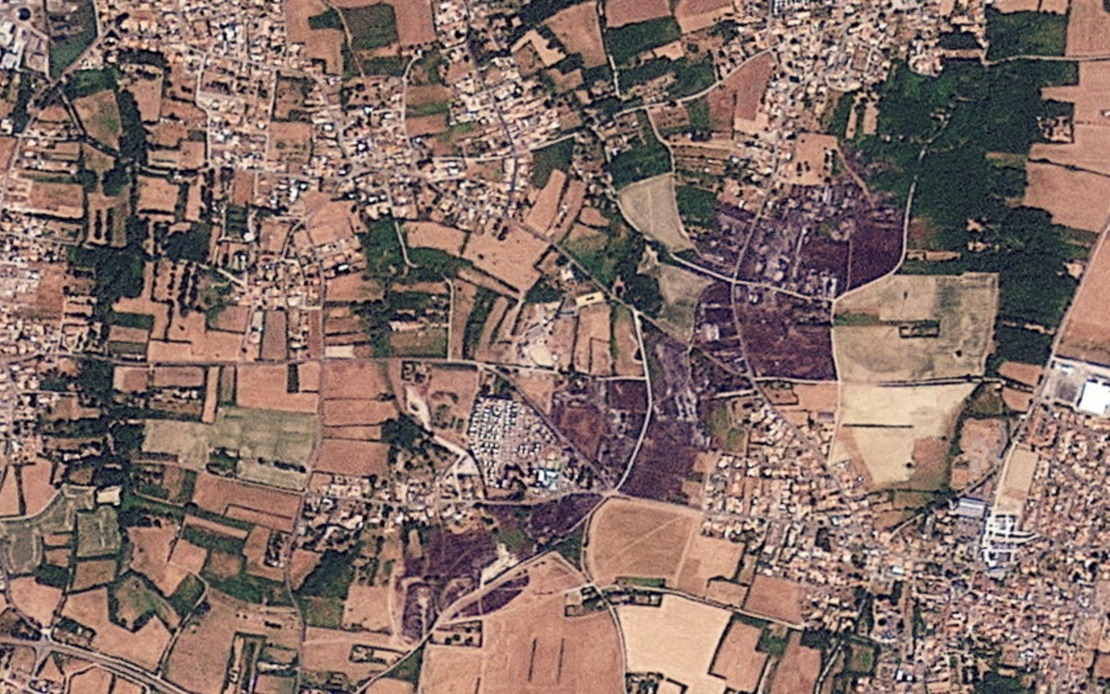
France is grappling with an intensifying wildfire emergency as two separate forest fires in the Fontainebleau region continue to advance despite concerted firefighting efforts. The twin blazes have collectively consumed approximately 1,920 hectares of woodland, with the situation remaining fluid as both fires spread overnight. Around 600 firefighters maintain a continuous presence at the affected sites, working around the clock to contain the advancing flames and prevent further destruction of France's natural heritage.
The first fire ignited on Sunday and has already destroyed roughly 1,500 hectares, while the second outbreak has charred between 300 and 400 hectares. French law enforcement has intensified its response by arresting two individuals suspected of deliberately igniting the initial blaze, signaling that authorities view intentional fire-setting as a serious threat to public safety and environmental resources. This development underscores a troubling pattern across the nation, where officials have launched 59 separate investigations into suspected arson incidents since the fire season commenced.
French Transport Minister Philippe Tabarot has responded to the crisis by demanding stringent legal consequences for those convicted of deliberate fire-setting. His public statement emphasizes a distinction between criminal arsonists and individuals suffering from pyromania, advocating that the former face "very harsh sentences" while the latter receive appropriate psychological treatment. This nuanced approach reflects growing recognition within government that wildfire causation requires both punitive and therapeutic responses, depending on the perpetrator's culpability and mental state.
Beyond the Fontainebleau incident, France confronts multiple simultaneous fire emergencies across its territory. The Trevillach wildfire, which erupted earlier in July within the Pyrenees-Orientales region, has disrupted critical transportation infrastructure. The railway operator SNCF has suspended train services along the Perpignan-Villefranche-Vernet-les-Bains corridor, with the company announcing that services between Ille-sur-Tet and Villefranche-Vernet-les-Bains will remain halted until at least July 20 pending infrastructure repairs.
Western and central regions also report significant fire activity. In Brittany's Côtes-d'Armor department, a heath fire erupted near Cap Fréhel on Monday, forcing the evacuation of more than 100 residents from surrounding communities and destroying approximately 38 hectares of landscape. Simultaneously, authorities in Lozère reported that an additional 107 hectares have succumbed to flames, stretching emergency resources even thinner across the country.
For Malaysian readers and regional observers, France's wildfire crisis illustrates a phenomenon increasingly familiar to Southeast Asia: the intersection of climate-related environmental stress and human factors in generating major disasters. Just as Malaysia and neighboring nations contend with transboundary haze and recurring dry-season fires, France faces the challenge of safeguarding vast forested areas while managing the dual threat of natural conditions and deliberate human interference.
The scale of France's current emergency—with nearly 2,000 hectares burning in a single region and dozens of separate fire investigations nationwide—demonstrates that even wealthy industrialized nations with sophisticated firefighting capabilities struggle to suppress multiple simultaneous outbreaks. The deployment of 600 firefighters to the Fontainebleau fires alone reflects the resource intensity required to combat such incidents, a reality that regional fire management agencies across Southeast Asia understand intimately.
The arrests of suspected arsonists raise broader questions about the motivations behind intentional fire-setting in forest regions. French authorities' recognition that pyromania requires medical intervention rather than purely criminal punishment aligns with emerging international understanding of fire-setting behavior. For regional policymakers, this suggests that effective wildfire prevention demands not only enforcement and infrastructure investment but also mental health resources and community education.
The disruption to French rail transport illustrates how wildfires cascade beyond immediate environmental damage to compromise essential services and economic activity. The railway suspension until mid-July affects freight and passenger movement through a key corridor, with ripple effects on supply chains and tourism. This interconnection between environmental disaster and infrastructure vulnerability resonates particularly strongly in Southeast Asia, where similar cascading impacts have disrupted regional transportation and commerce during peak fire seasons.
French government messaging around arson and wildfires also reflects a hardening political stance on environmental crimes. The Transport Minister's explicit call for severe penalties signals that policymakers view fire-setting not merely as property destruction but as attacks on national environmental assets and public welfare. This framing may influence judicial outcomes and set precedents for how courts weigh such offenses.
Looking forward, France's ongoing battle with multiple fires across dispersed regions will test the country's adaptive capacity. The suspension of rail services, evacuation protocols, and the psychological toll on affected communities represent costs that extend well beyond the immediate hectares consumed. Regional observers in Southeast Asia may find instructive lessons in how European nations integrate firefighting operations with transportation management and public communication during widespread emergencies.

