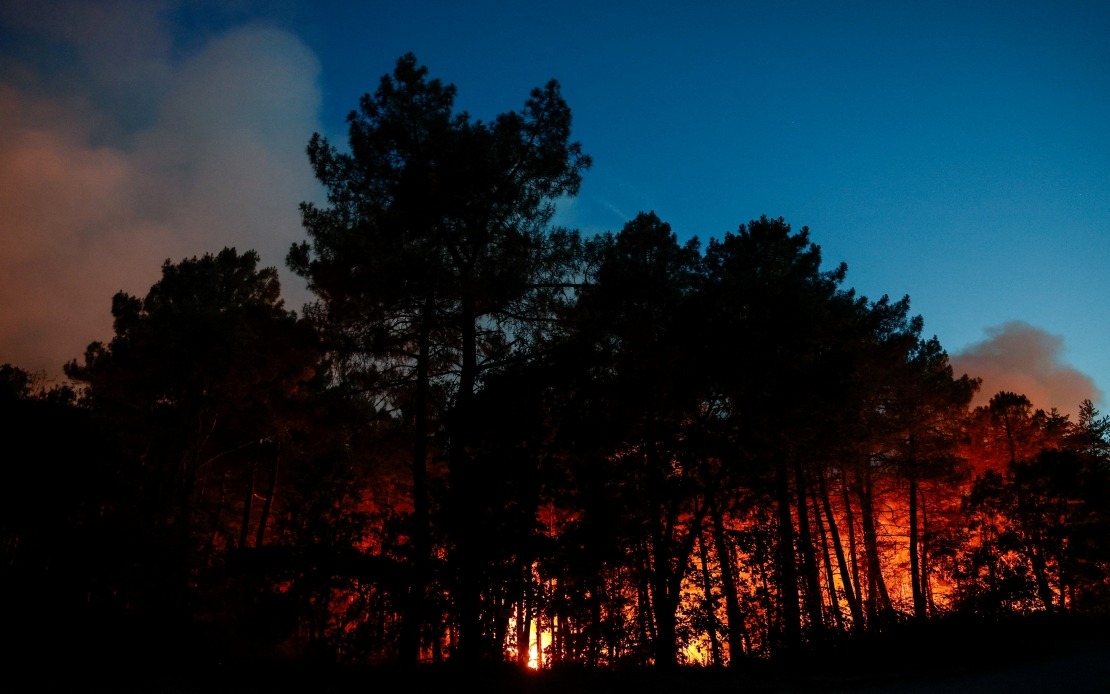
France is grappling with a wildfire crisis of historic proportions, having recorded 119,000 hectares of burned forest and vegetation in the first eight months of 2024 alone. Interior Minister Laurent Nunez disclosed the staggering figure during a weekend press conference, underscoring what officials characterise as an extraordinarily severe fire season that has strained the nation's emergency response capabilities to their limits.
The scale of the challenge becomes apparent when examining the frequency of incidents. Since January, authorities have logged 14,320 separate wildfire outbreaks across French territory, a figure that highlights both the geographical spread of the problem and the intensity with which fires are erupting. Among these incidents, 25 major conflagrations emerged on Friday alone, each demanding substantial firefighting resources and coordination. This concentration of major fires within a single day exemplifies the compounding pressures facing emergency services and demonstrates how rapidly conditions can deteriorate across multiple fronts simultaneously.
Despite some meteorological relief from slightly elevated humidity levels in scattered regions, Nunez cautioned that fundamental conditions favouring rapid fire spread remain deeply entrenched. High ambient temperatures persist across much of the country, while soil moisture levels have depleted significantly and vegetation has become exceptionally dry and combustible. This combination of factors—elevated heat, desiccated landscapes, and flammable vegetation—creates what fire scientists call the perfect combustion environment, where even minor ignition sources can trigger catastrophic spreading.
Geographically, the threat exhibits a disturbing concentration in France's most vulnerable zones. The Mediterranean coastal regions face particularly acute danger, as do the Rhone Valley corridor and designated areas throughout western France. Within these broader zones, the Var department and southern Corsica have been elevated to the maximum alert classification of "very severe," indicating that authorities anticipate imminent or ongoing fire activity requiring immediate protective measures. The Var region experienced a particularly frustrating setback when a previously contained fire reignited on Friday, consuming an additional 1,500 hectares and forcing officials to recommit resources to an area they had thought was secured.
Responding to the escalating crisis, French civil protection authorities have deployed roughly 1,500 additional firefighters overnight to fortify communities in the Var region. These reinforcements arrived following sustained aerial bombardment operations that continued until darkness made further sorties impossible. The strategy reflects a two-pronged approach: ground-based personnel defending populated areas and infrastructure, while aerial units attempt to slow fire advance and protect perimeters through water and retardant drops. The reliance on aerial assets underscores both the desperation of the situation and the practical limitations firefighters face when confronting blazes spreading across hundreds of hectares.
Nationalwide, France has maintained mobilisation levels that remain historically significant. The country has deployed all available aerial firefighting assets and activated 65 interdepartmental firefighter reinforcement columns, though this represents a slight reduction from the peak of 72 columns deployed in recent days. This adjustment reflects a deliberate decision to allow some crews to stand down temporarily for rest and recovery, a necessary concession to human physiology despite the ongoing threat. Officials have emphasised that these units remain on standby and can be reactivated within hours should fire conditions deteriorate further or new major incidents emerge.
The security dimension of the crisis has drawn official attention, with authorities indicating that 328 arrests have been made in connection with wildfire investigations. Though the source material does not specify the precise nature of these arrests, the figure suggests that a non-trivial proportion of fires may result from human negligence or intentional actions rather than natural causes such as lightning strikes. This investigative dimension adds a law enforcement component to what is fundamentally an environmental and emergency management challenge.
For Malaysia and other Southeast Asian nations, the French experience offers instructive parallels and warnings. While the tropical and monsoon climates of Southeast Asia differ substantially from Mediterranean conditions, the underlying dynamics of climate-driven fire risk—prolonged dry periods, elevated temperatures, and depleted soil moisture—are increasingly relevant across the region. Indonesia, in particular, has experienced devastating transboundary haze episodes triggered by massive peatland fires, demonstrating how regional fire crises can inflict cross-border harm. The French government's comprehensive mobilisation of resources, emphasis on inter-agency coordination, and willingness to deploy substantial capital and personnel illustrates the commitment required to manage large-scale fire emergencies effectively.
The French Interior Minister's calls for residents to remain vigilant and adhere to local authority directives reflect an acknowledgment that comprehensive emergency response requires public cooperation. Restricting unauthorised burning, maintaining defensible spaces around structures, and ensuring rapid reporting of suspicious fires constitute essential public contributions to fire management efforts. In many fire-prone societies, public behaviour patterns fundamentally determine whether nascent fires achieve containment or explode into major incidents.
Looking forward, the French wildfire situation carries troubling implications for climate adaptation. The emergence of record-breaking fire seasons as a recurrent phenomenon rather than statistical anomaly suggests that baseline assumptions about acceptable risk levels and resource requirements may require substantial upward revision. Nations throughout Europe and beyond may need to fundamentally reassess their firefighting infrastructure, personnel training, and stockpiles of specialised equipment based on the new reality that exceptional fire seasons are becoming normatively frequent. The financial implications are considerable, but the consequences of insufficient preparation prove far more costly in lives, economic damage, and ecosystem destruction.

