France is implementing a major escalation of border security measures along its frontier with Spain, driven by mounting pressure from the influx of migrants reaching Ceuta, the Spanish enclave located on the Moroccan coast. The decision reflects growing concern among European leaders about uncontrolled migration flows and the strain they place on neighbouring nations' infrastructure and administrative systems.
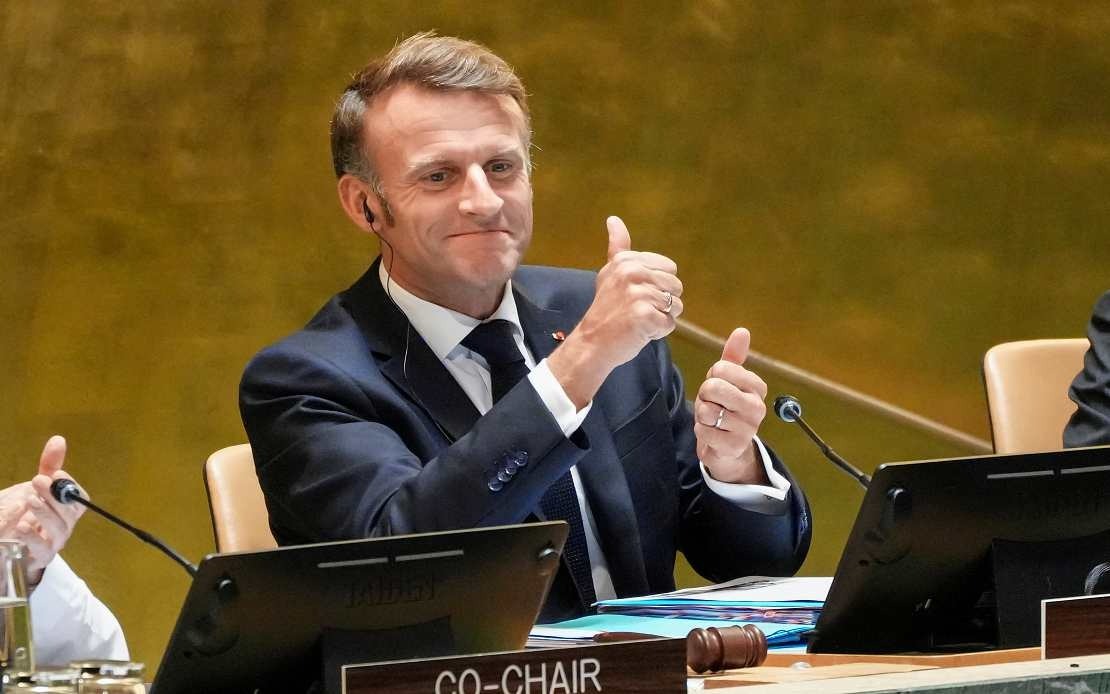
President Emmanuel Macron initiated the security upgrade after consultation with Spanish authorities grappling with the humanitarian and logistical challenges posed by sudden arrivals in Ceuta. The Élysée Palace announced on Friday that Macron had directed the interior ministry to immediately strengthen enforcement protocols at the Spanish border. Beyond domestic measures, the French president has signaled willingness to coordinate with Madrid and Rabat, positioning France as a collaborative partner in addressing what many European capitals view as a regional instability issue.
French Interior Minister Laurent Nuñez moved swiftly to operationalize these directives, issuing formal instructions on Thursday evening to commence enhanced border screening procedures without delay. This administrative response underscores the urgency with which Paris is treating the situation, recognizing that protracted migration surges can destabilize broader security arrangements and create political pressure domestically. The ministry's rapid mobilization demonstrates how migration crises at one border can trigger cascading security responses throughout interconnected European systems.
A critical component of France's strategy involves deploying the border agency's rapid reaction force, a specialized unit previously assigned to manage migration pressures along the Italian border. This multidisciplinary team comprises officers from the national police force, the gendarmerie, and customs authorities, supplemented by personnel from Sentinelle, France's dedicated counter-terrorism military unit. The decision to redeploy this force indicates that Paris views the Spanish border situation as sufficiently serious to warrant removing resources from another sensitive frontier, signaling the relative priority it now assigns to the Iberian crossing.
The numerical commitment is substantial: 334 police officers and gendarmes will be mobilized beginning Saturday to conduct ground-level enforcement operations. This represents a considerable human resources allocation for border management, reflecting not merely routine procedural updates but a fundamental shift in operational posture. The sheer number of personnel involved suggests France anticipates either sustained migration pressure or is attempting to establish visible deterrence that might discourage irregular crossing attempts.
Technological and air-based surveillance will complement the human deployment. Three aircraft have been assigned for aerial reconnaissance missions, enabling French authorities to monitor cross-border movements across expansive terrain difficult to patrol comprehensively on foot. Drone operations will provide real-time intelligence gathering, while railway patrols along the French-Spanish rail corridor will intensify substantially. These layered surveillance capabilities reflect modern border management approaches that combine personnel-intensive ground operations with advanced technological systems.
For Malaysia and Southeast Asian observers, France's response illustrates how developed nations with advanced security apparatus respond to migration pressures. While the Mediterranean context differs substantially from Southeast Asian migration dynamics, the French model demonstrates escalation patterns—from administrative directives through personnel deployment to technological augmentation—that may resonate with countries managing their own border challenges. The emphasis on interagency coordination, combining police, military, and specialized units, mirrors approaches some ASEAN nations have adopted when facing similar pressures.
The coordination dimension merits particular attention for regional policymakers. France's explicit engagement with Spanish and Moroccan counterparts reflects recognition that unilateral border management proves insufficient when migration flows originate from or transit through neighbouring territories. This trilateral approach—securing one's own border while simultaneously engaging source and transit countries—represents an increasingly common international practice that several Southeast Asian governments have attempted to replicate with varying degrees of success.
Politically, Macron's public commitment and Nuñez's rapid implementation reflect broader European anxieties about migration becoming a destabilizing electoral issue. The visibility of enhanced security measures serves both practical and communicative purposes: genuinely attempting to manage cross-border movements while simultaneously demonstrating to domestic audiences that governments are responding decisively to perceived threats. This dual logic—operational and political—characterizes migration policy across wealthy democracies and helps explain why responses often appear disproportionate to actual migration numbers.
The deployment of Sentinelle personnel represents a noteworthy conflation of terrorism and migration concerns within European security frameworks. By assigning counter-terrorism units to migration enforcement, French authorities implicitly suggest potential security linkages between irregular migration and terrorism risks, a narrative that has gained currency across Europe despite disputed empirical foundations. This framing influences how societies perceive migrants and shapes public discourse around border security policies.
Looking forward, the sustainability of such intensive measures remains uncertain. Maintaining 334 officers in dedicated border operations indefinitely strains public resources, particularly if migration pressures persist without resolution. The long-term viability of France's approach will depend partly on whether diplomatic engagement with Spain and Morocco produces agreements reducing migrant flows originating from or transiting through North African territories. Without addressing root causes through coordinated regional approaches, security-first responses risk becoming permanent fixtures consuming substantial state capacity.
For Southeast Asian governments monitoring international border management practices, France's response demonstrates how wealthy nations leverage state capacity and technological resources to assert control over migration flows. The relative success or failure of this intensive deployment may influence how other governments calibrate their own border management strategies, particularly as migration pressures intensify due to climate change, economic disparities, and regional instability across the Global South.

