France has formally established the electoral calendar for its next presidential contest, setting the first round for April 18, 2027, and confirming May 2, 2027, as the date for a potential second round should no candidate secure an outright majority on the initial ballot. Government officials disclosed the decision during a Cabinet meeting on Wednesday, cementing the timeline after weeks of internal deliberation and consultation with political stakeholders across the spectrum.
The scheduling announcement carries particular significance for European observers and for Southeast Asian democracies monitoring how established Western nations manage electoral organisation. France's presidential system wields considerable influence across the European Union and beyond, making the integrity and perception of fairness in its electoral process a matter of broader geopolitical interest. The dates also arrive at a moment when French politics faces considerable fragmentation, with multiple competing blocs vying for dominance in what many analysts expect to be a contested race.
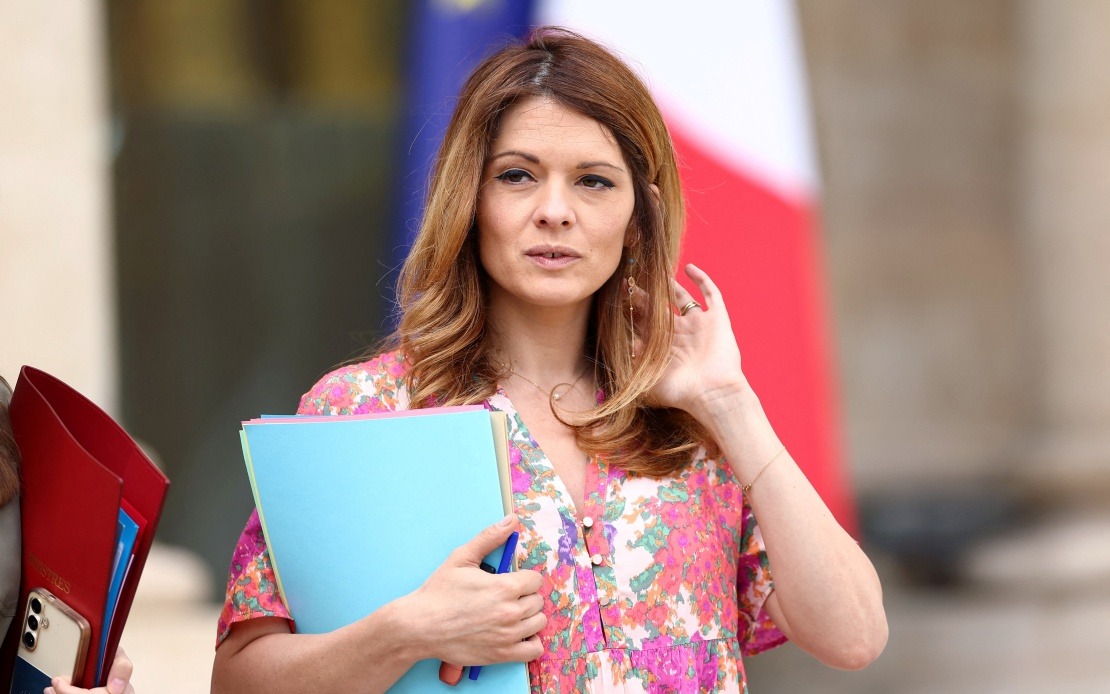
Government spokesperson Maud Bregeon moved swiftly to defend the chosen dates, asserting that no hidden political calculation underpinned the decision. She characterised the timeline as emerging from careful consultation with representatives of political parties and as reflecting constitutional prerequisites that constrain the options available to the state. Bregeon's framing attempted to position the government as a neutral administrator of electoral mechanics rather than as an actor with vested interests in the outcome.
However, the timing has generated immediate criticism from opposition quarters, particularly regarding the placement of the runoff election just a single day after May 1, the traditional date for International Workers' Day demonstrations across France. This proximity has raised questions about whether the electoral machinery might inadvertently or deliberately complicate the staging of labour demonstrations or conversely whether such gatherings could influence the final voting period. Opposition politician Bruno Retailleau seized on this point, openly characterising the electoral schedule as lacking neutrality and hinting that a deliberate strategic calculation might account for the apparent awkwardness of the dates.
The controversy reflects deeper tensions within French politics regarding procedural fairness and the perception thereof. In democracies like Malaysia, where electoral management remains contested terrain, such disputes over the optics of scheduling reveal how technical decisions can become flashpoints for political dispute. The French situation demonstrates that even longstanding democracies must navigate the challenge of maintaining public confidence in institutional neutrality when decisions inevitably carry knock-on effects for various political interests.
Bregeon countered opposition objections by insisting that electoral regulations apply consistently across all contestants and will be administered according to standard protocols regardless of calendar circumstances. She invoked a pragmatic argument, noting that French political actors have accumulated considerable experience in managing campaigns that overlap with major public demonstrations and that such coordination, while occasionally awkward, remains entirely manageable within France's established democratic framework.
The government's defence emphasised that the consultation process preceding the announcement had been comprehensive, incorporating input from across the political spectrum to ensure no legitimate constituency felt excluded from the decision-making process. Bregeon stressed that while no conceivable schedule could satisfy every possible objection or avoid all potential complications, the selected dates afforde sufficient campaign time for candidates to articulate their programmes and for voters to assess the competing visions on offer.
The broader context here involves France's persistent challenge with political fragmentation. The presidential system requires candidates to appeal across ideological divides and geographic regions, yet recent years have witnessed the rise of anti-establishment movements and the splintering of traditional party alignments. An election scheduled for spring 2027 will occur against whatever economic and social backdrop emerges over the coming years, potentially amplifying or moderating the intensity of existing grievances within the electorate.
For Southeast Asian observers, the French experience underscores how developed democracies must balance technical efficiency in electoral administration with the political imperative of maintaining public trust in institutional fairness. The fact that opposition figures immediately questioned the neutrality of the scheduling decision reveals how vulnerable even well-established systems can be to perceptions of bias, particularly when decisions produce outcomes that appear to advantage or disadvantage particular political forces. Malaysia and other regional democracies face analogous challenges in ensuring that electoral calendars appear above reproach while acknowledging that no arrangement can eliminate all potential concerns.
The May 2 runoff date, if needed, will place the ultimate resolution of France's presidential contest precisely at a moment of heightened civic engagement around labour rights and working conditions. This juxtaposition may actually enhance democratic participation by concentrating public attention, or it may create complications for campaigns and organisers. The government's confidence that institutional experience will smooth over any practical difficulties suggests faith in French democratic capacity to accommodate overlapping political events without undermining electoral legitimacy.
Looking forward, the April-May 2027 election cycle will test not only the strength of individual candidates but also the resilience of French democratic institutions themselves. The calendar is set, the parameters are defined, and now the work of political competition can proceed according to established rules. Whether the proximity to International Workers' Day becomes a significant factor in campaign dynamics or fades into procedural background noise will likely depend on broader political events and candidate strategies in the intervening years.

