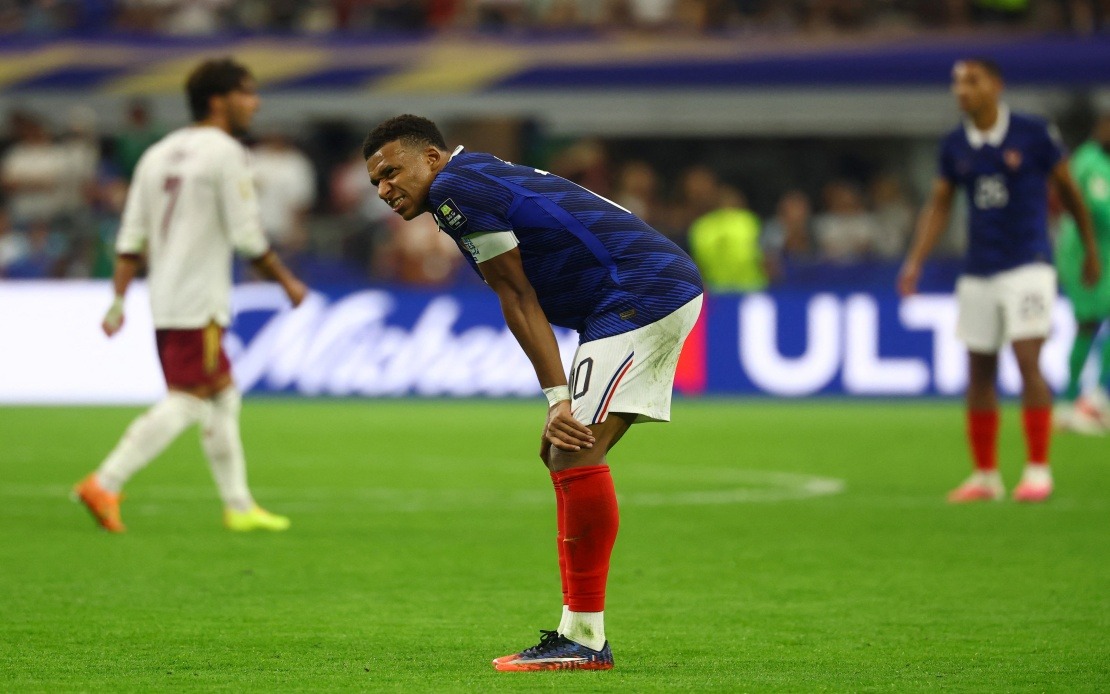
The aftermath of France's FIFA World Cup semifinal elimination turned volatile on Tuesday evening, resulting in the detention of over 160 individuals across the country's major cities. According to the Paris Police Prefecture, 141 people were arrested in the capital and surrounding regions following clashes that erupted immediately after Spain's decisive 2-0 victory. The scale of the disturbances underscores how deeply sporting disappointments can ignite broader social tensions, particularly when young crowds gather to witness high-stakes international matches.
The incidents in Paris primarily centered on confrontations between police and groups of young people who employed firework mortars as projectiles against law enforcement and emergency service personnel. These handheld fireworks, which can be dangerously volatile when deliberately launched toward crowds, represented a significant escalation beyond typical post-match celebrations and demonstrated the organized nature of some of the disorder. Authorities responding to the disturbances operated under heightened alert, aware that such incidents could quickly spiral into more serious confrontations if crowds grew unchecked or if provocations intensified.
Lyon experienced similar but comparatively smaller-scale incidents. Several hundred spectators had assembled at Place Bellecour, one of France's largest public squares, to watch the semifinal match on screens. Following Spain's victory, the gathering fractured into smaller groups, and a portion of the crowd became confrontational, directing fireworks and other projectiles at police officers positioned to manage the crowd. French riot police responded to these provocations swiftly, resulting in approximately 20 arrests in the city. The geographic spread of the disturbances across France's two largest cities suggested that the reaction to the defeat was not confined to isolated pockets of unrest but reflected a wider emotional response to the national team's unexpected elimination from the tournament.
The demographic profile of those arrested provides insight into which population segments were most directly involved in the disturbances. The Paris Police Prefecture noted that detainees ranged in age from those born in 2002 to 2011, indicating that the youngest arrestees were still teenagers, while the oldest were in their early twenties. This concentration among very young people raises questions about crowd management at large public gatherings and the role that age, peer influence, and impulsive decision-making play in escalating tensions from disappointment into violence. The involvement of minors also complicates the judicial response, as French law distinguishes between adult and juvenile offenders in terms of sentencing and rehabilitative approaches.
Despite the scale of arrests and the intensity of some confrontations, authorities reported that the disturbances resulted in no serious injuries to either police personnel, emergency responders, or members of the general public. This relative absence of significant harm, while positive from a public safety perspective, also suggests that the firework projectiles and other items thrown were not deployed with intent to cause life-threatening injury but rather represented expressions of frustration and aggression within what remained largely contained urban disorder. No major property damage was recorded in either Paris or Lyon, indicating that the incidents did not develop into the kind of widespread vandalism or looting that sometimes accompanies large-scale public disturbances.
The World Cup semifinal result itself represented a significant disappointment for French football and the nation's broader sporting aspirations. Spain's comprehensive 2-0 victory eliminated France from contention for another World Cup title and dashed immediate hopes for back-to-back championships. For a country with deep sporting traditions and considerable national investment in football, such elimination matches can trigger emotional responses that occasionally manifest in public disorder, particularly among younger supporters less practiced in processing sporting defeats. The timing of the match in the evening, when public spaces remained populated and crowds naturally gathered to watch the game, created conditions where large numbers of emotionally engaged spectators were simultaneously present in concentrated urban areas.
The response by French authorities reveals established protocols for managing post-match disturbances in major cities. Both Paris and Lyon deployed riot police in anticipation of potential disorder following the semifinal, and their rapid intervention when confrontations emerged helped contain the scope of incidents. The arrests made were primarily for specific offenses related to the use of fireworks as weapons against police rather than for generic participation in unlawful assembly, suggesting that law enforcement sought to target those engaged in more serious provocative conduct. The efficiency of the arrests and subsequent processing of detainees demonstrates that French police services maintain systematic approaches to crowd control and public order at major sporting events.
For Malaysia and other Southeast Asian nations, the French situation offers relevant lessons regarding the management of passion and emotion surrounding major international sporting events. While football enjoys deep popularity across Southeast Asia, incidents involving mass arrests following sporting disappointments remain comparatively rare in the region, though individual incidents of violence at club matches have occurred. The French experience illustrates how even highly developed democratic societies with significant resources devoted to public order management face challenges in channeling collective disappointment into peaceful outlets rather than allowing it to escalate into confrontation with authorities.
The broader implications of the incident extend beyond immediate policing concerns to questions about how modern societies accommodate intense emotional investment in international sporting competition. The concentration of disturbances among very young people also suggests that engagement with major tournaments increasingly occurs through digital networks and peer group dynamics rather than solely through traditional family or community viewing structures. Understanding these shifts in how sporting events are experienced and processed collectively remains important for policymakers concerned with maintaining public order while preserving the legitimate enthusiasm that international competitions generate across diverse populations.

