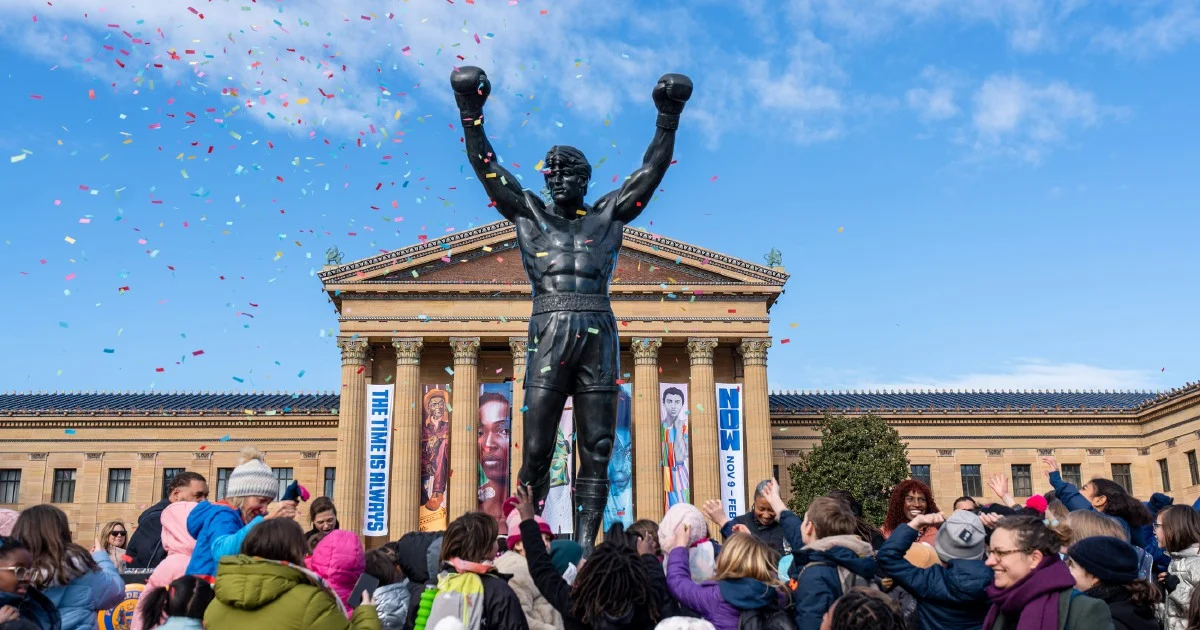
French World Cup supporters have been issued a cautionary notice from their federation advising them to resist the temptation of adorning Philadelphia's famous Rocky Balboa monument with their national colours, as a peculiar curse appears to have plagued several international squads whose followers engaged in similar behaviour during past tournaments. The admonition, delivered on Saturday, reflects growing concerns within the French contingent that disturbing the bronze statue—which depicts the fictional boxer from Sylvester Stallone's film franchise—could jeopardise their campaign in the tournament.
Philadelphia's Rocky statue, located at the base of the Museum of Art's grand steps, has become an unofficial ritual ground for World Cup supporters who photograph themselves with the sculpture and occasionally drape it in their team colours as a good-luck charm. However, documentation of past sporting events has revealed an unexpected pattern: teams whose fans decorated the monument have subsequently suffered unforeseen defeats, injuries, or early eliminations from major competitions.
The phenomenon gained credibility among tournament organisers and team management after multiple documented instances where nations that personalised the statue experienced unexpected setbacks. Whether the correlation reflects genuine superstition or merely coincidental clustering of disappointments, the pattern has become sufficiently established to warrant official caution from national delegations.
For French football supporters, accustomed to their nation's success in international competitions, the warning carries additional weight given France's consistent performance expectations. The French squad's status as defending champions or strong contenders in recent World Cup cycles means that even marginal disadvantages—real or perceived—warrant careful avoidance. The federation's intervention suggests that in professional sport, where psychological factors significantly influence team performance and morale, even superstitious concerns warrant formal acknowledgment.
The Rocky statue phenomenon illustrates how sporting culture extends far beyond match performances into the symbolic realm of fan behaviour and collective superstition. Supporters worldwide have long embraced pre-match rituals, lucky items, and behavioural practices believed to influence outcomes, creating a parallel sports universe where psychological and spiritual considerations intertwine with athletic preparation. The official warning from France validates this cultural dimension rather than dismissing it outright.
Philadelphia's Rocky monument has become a focal point because of its prominent location and symbolic significance beyond mere cinema. The statue represents underdog determination and overcoming adversity—themes that resonate powerfully with international football cultures. Supporters naturally gravitate toward touching or decorating such symbols, viewing them as conduits for channelling good fortune toward their teams.
For Malaysian and Southeast Asian football enthusiasts, the Rocky statue superstition offers an interesting cultural intersection. Southeast Asian football communities are deeply familiar with superstitious practices spanning team colours, pre-match rituals, and symbolic objects believed to influence sporting outcomes. The international legitimisation of such concerns through official warnings from major footballing nations validates similar belief systems prevalent across the region.
The French federation's caution also reflects practical considerations beyond pure superstition. Large gatherings of supporters around the statue risk creating congestion, safety hazards, and potential conflicts between rival fan groups. By framing the warning through the curse narrative rather than explicit safety concerns, the federation achieves compliance while respecting the cultural significance supporters attach to such rituals.
The warning raises broader questions about how professional organisations navigate the intersection of rational athletic science and deeply embedded cultural beliefs. France's approach—neither dismissing supporter superstitions nor endorsing them explicitly, but instead acknowledging and redirecting them—represents a pragmatic accommodation of human psychology within competitive sport.
Historically, major sporting events have accumulated layers of folk wisdom regarding lucky and unlucky acts. The Rocky statue curse joins an extensive catalogue of sporting superstitions, from cricket teams refusing to mention unfinished innings to baseball players maintaining consistent pre-game routines. These practices persist because they provide psychological reassurance and collective cohesion, regardless of statistical correlation with actual outcomes.
For France heading into their World Cup campaign, avoiding the statue controversy allows the squad to maintain focus on performance fundamentals while their supporters direct their nervous energy toward more benign rituals. The warning effectively channels supporter enthusiasm into constructive avenues while eliminating a variable that, however symbolically, could potentially distract team concentration or breed negative sentiment.
The episode ultimately demonstrates how international football transcends athletic competition to encompass folklore, superstition, and cultural practice. France's formal acknowledgment of the Rocky statue curse—despite its apparent irrationality—illustrates that winning at the highest levels requires managing not just physical and tactical preparation, but also the psychological landscape inhabited by players and supporters alike.
%22%2F%3E%3C%2Fpattern%3E%3C%2Fdefs%3E%3Crect%20width%3D%22100%25%22%20height%3D%22100%25%22%20fill%3D%22url(%23ph47hsg)%22%2F%3E%3Crect%20width%3D%22100%25%22%20height%3D%22100%25%22%20fill%3D%22url(%23ph47hsp)%22%2F%3E%3Ctext%20x%3D%2250%25%22%20y%3D%2250%25%22%20text-anchor%3D%22middle%22%20dominant-baseline%3D%22central%22%20fill%3D%22rgba(255%2C255%2C255%2C0.95)%22%20font-family%3D%22Georgia%2C%20'Times%20New%20Roman'%2C%20serif%22%20font-weight%3D%22700%22%20font-size%3D%22226%22%20letter-spacing%3D%22-0.02em%22%3EExists%3C%2Ftext%3E%3C%2Fsvg%3E)
%22%2F%3E%3C%2Fpattern%3E%3C%2Fdefs%3E%3Crect%20width%3D%22100%25%22%20height%3D%22100%25%22%20fill%3D%22url(%23ph4jpltg)%22%2F%3E%3Crect%20width%3D%22100%25%22%20height%3D%22100%25%22%20fill%3D%22url(%23ph4jpltp)%22%2F%3E%3Ctext%20x%3D%2250%25%22%20y%3D%2250%25%22%20text-anchor%3D%22middle%22%20dominant-baseline%3D%22central%22%20fill%3D%22rgba(255%2C255%2C255%2C0.95)%22%20font-family%3D%22Georgia%2C%20'Times%20New%20Roman'%2C%20serif%22%20font-weight%3D%22700%22%20font-size%3D%22151%22%20letter-spacing%3D%22-0.02em%22%3EMalaysian%3C%2Ftext%3E%3C%2Fsvg%3E)