A father-and-sons rescue unfolded off one of Thailand's most celebrated holiday destinations when a French man and his two young children found themselves stranded at sea for more than 16 hours following a jet ski accident near Koh Samui. The incident, which occurred in the early evening hours of Thursday and extended through an overnight ordeal, ended when local authorities located the family on Friday morning, with all three survivors showing signs of physical exhaustion but ultimately discharged from hospital within hours of their recovery.
The 50-year-old father had hired a jet ski from a local rental operator on Koh Samui at approximately 5 pm on Thursday, intending to enjoy some time on the water with his two sons, aged five and seven. What should have been a recreational outing on the calm, tropical waters of the Gulf of Thailand turned into a survival situation when the vessel capsized after less than 20 minutes of operation. Local government official Amorn Chomchoey recounted the medical team's assessment upon rescue, noting that the family appeared exhausted and had swallowed considerable amounts of seawater during their extended time in the ocean. The boys, in particular, displayed visible signs of the ordeal, with pallid complexions reflecting the stress of their unexpected predicament.
The alert that triggered the rescue operation came from the jet ski rental company itself. When the family failed to return within the timeframe specified in their rental agreement, the operator became suspicious that something had gone wrong and immediately contacted local rescue authorities and provincial officials. This proactive notification by the rental firm proved critical in initiating the search and rescue response, demonstrating the importance of accountability within the tourism industry. Search efforts continued through the night, with teams eventually spotting the family at approximately 10 am Friday morning after more than 16 continuous hours in the water.
Investigators examining the incident face questions about what caused the jet ski to capsize so quickly into the outing. The vessel remained operational for just over 15 minutes before going down, raising concerns about mechanical failure or operator error. The father claimed to investigators that he possessed experience operating jet skis, yet the rental operator later suggested to local media that the family may have ventured beyond the designated zone outlined in their rental contract. This discrepancy—whether the accident stemmed from mechanical issues, unauthorised travel beyond safe areas, or other factors—remains the subject of official scrutiny as authorities seek to prevent similar incidents.
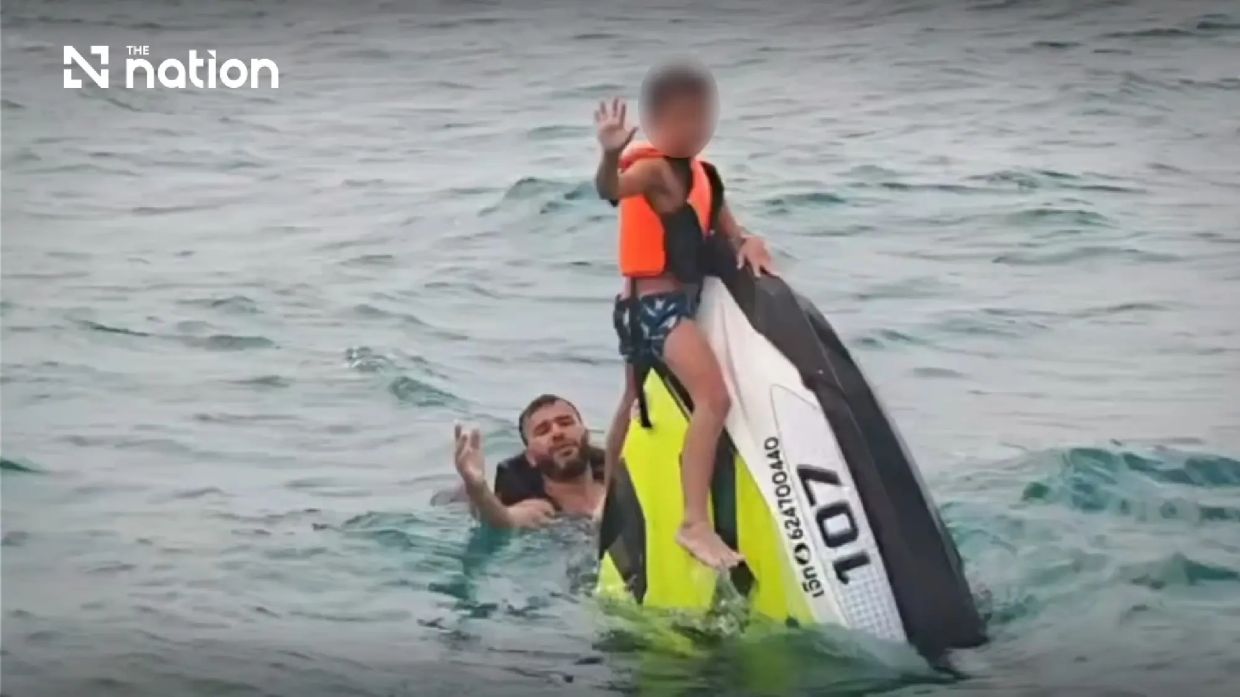
Rescue footage provided by the Koh Samui district office captured the dramatic nature of the situation when the family was found. The jet ski lay almost entirely submerged, with only its triangular nose section protruding above the water's surface. One of the boys was perched atop the partially sunken vessel while the father floated nearby, both wearing life jackets that had clearly played a crucial role in their survival through the long night. Video recordings documented rescuers speaking reassuringly to the traumatised family, with one rescuer audibly instructing them to remain calm and emphasising that they had survived. Once on the rescue boat, the family received water and medical attention before being transported to hospital for thorough evaluation.
Despite the harrowing nature of their experience, the family's resilience and the effectiveness of local rescue services ensured a positive outcome. All three were discharged from hospital after initial checks, with no reports of serious injuries or lasting harm. Remarkably, the family chose not to cut short their holiday and instead remained in Thailand to continue their vacation, suggesting that their confidence in local services and recovery from the immediate physical effects was sufficient to proceed with their plans. This decision also speaks to the professionalism and reassurance provided by rescue personnel during and after the operation.
Koh Samui holds particular significance in Thailand's tourism sector as a premier family destination, renowned for its protected waters and the breadth of resort facilities catering to visitors with children. The island attracts millions of international tourists annually, many drawn precisely by its reputation for relative safety and suitability for families. Jet ski rentals represent a significant part of the recreational offerings on the island, generating revenue for local operators while providing water-based experiences to holidaymakers. However, incidents such as this highlight the necessity for rigorous safety protocols, comprehensive briefings on operational boundaries, and well-maintained equipment to ensure that adventure activities remain genuinely safe for participants of all ages and experience levels.
This rescue operation underscores several critical considerations for tourism authorities and private operators in Thailand's resort regions. The incident demonstrates both the vulnerability of recreational water activities and the importance of effective monitoring systems, rapid response mechanisms, and clear communication between rental operators and authorities. For international visitors planning water-based activities in Southeast Asia, the French family's experience serves as a sobering reminder of the unpredictability of the ocean and the absolute necessity of wearing proper safety equipment. The presence of life jackets undoubtedly prevented tragedy, making their mandatory use non-negotiable for all jet ski rentals regardless of a participant's claimed experience level.

