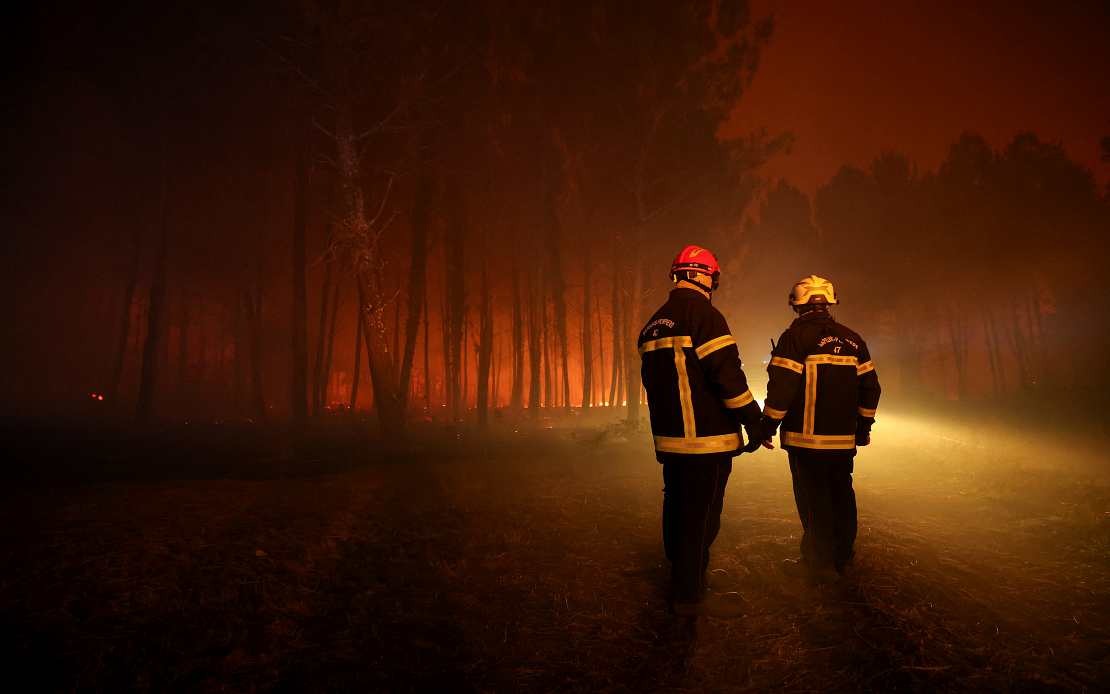
A 15-year-old boy in France has been charged following a fire in Merignac, a town situated near Bordeaux airport, which resulted in the deaths of two firefighters last month. The teenager appeared before a judge on Thursday and was subsequently placed in a closed educational facility pending further proceedings, according to French broadcaster BFMTV.
The incident represents a tragic culmination of circumstances that began with what investigators believe was a careless act. According to reporting by the Bordeaux-based daily Sud Ouest, the fire was allegedly ignited by a cigarette butt that the 15-year-old discarded onto nearby grass. The teenager and his 22-year-old brother had stopped in the area and were smoking when the younger of the two allegedly dropped his lit cigarette, sparking what would become a deadly conflagration.
The investigation into the circumstances reveals that both brothers had initially been taken into police custody following the incident. The older sibling was arrested on Wednesday but was subsequently released after investigators determined that his younger brother bore responsibility for starting the blaze. The 22-year-old had been cleared of involvement after his initial questioning, marking a significant development in the case as authorities narrowed their focus to the teenager.
The fire itself erupted in a building in Merignac, and its rapid spread created an extremely dangerous situation for emergency responders. Two firefighters lost their lives on July 21 while actively battling the flames, their deaths occurring after their emergency vehicle became trapped by the advancing fire. The loss represented a sobering reminder of the hazards that firefighters face daily in their service to communities, and it quickly prompted a thorough investigation by authorities determined to establish exactly how the emergency became so catastrophic.
The Bordeaux prosecutor's office launched a comprehensive inquiry into the incident's circumstances, examining not only how the fire began but also the factors that led to the deaths of the two emergency personnel. Their investigation sought to establish a clear chain of causation and to determine what role, if any, other contributing factors may have played in the tragedy. The inquiry extended beyond simple negligence to consider the broader context of how such a fire could develop so rapidly and fatally.
The apparent negligence involved in discarding a cigarette on dry grass speaks to a broader public safety concern across Europe regarding fire prevention. France, like many Mediterranean and continental European nations, experiences significant risk from uncontrolled fires during warmer months when vegetation becomes desiccated and highly flammable. A single carelessly discarded cigarette can cascade into a major incident within minutes, particularly in areas with accumulated dry brush or grass near buildings and structures.
For Malaysian and Southeast Asian readers, this incident carries particular resonance given the region's own experiences with fire hazards. The recurring haze and forest fire crises that affect Malaysia, Indonesia, and neighbouring countries underscore how human carelessness can escalate into environmental and public health emergencies. While the French case involves an individual incident, the underlying mechanism—inadequate awareness of fire risks and insufficient personal responsibility—mirrors challenges in preventing large-scale regional disasters.
The charging of a minor in connection with deaths caused by his actions raises questions about accountability and juvenile justice in France. At 15 years old, the teenager faces a significant legal process, though French law provides for different treatment of minors compared to adults. The placement in a closed educational centre suggests authorities are pursuing both accountability and rehabilitation, reflecting contemporary approaches to juvenile justice that attempt to balance punishment with the possibility of rehabilitation.
The case also highlights the cascading consequences of momentary inattention. A single act of littering in the form of a discarded cigarette resulted in the loss of two lives and profound grief for their families and colleagues. This reality has prompted ongoing public education campaigns throughout Europe about fire safety and the dangers of discarding smoking materials carelessly, particularly in outdoor settings during high-risk seasons.
For emergency services globally, including those in Malaysia, the Merignac incident serves as a sobering case study in occupational hazard. Firefighters routinely enter situations where danger escalates unpredictably, and training protocols attempt to prepare them for scenarios where environmental factors—such as vehicles becoming trapped by advancing flames—can transform routine responses into life-threatening emergencies. The two deaths in this incident have likely prompted reviews of emergency vehicle positioning and escape route protocols among fire services in France and beyond.
The broader implications extend to community safety culture and personal responsibility. Prevention of fire fatalities depends not only on institutional safeguards and professional expertise but also on millions of individual decisions about how to handle fire risks safely. Education campaigns emphasising the genuine dangers posed by discarded smoking materials remain a central component of public health strategy across developed nations, yet incidents like Merignac demonstrate that such messaging continues to require reinforcement and renewed emphasis.

