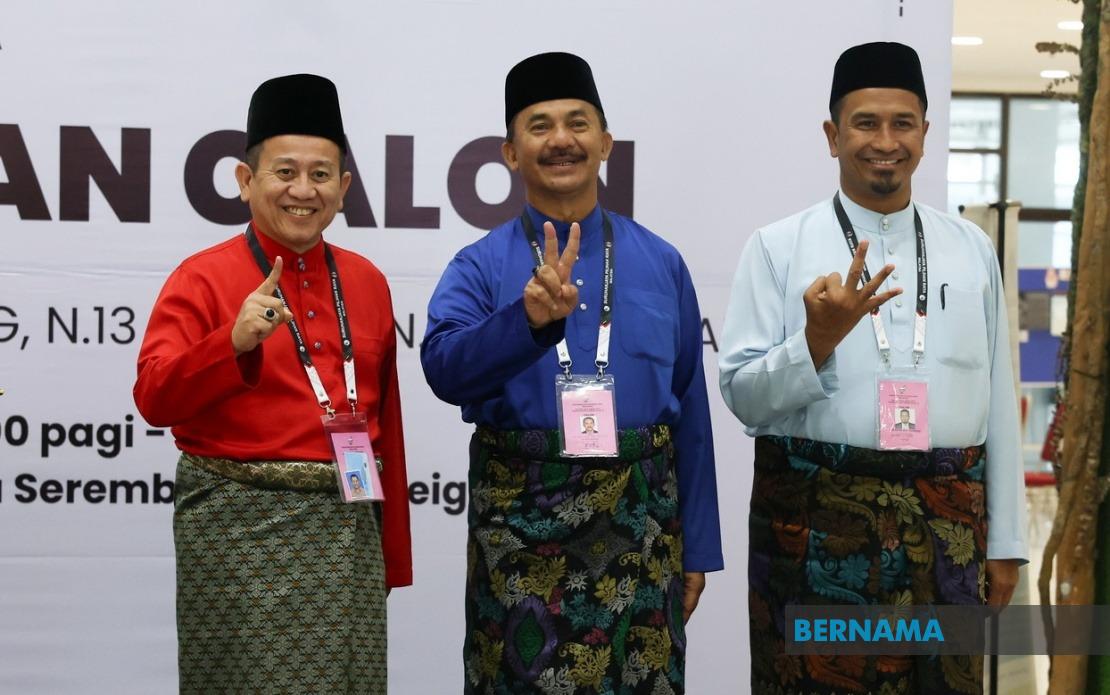
A notable wave of political renewal is sweeping through Negeri Sembilan's state election landscape, with major political coalitions strategically deploying large cohorts of fresh candidates to contest the 36 State Legislative Assembly seats. This deliberate mixing of seasoned politicians with first-time candidates reflects broader strategies within Malaysian politics to balance experience with renewed engagement, offering voters a notably different slate of representatives compared to previous electoral cycles in the state.
Pakatan Harapan's commitment to contesting all 36 seats demonstrates the coalition's determination to maintain electoral presence across every constituency, whilst signalling generational transition through its candidate roster. The decision to field 24 new faces alongside incumbent politicians suggests PH recognises the need to energise grassroots support whilst retaining the institutional knowledge of established members. This approach represents a calculated gamble—new candidates can mobilise younger voters and represent fresh perspectives, yet they lack the proven track record of sitting assemblymen. Negeri Sembilan PH Chairman Datuk Seri Aminuddin Harun's tactical repositioning from Sekamat to Linggi underscores how even senior party figures adjust their strategies to optimise electoral outcomes, demonstrating flexibility within PH's broader electoral architecture.
The presence of high-profile national figures within PH's slate adds substantial credibility to the coalition's state-level campaign. Transport Minister and DAP Secretary-General Anthony Loke's decision to defend the Chennah seat provides an anchor of national prominence, potentially elevating the visibility and resource allocation for PH's entire Negeri Sembilan campaign. Such positioning of heavyweight cabinet members in state elections creates cascading effects throughout the campaign, influencing media coverage, fundraising capabilities, and voter perception of a coalition's seriousness regarding state governance.
Barisan Nasional's candidate configuration reflects a less aggressive generational shift than PH, with 13 new faces selected from a 25-candidate roster. This more conservative approach suggests BN's strategy prioritises retaining sitting members with established local networks, whilst introducing new blood selectively rather than wholesale. The retention of key figures such as Foreign Minister Datuk Seri Mohamad Hasan, who will defend the Rantau seat, anchors BN's campaign with recognisable national leadership. Similarly, Negeri Sembilan BN Chairman Datuk Seri Jalaluddin Alias's continuation in Pertang indicates confidence in incumbent performance, though the strategic repositioning of Datuk Ismail Lasim from Senaling to Juasseh suggests tactical adjustments based on perceived electoral dynamics.
Perikatan Nasional's multi-party structure creates additional complexity within the 11-seat contest, with PAS, Gerakan, Wawasan, and MIPP each contributing candidates. This distributed approach fragments PN's campaign message across multiple organisational structures, potentially weakening coordination compared to PH's unified command structure, yet simultaneously allowing component parties to maintain distinct political identities and appeal to specific voter demographics. The presence of smaller coalition partners provides geographic and communal representation that single-entity coalitions cannot easily achieve.
Bersatu's decision to contest using its own party logo rather than the Perikatan Nasional banner represents a significant organisational signal, suggesting either renewed independence or recalibration of coalition relationships ahead of federal-level dynamics. Information Chief Datuk Tun Faisal Ismail Aziz's candidacy as a new face, alongside established figures like Hanifah Abu Bakar defending Labu, indicates Bersatu is pursuing a balanced growth strategy within the state. This emblematic shift reverses the 2023 approach and may signal broader realignment possibilities within Malaysia's political landscape, with implications extending beyond Negeri Sembilan into federal coalition mathematics.
The participation of micro-parties and independent candidates—including Parti Berjasa, ASLI, PSM, and four independents—reflects Malaysia's increasingly fragmented electoral environment. Whilst these fringe contenders are unlikely to secure seats in a 36-member assembly, their presence demonstrates declining barriers to electoral entry and expanding political contestation. For voters in specific constituencies, such candidates may present principled alternatives if major coalitions fail to adequately address localised concerns, though strategic voting mathematics typically favour consolidation around establishment parties.
The demographic spectrum among candidates reveals generational and political evolution within the state. The age differential between 70-year-old Datuk Abd Latiff A Tambi and 23-year-old Leevineshwaraan Murugan encapsulates the electoral transition underway, with newer politicians representing constituencies with distinct policy priorities and communication styles. Younger candidates typically emphasise digital engagement, environmental concerns, and economic opportunities relevant to post-Covid cohorts, whilst maintaining sufficient connection to traditional concerns that continue mobilising older demographics. This generational breadth theoretically enables parties to address diverse electoral segments, though execution remains contingent on campaign effectiveness.
The total of 103 confirmed candidates across various parties demonstrates competition intensity, with mathematical implications for vote splitting in three-cornered contests. In constituencies where multiple coalitions field competitive candidates, vote fragmentation may determine outcomes less through positive endorsement of leading candidates and more through distribution of anti-establishment or protest voting. Malaysian voters increasingly recognise such dynamics, with sophisticated campaigning attempts to predict and influence cross-coalition vote transfer patterns, particularly in marginal constituencies where single-digit majorities remain common.
For Malaysian and Southeast Asian observers, Negeri Sembilan's electoral configuration signals broader themes within regional democracy. The emphasis on candidate renewal reflects democratic systems' attempts to balance institutional continuity with generational demands for political change. Across Southeast Asia, similar pressures manifest in various ways—Thailand's party formation dynamics, Indonesia's regional leadership transitions, and the Philippines' political family recalibrations all grapple with comparable tensions between establishment consolidation and grassroots pressure for renewal. Negeri Sembilan's approach, blending incumbency with fresh candidacies, represents one pragmatic equilibrium point within these broader trajectories.
The electoral timeline, with early voting scheduled for July 28 and polling day on August 1, provides voters with concentrated decision-making periods. This compressed campaign window—characteristic of Malaysian state elections—intensifies candidate exposure requirements and media saturation, favouring well-resourced coalitions capable of rapid mobilisation. For new faces particularly, the shortened timeframe presents genuine disadvantages in establishing name recognition and policy platforms, potentially benefiting established politicians whose prior electoral victories ensure baseline familiarity among constituents. This temporal factor thus may partially offset the theoretical advantages of candidate renewal, tilting outcomes toward incumbents unless new candidates possess exceptional media presence or grassroots infrastructure.
The Negeri Sembilan election ultimately represents a microcosm of contemporary Malaysian electoral politics, where technological advancement, demographic shifts, and political fragmentation create simultaneous pressures for both stability and change. The candidate configurations adopted by major coalitions reveal their interpretations of voter sentiment and optimal competitive positioning. Whether this infusion of new faces genuinely produces electoral change or merely recycled outcomes under different personnel remains the central question facing voters in the state. Early August's results will provide data regarding the electoral weight Malaysian voters assign to political renewal versus institutional experience.

