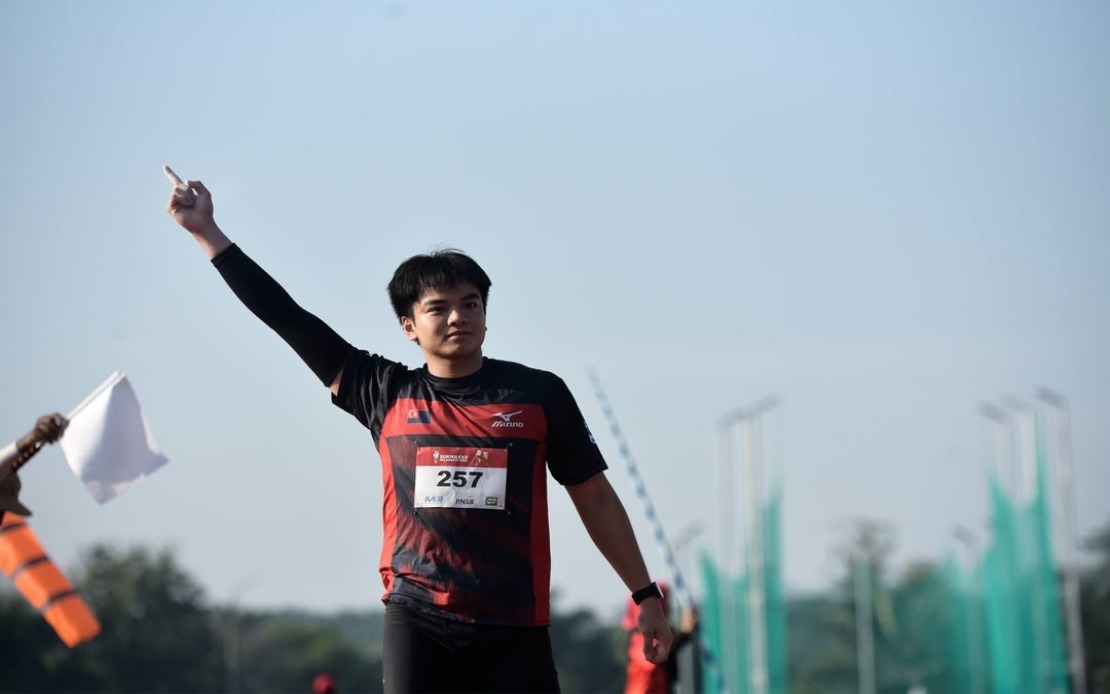
Chai Kai Le's path to sporting excellence began not on the javelin runway but on the badminton court, where a simple observation from an alert teacher would ultimately reshape his athletic trajectory. The 18-year-old Johorian, competing at the Selangor 2026 Malaysia Games, has now etched his name into SUKMA history after unleashing a javelin throw of 64.44 metres at the Universiti Putra Malaysia Sports Centre, shattering a record that had stood unchallenged for more than a quarter-century.
The previous Games record of 62.33 metres, established by Sarawak's Kho Mei Kuan during the 2000 Penang edition, belonged to a different era of Malaysian athletics. Kai Le's second-attempt performance represents not merely a marginal improvement but a significant leap forward, signalling a new generation of strength and technique in field events at the Games. The achievement carries particular resonance for Johor's athletics programme and underscores the potential within Malaysia's regional sports development systems when talent identification and nurturing mechanisms function effectively.
Kai Le's transition from shuttlecock to spear emerged from the keen eye of an educator who recognised the biomechanical qualities required for javelin success. While pursuing badminton during his primary years, the explosive arm movements and release mechanics that define the sport caught his teacher's attention. Rather than remaining confined to the badminton court, this observation prompted an experimental shift when he reached Standard Six—a turning point that demonstrates how informal talent spotting within schools can have profound long-term consequences for individual athletes and national sporting pipelines.
The teenager's developmental journey accelerated considerably once he committed fully to javelin training. He began attending open competitions and observing elite throwers in action, a process that transformed abstract ambition into concrete aspiration. Witnessing the distances achieved by senior athletes provided both inspiration and a tangible benchmark, motivating him to pursue excellence in a discipline that demanded technical precision, explosive power, and sustained dedication. This exposure to higher performance levels proved instrumental in shaping his competitive mentality and establishing realistic yet ambitious goals.
Beyond the athlete's individual talent and determination, Kai Le's success reflects the crucial role of parental support in sustaining long-term athletic development, particularly during the formative teenage years. His father, Chai Yin Huan, has provided consistent financial and emotional backing throughout the athletic journey, prioritising treatment and recovery when injuries arose whilst ensuring access to quality equipment. This parental commitment extends beyond merely funding participation; it represents an investment in the child's wellbeing and potential, reflecting values increasingly common among families of emerging Malaysian athletes who recognise the opportunities that elite performance offers.
The financial demands of javelin training often remain underestimated in public discussions of sports development. Equipment replacement, physiotherapy sessions, travel to competitions, and coaching fees accumulate rapidly, creating barriers for talented athletes from financially constrained backgrounds. Kai Le's father demonstrated consistent willingness to absorb these costs without demanding guarantees of achievement, instead prioritising his son's health and personal satisfaction. This unconditional support proved particularly critical during recent years when injuries threatened to derail momentum.
As a pre-university student at Bukit Jalil Sports School, Kai Le has balanced academic responsibilities with intensive athletic training, compounding the physical and mental demands of elite sport development. Throughout the past twelve months, he has battled recurring injuries affecting his back, right shoulder, and elbow—chronic issues that have not fully resolved despite ongoing treatment and rehabilitation efforts. Many athletes would have reduced intensity or postponed major competitions under such circumstances, yet Kai Le persisted with training and competition schedules, demonstrating the psychological resilience required to perform under adversity.
Earlier this year, competing at the Indonesia Open, Kai Le established both a personal best and a national under-20 record of 65.65 metres, indicating that his physical capacity extends beyond the SUKMA performance and that the record-breaking throw did not represent his absolute ceiling. This progression suggests systematic improvement rather than a one-off achievement, implying that with continued development and injury management, further advances remain attainable. The under-20 national record particularly signifies that his performance trajectory remains strongly upward despite navigating persistent injury challenges.
Kai Le has established his immediate next target at 70 metres, a psychologically significant threshold that would position him competitively within regional and potentially international contexts. His qualification aspirations for the 2027 SEA Games provide concrete motivation for the upcoming twelve-month training cycle. To support this push, he has scheduled a month-long training expedition to Japan early next year, accessing specialised coaching and sports science resources unavailable domestically. This international training placement reflects Malaysia's evolving approach to athlete development, increasingly incorporating overseas training camps to access world-class facilities and expertise.
The investment in overseas training exposes Kai Le to different coaching methodologies, training environments, and performance benchmarks whilst potentially accelerating his injury recovery protocols through access to advanced sports medicine facilities. Japan's excellence in throwing events and sports science research makes it a strategically sound destination for developing javelin throwers. Such opportunities, once rare for Malaysian athletes outside basketball or badminton, increasingly characterise the elite sports development pathway as national programmes become more sophisticated and internationally connected.
Kai Le's achievement carries broader implications for Malaysian athletics development. His age suggests a long competitive career ahead, with potential to establish himself as a regional force in field events if injury management remains effective and training intensity continues. The record he set establishes a benchmark that will likely inspire younger athletes whilst also raising the performance standard expected at future Games editions. Should he successfully progress toward 70 metres and beyond, Malaysian javelin could transition from a niche discipline into a consistent medal contributor at regional competitions.
The psychological dimension of Kai Le's success merits attention alongside the technical accomplishment. His confidence—expressed simply as "if you really want it, it will come"—reflects the mindset cultivated through early talent identification, consistent parental support, quality coaching at Bukit Jalil Sports School, and measured competitive success. This combination of factors created an athlete who can absorb setbacks like injuries without abandoning goals, a quality increasingly identified as essential for sustainable excellence in sport.
As Kai Le progresses toward his 70-metre target and broader international ambitions, his journey embodies contemporary pathways through Malaysian athletics. Beginning with a teacher's observation on a badminton court, progressing through school sports systems, supported by parental commitment and institutional coaching resources, and now accessing international training opportunities, his trajectory demonstrates how multiple elements must align for record-breaking performances to emerge. His SUKMA achievement represents not a pinnacle but a waypoint in what promises to be a significant athletic career.

