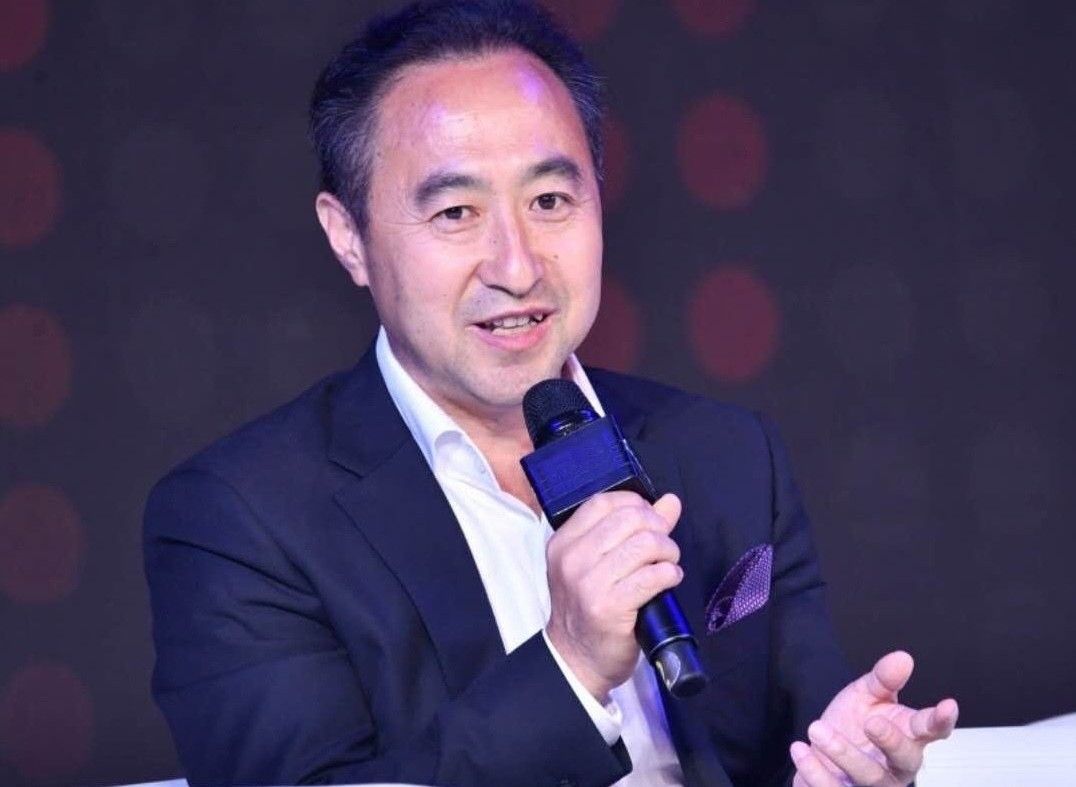
CJ Wang's journey from provincial Chinese classroom to billionaire entrepreneur began with a humble recognition that manual labour could be transformed by electricity and ingenuity. The 1969-born appliance magnate, now worth US$10.4 billion, represents a distinctive model of wealth creation in modern China: one built not on finance or real estate, but on the methodical improvement of everyday household products. His decision to leave teaching in 1994 proved pivotal, initiating a career arc that would ultimately reshape consumer expectations around kitchen appliances across Asia and North America.
Wang's formative years in Yantai, Shandong province, were steeped in the rhythms of traditional Chinese breakfast preparation. The young boy would assist family members in grinding soybeans using cumbersome stone mills—a labour-intensive process that formed the foundation of his later ambitions. After completing his electrical engineering degree at Beijing Jiaotong University, he initially followed his parents' professional trajectory into education. The decision felt inevitable at the time, a natural inheritance rather than a deliberate choice. Yet internal restlessness ultimately proved stronger than familial expectation. In his first international media interview with Time magazine, Wang reflected on this turning point with candour, acknowledging that while teaching satisfied conventional markers of success, it lacked the scope for genuine innovation that he craved.
The breakthrough came in 1994 when Wang developed the world's first electric soy milk maker—a device that mechanised the grinding and heating processes his childhood self had performed manually. The prototype was crude by later standards, far from the refined machines that would eventually dominate Chinese kitchens. Yet its fundamental contribution was undeniable: it proved that traditional breakfast staples could be democratised through appropriate technology. The market gap Wang identified was precise: convinced that soy milk and youtiao (fried dough sticks) would remain breakfast essentials across generations of Chinese consumers, he recognised an opportunity to eliminate the drudgery that had long constrained their preparation. That same year, he established Joyoung, a kitchen appliance brand that would eventually stock the homes of millions.
Joyoung's early trajectory demonstrates the power of focusing on achievable excellence rather than chasing prestige. By 2004, merely a decade into operations, the company had sold more than one million soy milk makers. The brand subsequently expanded into complementary categories—blenders, rice cookers, and other small kitchen appliances—all sharing Joyoung's reputation for affordability married to genuine reliability. This positioning proved particularly effective in the vast Chinese middle-income market, where consumers increasingly sought quality without extravagant pricing. For more than two decades, Wang methodically built Joyoung into a recognisable leader within Chinese domestic markets, eventually securing a listing on the Shenzhen Stock Exchange. However, by the late 2010s, Wang confronted a challenge that frequently constrains successful domestic enterprises: the difficulty of translating local dominance into global recognition.
Rather than attempting to build Western market presence from scratch—a costly and uncertain proposition—Wang pursued acquisition of an established American player. SharkNinja represented precisely the target he sought: a company with proven products generating consumer enthusiasm through vacuums and blenders, already possessing distribution networks and brand recognition that had eluded Joyoung internationally. Wang's assessment extended beyond product merit to organisational capability. He impressed upon SharkNinja's existing leadership, particularly CEO Mark Barrocas, that continuity under his ownership would be valued rather than destabilised. This represented shrewd judgement, recognising that institutional knowledge and established relationships within Western consumer markets possessed value that could not be rapidly replicated.
Wang's private equity vehicle acquired a controlling stake in SharkNinja during 2017, subsequently positioning it within his broader holding company JS Global Lifestyle. The parent entity launched on the Hong Kong Stock Exchange in 2019, providing the capital and operational platform for aggressive transformation. Wang's diagnosis of SharkNinja's constraints proved acute. The company's product portfolio remained relatively constrained; its sales strategy depended excessively on traditional television infomercials, lacking both social media sophistication and comprehensive retail distribution; and its manufacturing footprint, concentrated among a limited number of Chinese suppliers, restricted flexibility and constrained the pace of innovation. These were surmountable challenges rather than structural deficiencies, provided appropriate capital and strategic direction could be mobilised.
The restructuring that followed applied the lessons Wang had absorbed across decades of building Joyoung. SharkNinja dramatically expanded its product range, modernised its go-to-market approach to prioritise digital and social channels, and substantially invested in in-house research and development capacity. Under Barrocas' operational leadership and Wang's strategic oversight, the company began engineering products with explicit consideration for viral social media potential, particularly on TikTok where younger consumers aggregate. The two-brand architecture—Shark focused on vacuums and beauty categories, Ninja concentrating on kitchen appliances—allowed differentiated positioning while maintaining unified operational infrastructure. This bifurcation proved commercially astute, enabling SharkNinja to compete across disparate categories without brand confusion.
SharkNinja's growth trajectory under Wang's ownership accelerated dramatically. The company transitioned from a respectable but niche American brand into a multibillion-dollar enterprise commanding substantial market share across multiple appliance categories. This expansion culminated in separation from JS Global Lifestyle and a 2023 direct listing on the New York Stock Exchange, granting SharkNinja independent public company status. Wang retained roughly 35 percent ownership of SharkNinja through this transition, while maintaining a 52 percent stake in JS Global Lifestyle. His combined net worth of US$10.4 billion, calculated as of August 2026, reflected the value created through this strategic architecture.
Wang's compensation packages underscore the scale of wealth he commands. In 2024, he received total director remuneration exceeding HK$520 million (US$66.3 million) across his various corporate roles, positioning him as Hong Kong's second-highest-paid director according to financial data platform Webb-site. These figures, while substantial, appear modest relative to his underlying shareholdings and net worth, reflecting his existing billionaire status and the diminishing marginal utility of employment compensation at such levels of wealth. Yet the compensation packages themselves represent acknowledgment of his continuing operational engagement and value-creation activities across multiple business domains.
Wang's public emergence and willingness to grant international media interviews, including his first Time magazine conversation, signal a calculated reassessment of his public posture. Colleagues consistently describe him as soft-spoken, private by temperament, and uninterested in the celebrity culture that frequently accompanies billionaire status. He has identified golf and Macallan whisky as recreational pursuits. Yet his recent decision to place his personal narrative on record reflects a pragmatic response to geopolitical realities. Amid intensifying US-China trade tensions and heightened American scrutiny regarding Chinese capital flows, Wang recognised that permitting speculation to define external perceptions of his background and intentions risked genuine commercial and regulatory complications. By proactively narrating his own story—emphasising humble origins, technological innovation, and value creation rather than political or strategic considerations—he seeks to establish narrative control during a period of rising bilateral suspicion.
Wang's trajectory carries particular salience for Malaysian and Southeast Asian observers navigating the region's complex position within US-China competition. His career trajectory demonstrates that substantial wealth and global commercial significance can be generated through patient focus on incremental product improvement and meeting genuine consumer needs, rather than through politically-connected dealmaking or speculative capital deployment. Joyoung's success in Chinese markets and SharkNinja's subsequent ascent in American consumer categories illustrate how enterprises can transcend national boundaries when built on demonstrable product merit and operational excellence. For Malaysian entrepreneurs and investors, Wang's example suggests that the pathway to significant global influence need not require either Western venture capital patronage or state backing, but instead reflects disciplined execution across extended timeframes.

