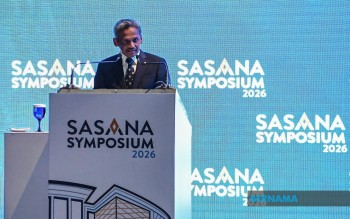
The annual Sasana Symposium hosted by Bank Negara Malaysia this year took an unconventional turn when Governor Datuk Seri Abdul Rasheed Ghaffour abandoned the typical central bank playbook of dense economic data and technical jargon. Instead, he grounded his address in a living parable: the Gelam tree, a seemingly ordinary plant native to Malaysia's east coast that embodies surprising lessons about economic survival and renewal.
The Gelam tree (Melaleuca Cajuputi) possesses an unremarkable appearance, yet demonstrates remarkable resilience in the face of environmental adversity. Growing in acidic peat soil, stagnant water, and areas prone to wildfires, the tree does not resist these harsh conditions but rather transforms itself through them. Its survival mechanism centres on continuous renewal—perpetually shedding its outer bark to remain adaptable and vigorous. This biological reality became the Governor's springboard for discussing structural economic reform, drawing a direct parallel between botanical adaptation and policy evolution. The metaphor resonated throughout the symposium, becoming a touchstone for discussions about how Malaysia must shed inefficiencies and outdated systems to navigate an unpredictable global economy.
Ghaffour's use of the Gelam tree served a deliberate pedagogical purpose. Rather than lecturing on monetary policy transmission mechanisms or financial stability frameworks, he invited delegates to contemplate what sustained adaptation looks like in natural systems, then extended that insight to macroeconomic management. Structural reforms, in this framing, are not abstract exercises in technocratic governance but essential mechanisms through which economies remain viable across changing circumstances. The analogy challenges the notion that economic systems should remain stable and static; instead, it suggests that true stability emerges through managed, continuous transformation.
Former Bank Negara Deputy Governor and former OCBC Bank Singapore chairman Datuk Ooi Sang Kuang expanded on this theme during the plenary session on resilience, anchoring the discussion in Malaysia's concrete financial sector history. He observed that the monetary and financial stability visible today was not achieved instantaneously but accumulated through decades of deliberate foundation-building, particularly strengthened following the 1997 Asian Financial Crisis. The crisis became a formative experience that prompted Malaysian policymakers and financial institutions to collaborate intensively, creating supervisory frameworks and risk management protocols that subsequently proved their worth during the global financial crisis and the pandemic. Ooi emphasised that financial stability functions as a prerequisite for the real economy to flourish—without sound monetary conditions and efficient capital allocation, even promising economic opportunities cannot materialise effectively.
The mechanisms through which Malaysia built this resilience deserve closer examination. Ooi highlighted the importance of continuous risk identification combined with rigorous stress testing across the financial system. Bank Negara Malaysia has cultivated a robust supervisory architecture that regularly examines institutional balance sheets, tests responses to adverse scenarios, and validates the assumptions underlying financial stability. This work is neither completed nor dormant; rather, it constitutes an ongoing cycle of assessment and refinement. When subsequent crises arrived, the financial sector's capacity to absorb shocks and continue financing households and businesses became instrumental in enabling faster economic recovery. This track record stands as testament to the value of institutional frameworks designed with resilience rather than merely growth in mind.
Yet structural reform demands more than technical expertise and policy coherence—it requires navigating the political economy of change. Dr Nungsari Ahmad Radhi, chairman of Khazanah Research Institute, brought this dimension into focus during the same plenary session, noting that reforms operate in a political marketplace fundamentally distinct from capital markets. Implementing reforms imposes real costs on identifiable groups: firms face disruption to established business models, households absorb adjustments to living costs, and entire sectors must recalibrate operations. These transition costs are not merely abstract economic concepts but tangible burdens borne by workers, entrepreneurs, and families. Policymakers cannot dodge this reality through messaging or compromise; they must acknowledge that meaningful reform necessarily involves distributional consequences, with some sectors and groups bearing heavier burdens than others.
The tradeoffs inherent in reform became concrete in Malaysia's recent fiscal and subsidy adjustments. Ghaffour recalled that measures including targeted diesel subsidies, subsidy rationalisation across multiple domains, and selective tax modifications were phased in strategically to allow households and businesses adaptation periods. These moves required difficult political choices but generated fiscal space essential for investing in education, healthcare infrastructure, climate resilience capacity, and social protection systems. Without such reforms, government capacity to fund these essential areas would have remained constrained. The sequencing and transparency of these measures mattered significantly—sudden shocks create disruption and resentment, whereas graduated implementation allows economic actors to adjust expectations and behaviour accordingly.
Malaysia's current macroeconomic position validates this reform strategy. Growth remains on a steady trajectory, inflation tracks within target ranges, and the central bank maintains a stable macroeconomic environment alongside a reinforced financial system. These conditions create what Ghaffour termed "the means to take the long view"—an uncommon luxury for policymakers often buffeted by short-term pressures. With inflation controlled and growth stable, Malaysia possesses the room to pursue reforms that might temporarily discomfort constituencies but ultimately strengthen institutional and economic foundations.
The historical precedent Ghaffour invoked enriches understanding of the Gelam metaphor. For generations, Malay shipbuilders used Gelam bark fitted between wooden planks to construct vessels capable of flexing under wave pressure rather than splintering. This ancient maritime knowledge encoded a profound principle: resilience derives not from rigid resistance to external forces but from structured adaptability. Malaysia's development trajectory has similarly rested on this principle. Each generation confronted distinctive challenges and made consequential choices about responses to evolving global conditions. The 1970s required different reforms than the 1997 crisis, which demanded different approaches than the 2008 financial meltdown and subsequent pandemic. Each period necessitated shedding certain practices and developing new capabilities.
The contemporary reform agenda continues this lineage. Structural adjustments underway across fiscal policy, financial regulation, and subsidy architecture represent not departures from Malaysia's development philosophy but extensions of it. The challenge facing all stakeholders—government, financial institutions, civil society, and individual economic actors—involves collaborative crafting and refinement of policies that support both immediate stability and long-term resilience. Without broad-based participation in policy development and genuine willingness to adapt implementation based on evidence of consequences, even well-designed reforms risk foundering. The Gelam tree survives not through isolation but through integration with its ecosystem; similarly, Malaysian economic reforms require engagement across the entire political economy.
Looking forward, the symposium's emphasis on resilience through adaptation positions Malaysia's policy community to navigate uncertainty with greater confidence. The principle articulated through the Gelam metaphor transcends neat policy categories and sectoral divisions—it applies equally to monetary policy, financial regulation, subsidy design, investment in human capital, and climate adaptation. Malaysia's development story, in this reading, becomes ongoing navigation between maintaining bearings amid change and transforming structures that no longer serve contemporary needs. Realising ambitious reform agendas requires precisely this balance: clear direction coupled with adaptive implementation, strong institutional frameworks paired with genuine stakeholder engagement, and acceptance that transformation inevitably creates friction alongside progress.

