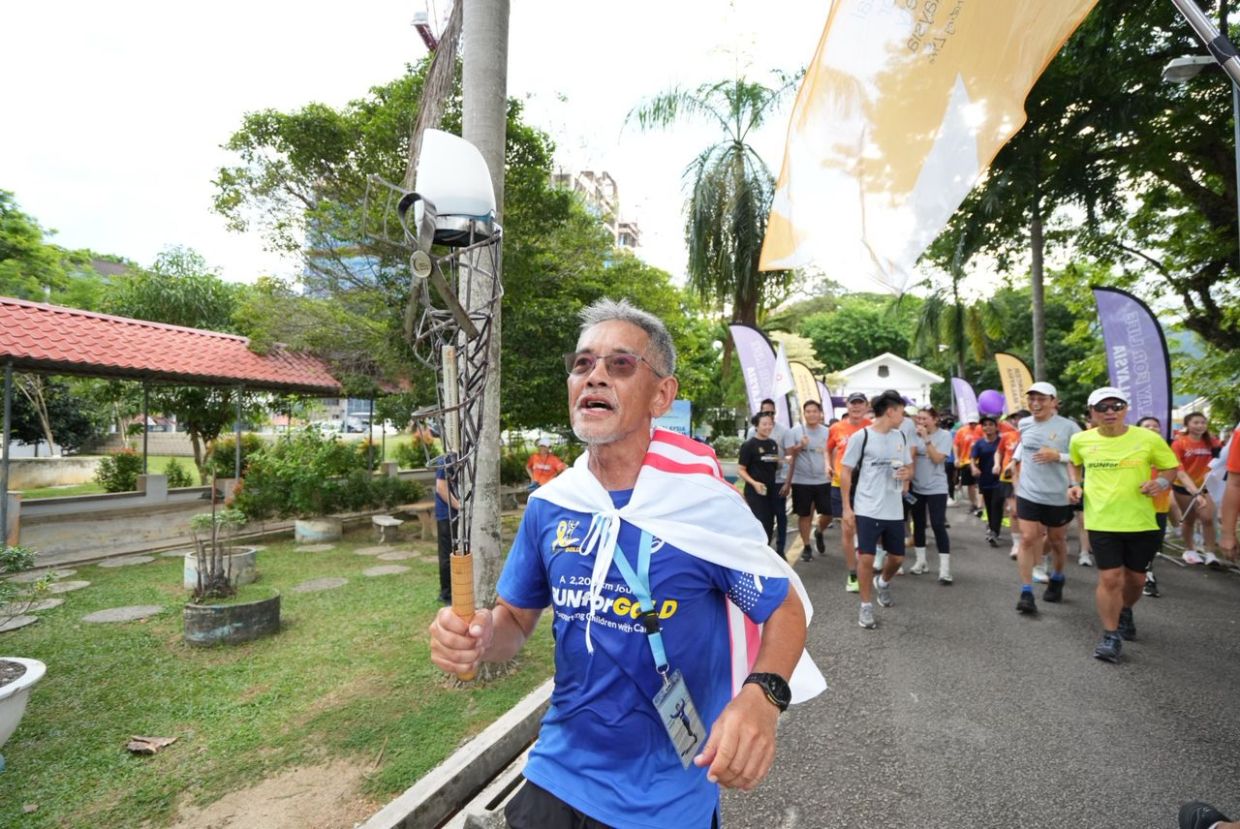
When Goh Joo Lee succumbed to cancer in 2024 at the age of 63, her husband of decades found himself navigating an unfamiliar terrain—not the highways of Peninsular Malaysia, but the landscape of loss and displacement. SG Lim, a 66-year-old retired civil engineer from Penang whose name itself stands as initials for his determination, refused to let retirement become a period of withdrawal. Instead, he fractured his time across three continents, splitting himself between his children in Australia, his aging mother and siblings in Malaysia, and moments of solitude in Hong Kong. Yet none of these journeys addressed the profound emptiness left by the departure of the woman he described simply as loving and caring—qualities that extended even from her hospital bed, where she fretted over her husband and children rather than her own deteriorating condition.
The memory that crystallises Goh's character most vividly for Lim involves a stranger. While hospitalised herself, Goh asked her husband to purchase flowers for a woman battling cancer in the opposite ward, a patient who had endured hospitalisation for over a year. The transaction was small, but its resonance enormous—what moved Lim was not the gesture itself, but witnessing the recipient's joy and the visible relief it brought to her devoted husband. This vignette encapsulates how Goh's compassion transcended the boundaries of kinship, extending into the lives of those she would never know beyond a hospital corridor. Lim carries these memories alongside recollections of an artistic woman who painted and drew, leaving behind digital footprints of creativity on social media that serve as ongoing reminders of her aesthetic soul.
Transforming sorrow into momentum required an intellectual spark. Lim encountered Laurence Carter's book—though the title remains unspecified in his telling—which kindled an idea that grew into a resolve: to traverse Peninsular Malaysia on foot, covering its length through running and walking. Rather than keeping this vision private, Lim sought counsel from Carter himself, demonstrating that personal ambition aligned with a larger purpose. The vision crystallised when the National Cancer Society Malaysia (NCSM) embraced the concept, christening it "Run For Gold" and anchoring it to a dual mission: raising both awareness and financial resources for children wrestling with malignancy.
The preparation was methodical and consuming. Having completed the Sydney Marathon the previous August, Lim recognised he faced an entirely different challenge than a single race day. He systematised his conditioning with the rigour of an engineer: waking at five in the morning to adapt his circadian rhythms, intentionally running during late morning hours to acclimatise to Malaysia's punishing heat, incorporating strength training sessions to fortify his aging frame, and teaching himself video editing to document and share his journey across social media platforms. This wasn't improvisation—it was deliberate, structured training for a 2,200-kilometre odyssey spanning eleven states and federal territories.
The emotional architecture of the mission solidified during his first visit to a children's oncology ward organised by NCSM. The visual tableau—frail children and helpless-looking parents—jarred Lim into the profound rightness of his undertaking. No longer was this merely an endurance test honouring his late wife; it had become a practical instrument for alleviating suffering. The abstract notion of "helping" crystallised into concrete purpose: saving lives and relieving pain for children and their families caught in cancer's grip. This realisation, more than any training metric or kilometres logged, became the true fuel for his journey.
Along the roads of Peninsular Malaysia, Lim encountered people whose own acts of compassion mirrored the qualities he mourned in Goh. One such encounter occurred in Pekan, Pahang, where a retired teacher and his wife joined Lim's journey across multiple stages—through Johor, Melaka, and finally Penang. The couple became not merely witnesses but participants, running alongside Lim while the wife offered logistical support from the roadside. More significantly, they became ambassadors for the cause, deliberately stopping at eateries and community spaces to engage strangers in conversation about childhood cancer, converting their presence into advocacy. Watching them together, their evident affection palpable even in the midst of advocacy work, stirred in Lim a fresh wave of longing for the woman he had lost. Their partnership became a mirror reflecting what he no longer possessed.
The final 80-kilometre stretch into George Town, Penang represented more than the conclusion of a physical endurance feat. When Lim crossed that finish line after nearly three months on Malaysian roads, his first utterance was addressed to the person no longer present to hear it: "Darling, we made it!" The victory belonged to Goh as much as to him, a completion that she would never witness but for which she had been the catalyst. The irony was not lost on Lim—the woman who had inspired this gruelling undertaking became its silent co-conspirator, present in absence.
What emerged from the crowd that greeted Lim's arrival surprised him with its scale and diversity. Family members, childhood friends, former classmates, and complete strangers converged to welcome him home, their presence testifying to something unexpected: that a journey conceived in grief had transformed into a public statement about collective responsibility toward vulnerable children. The emotional intelligence required to orchestrate such a complex journey—honouring private loss while mobilising public resources—speaks to Lim's understanding that the most potent memorial is one that extends beyond reminiscence into action. By converting his suffering into service, he ensured that Goh's legacy would not remain confined to photograph albums or hospital ward memories, but would instead ripple outward through the lives of children she never knew, yet whose futures her husband now fights to protect.
The Run For Gold campaign represents a model of purpose-driven activism emerging from personal tragedy, demonstrating how grief need not terminate in stasis. For Malaysian readers, particularly those within communities affected by cancer or those contemplating how to honour departed loved ones, Lim's example offers an alternative narrative to resignation. Southeast Asia's ageing population and rising cancer incidence rates mean that Lim's journey intersects with a broader public health imperative. His determination to combine personal memorial with fundraising infrastructure suggests a replicable template for channelling loss into tangible benefit. In choosing to run rather than retreat, Lim has created not merely a testament to his wife's memory, but a pathway for others to transform their own sorrows into catalysts for community healing.

