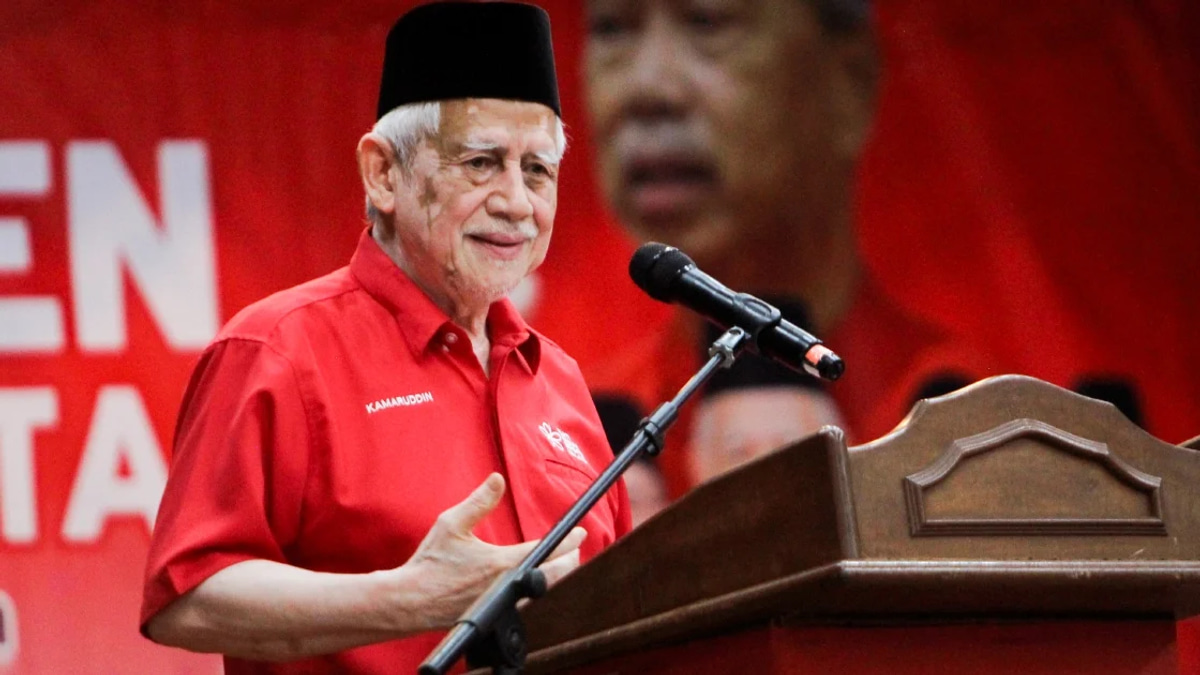
A pivotal moment of state detention in his youth became the genesis of purpose for Dr Shukri Abdullah, Kedah's honoured Tokoh Maal Hijrah, who received recognition and RM15,000 in cash during the state-level celebration in Alor Setar. The 76-year-old has built a remarkable trajectory from political activism to academic excellence to sustained mentorship—a journey he attributes fundamentally to the consequences of his two-week Internal Security Act detention in 1974.
That detention stemmed from his participation in the Baling Demonstrations while serving as a student leader at Universiti Sains Malaysia. The experience crystallised his understanding that personal transformation requires deliberate action and mental reorientation. Upon release, Dr Shukri found his scholarship revoked, a setback that would have derailed many. Instead, he reframed the loss as a clarion call to remake his future trajectory. His perspective reveals an often-overlooked aspect of adversity: the psychological pivot it can trigger when met with determination rather than despair.
Dr Shukri's intellectual ascent defied his earlier academic mediocrity. His school-level performance was unremarkable, resulting in his initial university application being rejected. Rather than accept this verdict, he secured employment as a journalist with Utusan Melayu in 1980 and used the year productively to strengthen his foundations before reapplying to USM. This tactical interlude demonstrates strategic patience—a quality largely absent from contemporary discourse on achievement. Once admitted, his singular focus on academic excellence culminated in an extraordinary outcome: he emerged as USM's overall best student and delivered the valedictory address as the university's top graduate, a distinction particularly striking given his prior scholastic struggles.
His educational ambitions extended beyond Malaysia. Dr Shukri pursued doctoral studies in the United Kingdom, completing a PhD from the University of Essex in an impressively compressed timeframe of two years and two months. This accelerated completion reflects both intellectual capability and focused discipline. Upon returning to Malaysia, he initially leveraged this credential through a lecturing role at USM, occupying a position of knowledge transmission within the academic establishment.
Yet Dr Shukri recognised that formal academia represented only one avenue for impact. He transitioned deliberately away from the university setting to establish himself as a motivational speaker and guide for students and parents, work he has sustained for more than three decades. This career pivot signals a deeper conviction: that systemic change occurs not merely through institutional channels but through direct human engagement and mentorship. His active engagement spanning multiple decades indicates a sustained commitment beyond the ephemeral nature of many professional endeavours.
The personal scaffolding supporting his public work remains robust. Dr Shukri is father to 10 children and grandfather to 22, dimensions of his life that ground his motivational philosophy in lived family experience. He articulates a coherent framework for excellence, centring on discipline, self-awareness, and the psychological capacity to initiate personal transformation. These are not abstract principles but distillations from his own navigational journey through institutional setbacks and personal reinvention.
Critically, Dr Shukri's teachings address a societal challenge particularly acute in Malaysia's development context: the establishment of purposeful direction among young people. He emphasises the necessity of clearly articulated life goals as protective factors against drift into unproductive or self-destructive activities. This resonates powerfully in a nation grappling with questions of youth engagement, social cohesion, and meaningful participation in national development.
His advocacy extends equally to parental involvement in child development. Dr Shukri contends that parents bear foundational responsibility for assisting their children in determining life direction from early developmental stages. This positioning of parental agency aligns with accumulating evidence on family-level determinants of educational and social outcomes, yet remains insufficiently emphasised in public discourse dominated by institutional remedies.
The recognition Dr Shukri received through the Maal Hijrah award, presented by the Raja Muda of Kedah, Tengku Sarafudin Badlishah Sultan Sallehuddin, formalises his contribution to state and national consciousness. The certification and monetary award acknowledge not merely past achievement but validate the ongoing relevance of his mentorship model in contemporary Malaysia.
Dr Shukri's trajectory illuminates a counterintuitive truth: personal transformation often emerges not from privilege or smooth institutional progression but from constraint, loss, and the necessity of deliberate reinvention. His insistence that individuals can fundamentally alter their trajectories through sustained awareness and commitment offers a philosophical corrective to deterministic narratives about social mobility and human potential. For Malaysian policymakers, educators, and parents, his decades-long engagement provides empirical evidence that purposeful mentorship, grounded in authentic personal experience, remains a potent instrument for shaping generations of young people navigating complex societal transitions.