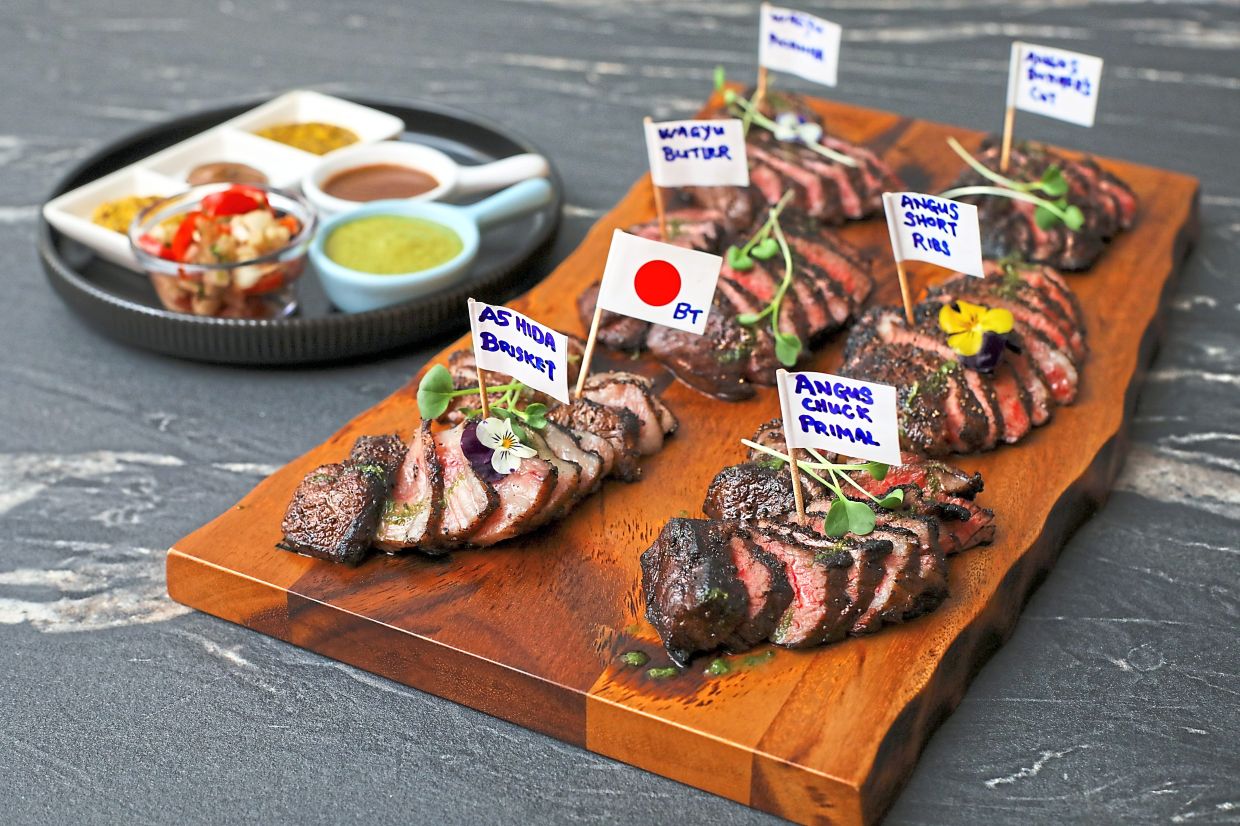
At Meat Feds in Petaling Jaya, chef Yenni Law methodically works her blade through sinew and silver skin, separating the edible flesh from the connective tissue of a beef block. This meticulous butchery represents a quiet revolution in Malaysian fine dining: the elevation of secondary beef cuts from utilitarian ingredients to kitchen centrepieces. Law's establishment has already claimed a Malaysia Book of Records distinction for featuring 20 secondary cuts on its menu—a striking achievement that would have seemed implausible just years ago in an industry long dominated by the premium trinity of striploin, tenderloin and ribeye.
Malaysia's position as Southeast Asia's leading beef consumer has historically been synonymous with prime cuts, which command premium prices and occupy prime real estate on restaurant menus. Yet this preference masks a fundamental inefficiency: prime cuts represent merely 8 to 10 percent of a carcass's usable meat, while secondary cuts comprise the remaining 80 to 90 percent. Traditionally, these abundant secondary portions have been processed into ground beef for burgers and sausages, their inherent flavour and texture profiles remaining largely unexplored by diners and underutilised by chefs seeking to distinguish their offerings.
The landscape has begun shifting noticeably, particularly across the Klang Valley's mid-range and high-end restaurant scene. This transformation has not occurred spontaneously but through deliberate industry intervention. Organisations including Meat & Livestock Australia and distributors such as Lucky Frozen Sdn Bhd have orchestrated seminars, masterclasses and tasting events that position secondary cuts as worthy protagonists rather than supporting players. These educational initiatives have proven remarkably effective in reshaping culinary perception and entrepreneurial calculation simultaneously.
The strategic template for this market transformation draws unexpected parallels to international precedent. During the 1980s, Norway's Minister of Fisheries launched an intensive campaign to introduce Norwegian salmon to Japan's culinary establishment, where the fish was initially dismissed by professional chefs. Within decades, salmon sushi ascended to become Japan's most popular sushi variety—a testament to the power of sustained education and market positioning. The Malaysian beef sector is consciously following this playbook, recognising that chef attitudes and consumer preferences are malleable when combined with expert demonstration and accessible knowledge transfer.
Law herself attributes much of her operational success to participation in industry-organised training sessions where master butchers dissect proper trimming techniques and cost-efficient processing methods. She brings her entire kitchen team to these events, treating them as benchmarking opportunities to verify her own cutting protocols and accelerate her staff's skill development. For restaurateurs and chefs previously inclined to overlook secondary cuts, such structured learning removes a significant barrier—the concern that unfamiliar ingredients might underperform in the kitchen or disappoint discerning diners.
Valeska V, regional manager for South-East Asia at Meat & Livestock Australia, articulates the strategic reasoning underlying these initiatives. Prime cuts benefit from inherent tenderness and relative simplicity of preparation, making them reflexively attractive to both chefs prioritising ease and consumers expecting familiar excellence. However, as culinary sophistication advances and market conditions shift, receptiveness to alternative approaches expands. Critically, the global economic environment now favours exploration: mounting pricing pressure on prime cuts creates genuine incentive for chefs and establishments to develop alternatives that maintain perceived value without inflicting proportional damage to food costs and profit margins.
The financial arithmetic has become compelling. Secondary cuts command prices anywhere from 20 to 60 percent lower than their prime counterparts, translating to savings measured in hundreds of ringgit per serving. Desmond Chong, head chef at Ignis KL, now features three to four secondary cuts on his woodfire grill menu, a decision substantially influenced by market realities rather than purely culinary philosophy. Prime cuts have experienced approximately 30 percent price escalation stemming from global oil crisis ripples and worldwide beef scarcity, whereas secondary cuts have absorbed only modest increases near the 10 percent threshold. This pricing disparity has effectively compelled chefs to reconsider their ingredient hierarchy from economic necessity.
James See, business development director at Lucky Frozen Sdn Bhd, frames this diversification as strategic resilience. Rather than remaining vulnerable to bovine supply shocks and inflationary pressures concentrated in premium cuts, the sector can distribute demand across the complete carcass, creating price stability and supply security. Malaysia's stable appetite for beef, combined with global constraints, makes whole-carcass utilisation a practical imperative rather than an aspirational sustainability goal.
Beyond economics, secondary cuts deliver substantive culinary differentiation that challenges any assumption that premium pricing necessarily correlates with superior eating experience. Flat iron steaks, chuck primal, brisket, picanha and short rib each present distinctive textural and flavour characteristics—varying degrees of chew, bounce, tenderness and malleability that create textural complexity absent in some prime cuts. At Law's establishment, diners encounter a curated spectrum of bovine expression, each cut expressing robust beef character through different sensory pathways. Similarly, at Ignis KL, charcoal-fired short ribs and flat iron steaks achieve silken mouthfeels and beautifully caramelised exteriors that compete aesthetically and sensorially with conventional premium presentations.
Yet the adoption of secondary cuts is not without friction. These ingredients demand substantially greater technical expertise than prime cuts, requiring chefs to develop proficiency in identifying and removing sinew, silver skin and excess fat—tasks complicated by the visual similarity between fat and sinew, where misidentification compromises both yield and final product quality. Law emphasises that mastery demands consistent, deliberate practice and intimate familiarity with each cut's anatomical characteristics and optimal processing approach. This learning curve represents the principal barrier preventing faster industry-wide adoption, particularly among establishments lacking dedicated butchery expertise or the institutional knowledge to train staff efficiently.
The convergence of educational accessibility, economic pressure and demonstrated culinary potential has created a critical juncture. Chefs like Law, who have invested in mastery and reaped both competitive distinction and operational advantage, now operate as proof of concept for peers considering similar transitions. Industry organisations continuing systematic education efforts face receptive audiences no longer dismissing secondary cuts as inferior compromise but increasingly recognising them as offering distinctive character, financial efficiency and entrepreneurial opportunity. What emerged from necessity may well crystallise into a permanent reorientation of Malaysian culinary practice.

