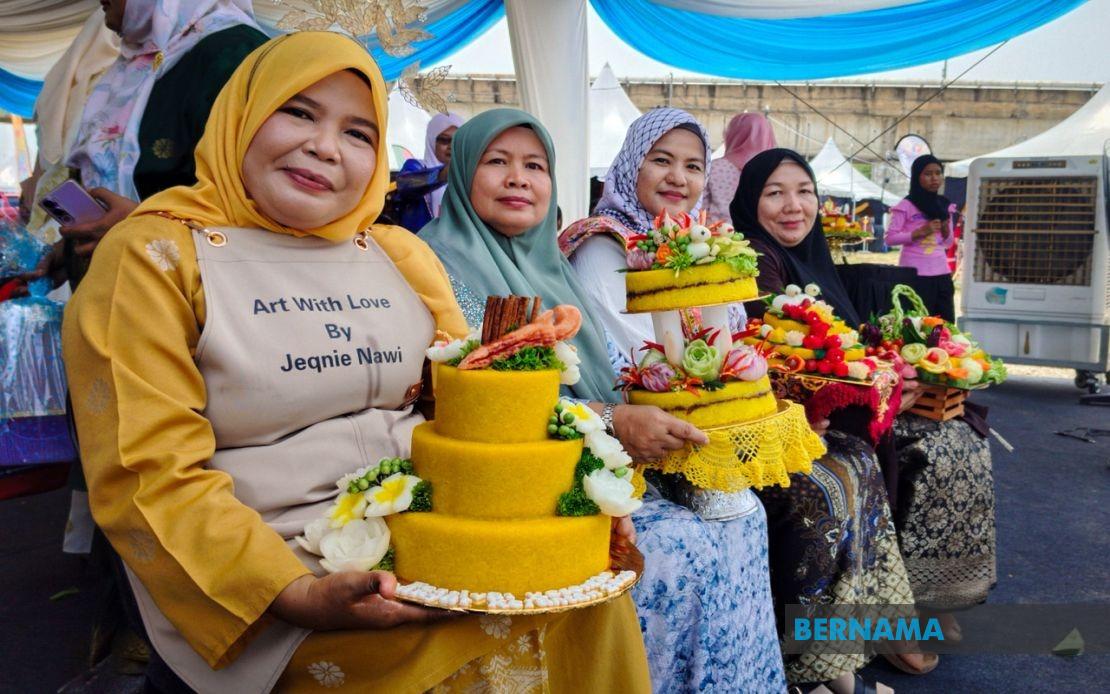
Nortiny Nawi's journey from corporate employment to culinary entrepreneurship offers a compelling illustration of how traditional skills can generate sustainable income in modern Malaysia. Four years after departing her position as a resort marketing officer, the 46-year-old has established herself as a sought-after specialist in creating elaborate pulut kuning arrangements, earning recognition at the Kelantan Folk Arts Festival in Tok Bali where she claimed the top prize with an eight-kilogramme creation adorned with intricate white radish carvings.
Operating from her home in Kampung Gong Cokoh, Nortiny has cultivated a steady stream of clientele that now generates her primary income. The surge in demand reflects deeper consumer trends across Kelantan, where decorative food presentations have become increasingly valued for significant cultural occasions. Her arrangements command pricing between RM100 and RM280 per piece, determined by the weight of glutinous rice and the intricacy of design specifications. This pricing structure positions her work within the premium segment of celebration catering, competing alongside professional event caterers whilst maintaining lower overhead costs through her home-based operation.
The foundation of Nortiny's entrepreneurial success traces back to childhood curiosity about cooking, though her serious pursuit only crystallized upon leaving her resort role. During her marketing career, she deliberately spent leisure hours in the resort kitchen, absorbing techniques and developing refined culinary sensibilities through direct observation of professional chefs. This informal apprenticeship proved instrumental—rather than undertaking formal culinary training, she acquired practical knowledge through contextual learning within a commercial kitchen environment. Upon transitioning to self-employment, she channeled this accumulated expertise into a highly specialized niche that differentiated her from conventional catering services.
Nortiny's customer base now encompasses diverse demographics across Kelantan, including private households, educational institutions, and government departments. This diversification provides business resilience, as demand sources operate across different seasonal patterns. Schools may order arrangements for year-end celebrations and sports days, while government agencies might require them for official functions and commemorative events. Individual customers seek her creations for weddings, bridal dinners (makan beradab), birthday celebrations, and thanksgiving occasions, creating overlapping demand cycles that enable her to accept up to six orders daily during peak periods.
The operational demands of pulut kuning preparation distinguish this business model from many food-based enterprises. Unlike baked goods that tolerate advance preparation and refrigeration, pulut kuning requires same-day execution with work commencing as early as 3 am. The process involves steaming glutinous rice, kneading the hot rice, cooling it to workable temperature, and carefully shaping it into decorative configurations—a labour-intensive sequence that resists automation or batch processing. This requirement for morning production, combined with the thermal sensitivity of the material, means Nortiny must maintain strict operational discipline to meet multiple daily orders without compromising quality or food safety standards.
The physical and temporal demands of this enterprise are substantial, yet Nortiny maintains motivation through customer appreciation and personal pride in continuous improvement. She explicitly attributes her persistence to the intrinsic satisfaction derived from positive client feedback and the ongoing challenge of refining her craft. This psychological dimension of her business—the integration of artistic expression with practical commercial success—provides sustenance beyond financial returns. Such motivation proves particularly valuable in early-stage food businesses, where profit margins often remain modest relative to effort invested.
Looking forward, Nortiny envisions scaling her operation through relocation to larger commercial premises. Current constraints of her home-based setup likely include limited production capacity, storage challenges, and potential regulatory considerations regarding food business operations from residential properties. Expansion to dedicated commercial space would enable simultaneous preparation of multiple orders, potentially accommodating the growing demand she experiences. However, such expansion requires careful financial planning, as commercial rental and kitchen infrastructure represent significant fixed costs that must be offset by increased order volume and pricing capacity.
Her success contributes to a broader economic narrative within Kelantan, where agropreneurship and traditional food crafting increasingly represent viable livelihood pathways. The state's cultural and culinary heritage—encompassing traditions of batik production, weaving, and specialized food preparations—provides foundations upon which entrepreneurs like Nortiny can construct contemporary businesses. Unlike manufacturing sectors dependent on foreign investment or tourism-focused enterprises vulnerable to external shocks, food preparation businesses rooted in local traditions can tap domestic demand and cultural occasions that remain relatively resilient.
Nortiny's trajectory also demonstrates the economic value embedded in traditional knowledge systems. Her pulut kuning expertise comprises techniques refined through generational practice, yet she has successfully packaged this knowledge into a commercial offering that commands premium pricing. This transformation of cultural and culinary heritage into income-generating activity represents a form of knowledge monetization that preserves traditional practices whilst creating contemporary employment. For Malaysia's push toward higher-value-added economic activity, such examples illustrate how cultural distinctiveness and traditional skills can serve as competitive advantages in specialized market segments.
The sustainability of her business model depends on several factors, including her physical capacity to maintain early morning production schedules, the elasticity of demand as awareness expands, and her ability to maintain quality consistency across increasing order volumes. Scaling whilst preserving the artisanal character that distinguishes her arrangements presents an ongoing challenge. Nevertheless, Nortiny's experience validates the economic potential of niche food businesses that combine cultural authenticity with professional execution—a pathway increasingly relevant for Malaysian entrepreneurs seeking sustainable livelihoods in their home communities.

