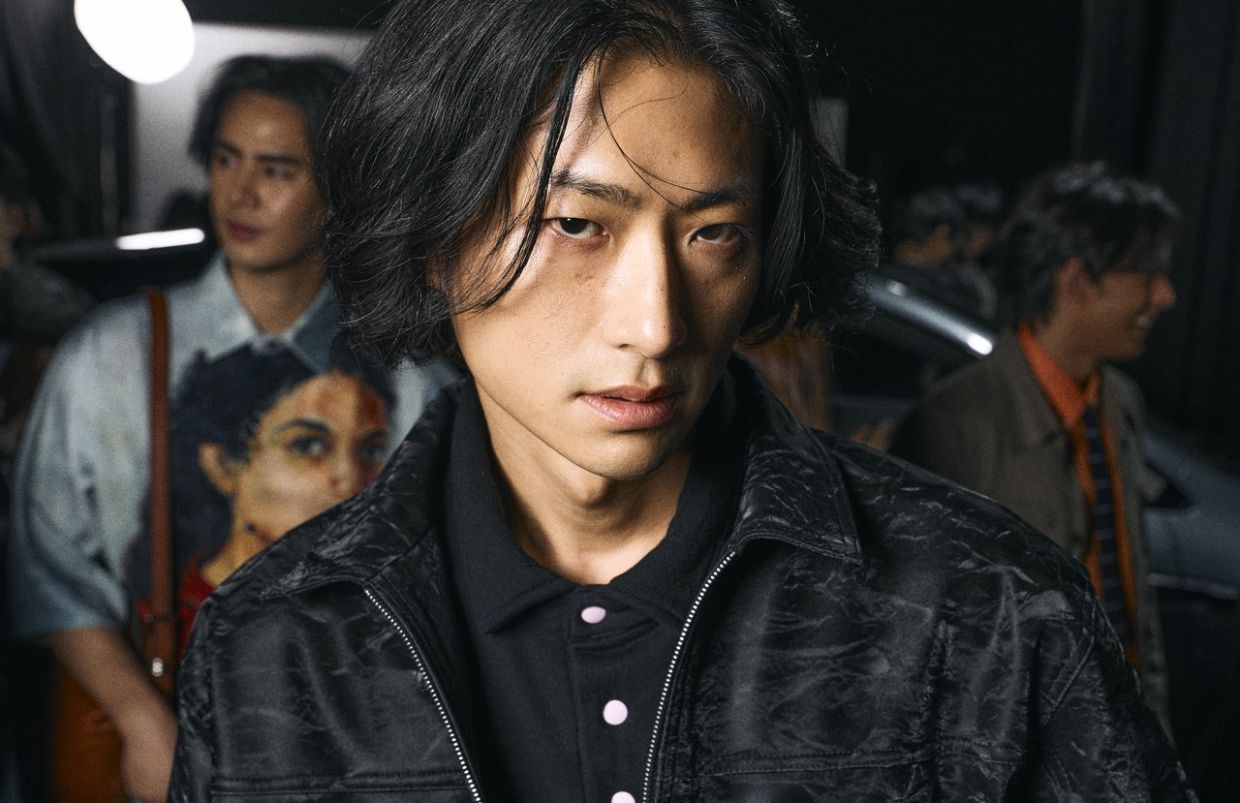
Heo Yong-jin's ascent into international fashion comes at an age when most would consider their professional trajectory firmly set. At 40, the South Korean former lawyer has pivoted from a decade of litigation support at Kim & Chang, one of Seoul's most prestigious law firms, to pursue modelling with surprising success. Last July, he walked in an exclusive Louis Vuitton trunk show in Bangkok showcasing a collaboration between the French luxury house's menswear creative director Pharrell Williams and Japanese designer Nigo—a moment that crystallizes how dramatically his life has shifted in just over a year.
The genesis of Heo's unlikely career change traces back to early 2023, when he relocated to Spain with his wife to study sports management and agency business. What began as an educational sojourn became a catalyst for personal transformation. Immersed in a fitness-conscious academic environment, Heo gradually adopted healthier habits, joining classmates for football and padel, a racket sport gaining traction across Europe. The physical changes were undeniable, and his wife's casual suggestion that he consider modelling proved surprisingly prescient. At 188 centimeters tall, Heo possessed the physical attributes the industry values, yet the notion of pursuing fashion work had never crossed his mind during his years in Seoul's legal sector.
With only four months remaining on his Spanish visa, Heo made a decision that would fundamentally alter his trajectory. He recognized that Europe had significant demand for Asian male models, making the professional gamble feel worth taking. Rather than waiting for industry gatekeepers to discover him, he took an entrepreneurial approach—building his own portfolio, engaging photographers independently, and reaching out directly to prospective clients. This proactive strategy yielded initial results: appearances in commercials for sunglasses brands, insurance advertisements where he portrayed a Malaysian father, and various local brand campaigns that validated his belief that a market existed for his profile.
Returning to South Korea brimming with momentum, Heo encountered the harsh reality of ageism within his home country's fashion ecosystem. Domestic agencies consistently cited his age as a barrier, dismissing a man approaching 40 with minimal professional modelling experience as an unlikely investment. Rather than accepting rejection, he strategically broadened his geographic focus. Through systematic outreach via email and portfolio submissions to agencies across China and Southeast Asia, Heo eventually connected with a Thai agency willing to represent him. This pivot toward Thailand proved transformative, opening doors to consistent work with local brands and positioning him for more prominent international opportunities.
The Louis Vuitton trunk show represented the culmination of this calculated expansion into Asian markets. Yet Heo approaches even this achievement with measured perspective, declining to characterize it as a definitive success story. His caution reflects deeper uncertainty about whether such visibility translates into sustained career momentum within an industry notoriously volatile for older entrants. The viral documentation of his journey on Instagram—accumulating four million views—has amplified public interest in his story, though he remains acutely aware that social media virality and commercial viability operate in different registers.
What distinguishes Heo's experience is the psychological dimension of his reinvention. After years projecting manufactured confidence within the formal structures of corporate law, he has discovered something more authentic through modelling work. The occupation offers what his previous career could not: the freedom to express himself physically, embody creative visions, and become the central narrative rather than a supporting player in others' legal battles. This fundamental shift in self-perception extends beyond professional satisfaction. He speaks candidly about the anxiety accompanying financial instability, yet he has concluded that material security within an unfulfilling career framework had never generated genuine happiness.
The emerging interest from South Korean brands suggests his domestic market may gradually warm to his presence. Recent inquiries for fashion lookbooks and campaign work indicate that the Louis Vuitton exposure carries currency even within skeptical Seoul-based companies. However, Heo's ambitions extend further. He has targeted Milan and Paris fashion weeks scheduled for late September through early October, where major houses including Prada, Bottega Veneta, Saint Laurent, and Tom Ford will present collections. Gaining access to these prestigious platforms requires securing agency representation capable of arranging auditions—a formidable challenge for a relatively unknown 40-year-old competing against established younger models with extensive portfolios.
From a regional perspective, Heo's trajectory illuminates shifting attitudes toward age and reinvention within Asian professional contexts. Southeast Asia, in particular, has demonstrated greater openness to models outside conventional age parameters, suggesting that demographic conservatism within Korean and Japanese industries does not necessarily reflect pan-Asian market realities. Thailand's willingness to represent him where Seoul's agencies demurred reflects differing commercial calculations and, potentially, less rigid aesthetic hierarchies. This geographic variance offers lessons for other career-changers within the region who encounter barriers in their home markets but discover opportunity elsewhere in Asia.
Heo's philosophical approach to his uncertain present distinguishes his narrative from conventional success stories. He explicitly resists characterizing his weight loss and modelling debut as remarkable, instead framing them as logical consequences of changed circumstances and personal choice. This humility, paired with his explicit hope that his experience might resonate with others contemplating major life changes, suggests he views his journey as exemplary primarily for its demonstration that conventional career timelines need not govern adult lives. The excitement he derives from uncertainty contrasts sharply with the emotional numbness he experienced within corporate law's structured predictability—a distinction that resonates particularly within Southeast Asian contexts where professional stability is often prioritized over personal fulfillment.
Looking forward, Heo confronts the same precarity that defines modelling for most practitioners, albeit with the added complexity of entering at an age when most peers have established secure income streams. Whether his visibility translates into the European fashion week appearances he seeks remains genuinely uncertain. Yet his willingness to navigate this unpredictability—to value the possibility of authentic expression and self-discovery over guaranteed material comfort—represents a philosophical position that challenges prevalent assumptions across East and Southeast Asian professional cultures. His story ultimately suggests that reinvention at 40 requires not exceptional talent or fortune, but rather the courage to relinquish established identity frameworks and pursue paths that, while uncertain, feel genuinely aligned with who one wishes to become.

