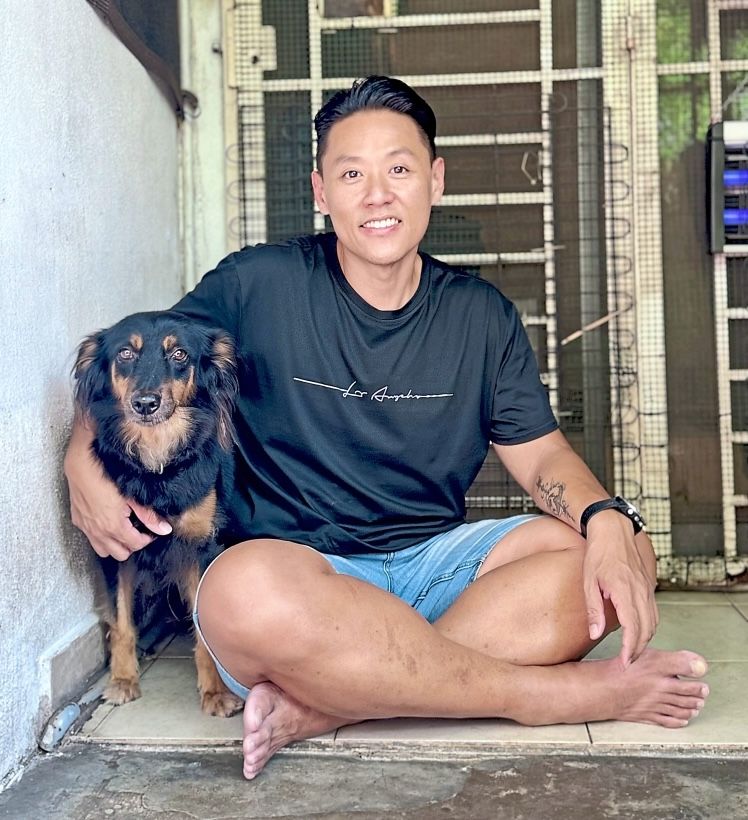
Three years ago, Benjamin Tan, a real estate negotiator based in Puchong, Selangor, ventured to Mid Valley Megamall's pet fair with his family on a mission that would change the life of one small dog. The Tans were searching for a canine companion to keep Blacky, their 12-year-old poodle, company during his senior years. Rather than purchase from a breeder, they enlisted the help of Brenda Chia, a dedicated volunteer with Malaysian Dogs Deserve Better, to guide their selection from among the many abandoned dogs awaiting homes. Chia's recommendation was Zudy, a diminutive creature who immediately captured the family's affection. What began as an exciting new chapter, however, quickly revealed the emotional scars this little dog carried from her past.
When Zudy first arrived at the Tan household, the family confronted the harsh reality of animal neglect. The small dog trembled uncontrollably, her body wracked with anxiety that manifested as constant shaking and shivering. The Tans, seasoned dog lovers, understood that such acute fear signified trauma, likely inflicted by human cruelty during Zudy's previous existence. "It took us a while because she was terribly afraid," Tan reflects. "She'd shake all the time. People can be cruel and you have to wonder what they did to her." The psychological toll ran deeper than mere nervousness; Zudy's terror was so profound that she could not bring herself to eat during those initial days in her new environment, a concerning sign of her distressed mental state.
The family's commitment to Zudy's rehabilitation proved instrumental in her gradual recovery. Over approximately nine months of patient, consistent care and unconditional affection, the physical manifestations of her anxiety began to subside. The relentless shivering that had characterised her first weeks eventually diminished, replaced by a cautious calm as she grew to recognise that her new home represented safety rather than danger. Yet even as Zudy's outward anxiety eased, the Tans noticed something peculiar about their adopted companion: she remained almost entirely silent. Unlike typical dogs, who communicate through a rich vocabulary of huffs, whines, yips, yelps, barks and howls, Zudy produced virtually no sound at all. "I thought she might be mute," Tan confesses. "She made no noise at all." This unusual quietness raised questions about whether the damage inflicted upon Zudy extended to her ability to vocalise.
As Zudy's confidence gradually increased within the safety of her home, the Tans began integrating her into their daily routines, including visits to a dog-friendly park in their neighbourhood. These outings revealed the depth of Zudy's lingering social anxiety. Initially, she would cling to Tan's side, too frightened to venture far or interact with other people. The process of socialisation unfolded with agonising slowness; the family allowed her to approach strangers cautiously, to sniff and establish her own comfort level before moving forward. "At first she was shy and hid by my side. Very slowly she was less nervous about strangers. We let her sniff a while and then she'd be okay," Tan recalls. Despite these incremental improvements in her public behaviour, Zudy maintained her mysterious silence throughout that first year of residence. When Blacky barked at delivery personnel or security guards, Zudy would mimic the gesture, opening her mouth as if to produce sound, yet nothing emerged. "I could see her make the gesture but there was no noise," Tan explains. "She wouldn't gesture in the park, she was too timid for that, but at home, when Blacky would bark at the delivery man, security people passing and anyone in the street, Zudy would put her head up and mimic but there was nothing."
Because Zudy had been adopted purely as a beloved family member rather than as a guard dog, the Tans accepted her quiet disposition without concern, content that she was healing at her own pace. The moment of transformation came unexpectedly after approximately one year of living with the family. Tan heard Blacky's familiar bark emanate from the house, but this time a second, unfamiliar bark joined in—and it was louder than his poodle's. "Blacky has a good bark," Tan laughs, "but the bark that went with it was even louder. I thought, it can't be little Zudy, can it?" Yet it unmistakably was. After more than twelve months of silence, Zudy had discovered her voice and was wielding it with remarkable force. This breakthrough represented far more than the emergence of a vocalisation; it symbolised Zudy's psychological transformation from a traumatised, silent survivor into a dog confident enough to assert her presence and personality.
Since that pivotal moment, Zudy has embraced vocality with enthusiasm, much to the amusement of her family. Today, when Blacky, now 15 years old, barks at patrolling security guards, Zudy enthusiastically joins in, her voice no longer absent but prominent. She has discovered her own pastimes and interests, yapping at the lizards in the garden and enthusiastically vocalising along when the birds at the back of the house engage in their dawn and dusk chorus. Tan occasionally finds himself requesting that his once-silent dog moderate her newfound verbosity. "Sometimes I tell her to be a bit quieter even," he chuckles, a remarkable statement considering his initial concern that she might be permanently mute.
Equally remarkable is the transformation in Zudy's public demeanour and social confidence. The timid creature who once hid behind her owner's legs has evolved into a composed, self-assured companion. When approached by people in the park, she no longer retreats in fear but instead sits calmly, waiting for them to complete their greeting. She has grown sufficiently courageous to play freely when released, running and exploring without the paralysing anxiety that once confined her. "She's actually quite brave. When we release her to play, she runs around and isn't afraid," Tan says with evident pride. This newfound confidence has manifested in unexpected and humorous ways, as Zudy has begun asserting authority within the household.
The most amusing evidence of Zudy's transformation lies in her newfound bossiness regarding meal times. The family maintains a consistent dinner schedule of 8 pm, a routine Zudy has evidently memorised. Minor delays of a few minutes occasion no response from the small dog, but should the Tans become distracted and the feeding time extends beyond thirty minutes, Zudy takes matters into her own paws. She approaches her owners with purposeful determination and barks insistently until they rectify the situation. "We give her dinner at 8pm. If we're a few minutes off, that's okay. But if we are sidetracked and it hits 30 minutes, Zudy will come and bark at us," Tan laughs. Remarkably, the household responds immediately to these demands, rewarding her assertiveness with instant meal service. From a dog so traumatised that she could not eat, Zudy has become one who will vocally insist upon her dinner being served on schedule.
Zudy's remarkable journey encapsulates the profound impact of rescue adoption and patient, loving care on deeply wounded animals. She arrived at the Tan household as a silent, trembling shadow of a dog, bearing the invisible injuries of past cruelty and abandonment. Through consistency, gentleness, and unconditional acceptance, her family provided the therapeutic environment necessary for her to heal not just physically but emotionally and psychologically. The discovery of her voice after more than a year of silence symbolises far more than the emergence of a new behavioural trait; it represents the restoration of her agency, her confidence, and her ability to participate fully in life. Today, Zudy stands as a testament to the transformative power of rescue and the resilience of dogs themselves. Her journey from voiceless victim to vocal household authority demonstrates that even deeply traumatised animals can recover their spirits and claim their rightful place as cherished family members who are valued, heard, and even occasionally obeyed.

