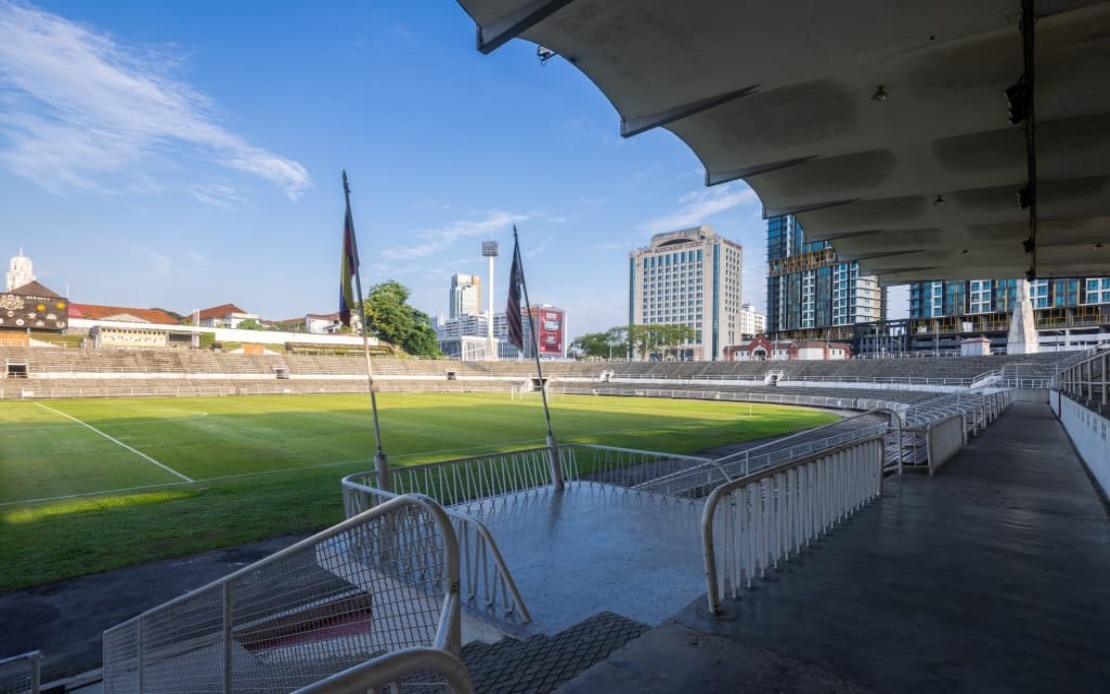
Nearly seven decades after Tunku Abdul Rahman Putra Al-Haj proclaimed Malaysia's independence with the iconic sevenfold cry of "Merdeka!" at Stadium Merdeka on August 31, 1957, that founding patriotic fervor continues to resonate throughout the nation—now symbolised by celebrations at Dataran Putrajaya, the gleaming nerve centre of Malaysia's federal administration. The transition between these two venues represents far more than a logistical shift; it encapsulates the remarkable journey of a young nation progressing from the threshold of sovereignty to a confident modern state navigating the complexities of contemporary governance and development.
The migration of Malaysia's premier National Day observance from Stadium Merdeka to locations including Dataran Merdeka and ultimately Putrajaya mirrors the broader narrative of national transformation. This year's celebration marks the tenth occasion on which Putrajaya has hosted the national-level festivities since first doing so in 2003 under the theme "Keranamu Malaysia." The frequency of Putrajaya hosting these events—occurring in 2003, 2005, 2018, 2019, 2020, 2021, 2023, 2024, and 2025—demonstrates a deliberate strategic preference that was formalised when the Cabinet resolved in April 2025 to designate Putrajaya as the primary venue for three consecutive years from 2025 to 2027. This institutional commitment suggests the government's confidence that the administrative capital can authentically represent Malaysian aspirations and collective identity.
Putrajaya itself embodies this aspirational trajectory. Established as the Federal administrative centre in 1995 on land formerly called Prang Besar, the purpose-built city was designed as a "smart city in a garden" that symbolises Malaysia's commitment to modernisation and sustainable urban development. The choice to celebrate independence within this carefully orchestrated environment creates an interesting symbolic tension—one anchored in the planning and execution of a contemporary vision rather than in the spontaneous, emotionally charged declaration that occurred at Stadium Merdeka. Yet this distinction need not diminish the authenticity of patriotic expression, according to academic perspectives examining how nations commemorate their founding narratives.
Prof Dr Sarjit Singh Gill, Chairman of the National Unity and Progressive Society Cluster at the Malaysian Professors Council and anthropology specialist at Universiti Putra Malaysia, argues persuasively that the venue transition reflects complementary rather than contradictory historical symbolism. Stadium Merdeka retains profound psychological resonance, particularly among older Malaysians—those aged 70, 80 and beyond—who associate the location directly with collective liberation and the tangible moment when colonial subjugation ended. Putrajaya, conversely, represents the architectural embodiment of the independence dividend, showcasing the administrative apparatus that independent Malaysia constructed to serve its citizens. Rather than viewing these as competing symbols, Gill advocates recognising them as sequential markers on a national timeline that illuminate both historical achievement and contemporary progress.
This interpretive framework addresses a legitimate concern about generational transmission of patriotic consciousness. Younger Malaysians, particularly those born well after 1957, may lack visceral connection to the independence moment and the historical circumstances surrounding it. The deliberate preservation of two distinct commemorative spaces—one suffused with historical nostalgia and another embodying modernist aspiration—creates pedagogical opportunities for understanding how nations evolve. Gill emphasises that effective National Day celebrations must incorporate two fundamental elements: first, explicit recognition of past leaders' sacrifices and the negotiated consensus through which they secured independence; second, celebration of Malaysia's defining characteristic—racial diversity managed through the principle of unity in diversity. These elements transcend physical location and reside instead in how celebrations are conceptualised and executed.
Putrajaya's elevation as preferred venue reflects practical administrative considerations that demonstrate evolving approaches to public event management. According to the Event Management and Innovation Unit within the Management Services Division at the Ministry of Communications, Putrajaya's selection reflects logistical sophistication rather than diminished historical regard. The administrative capital's integration with the Mass Rapid Transit network, water taxi services, and shuttle bus systems provides transportation alternatives that private vehicle-dependent Stadium Merdeka celebrations cannot easily match. This infrastructure advantage proves particularly significant when accommodating the massive crowds that national-level celebrations attract. The efficiency of mobility systems directly correlates with the celebration's capacity to welcome broader participation, thereby democratising access to patriotic expression rather than confining it to those with convenient transportation options.
The thematic architecture of recent celebrations further illustrates how contemporary organisers attempt to bridge historical consciousness with future orientation. The 2026 National Day and Malaysia Day theme—"Malaysia MADANI: Kesejahteraan Dinikmati" (Malaysia MADANI: Well-being Enjoyed)—explicitly narrates national development as the continuation of independence rather than its departure. This framing suggests that the primary purpose of secured sovereignty was enabling subsequent generations to construct institutions and systems promoting collective flourishing. The theme acknowledges that independence represents a beginning rather than an endpoint, aligning historical acknowledgment with developmental objectives that resonate with Malaysians evaluating their current circumstances and future possibilities.
Engaging younger generations with authentic patriotic sentiment requires integrating contemporary creative and technological expressions alongside traditional commemorative elements. This year's celebration programme incorporates multimedia performances including "Gema Inovasi MADANI" and the musical fusion "Rentak MADANI, Paluan Tradisi," which blends innovation with cultural continuity. The participation of 1,500 schoolchildren in human graphic visual formations transforms youth from passive spectators into active agents of national expression. These choreographed elements, far from diminishing patriotic authenticity, provide entry points through which digitally-native Malaysians can experience collective national identity within cultural frameworks they find comprehensible and engaging.
Individual participant testimonies illuminate how celebrations function beyond ceremonial obligation to create genuinely transformative personal experiences. Muhammad Nasrul Nasir, a 30-year-old Administrative Assistant at the Federal Territories Department, describes his previous year's attendance at Dataran Putrajaya as creating "meaningful and lasting memory," particularly when witnessing the captivating skydiving performances. His deliberate progression from spectator to parade participant this year—representing his agency in the formal proceedings—demonstrates how national celebrations can mobilise civic engagement when properly designed. His account specifically emphasises how the event "reminded [him] of the contributions of past heroes who sacrificed for the nation's independence," indicating that Putrajaya celebrations successfully transmit historical consciousness despite physical distance from the 1957 independence declaration site.
The evolution of National Day celebration venues ultimately reflects sophisticated national decision-making that recognises multiple legitimate objectives simultaneously. Preserving Stadium Merdeka's historical significance while leveraging Putrajaya's modern infrastructure and accessibility represents a pragmatic synthesis rather than a binary choice between tradition and progress. Malaysia's challenge involves ensuring that generational transitions do not erode patriotic consciousness but rather deepen understanding of independence as a national foundation upon which subsequent development rests. The commitment to hosting celebrations at Putrajaya through 2027 indicates sustained institutional confidence that the administrative capital can authentically represent national identity while accommodating growing participation and technological sophistication. As Malaysia matures as an independent nation, the ability to commemorate independence through diverse locations and evolving methods while maintaining emotional and historical authenticity will prove increasingly important for social cohesion and national resilience.

