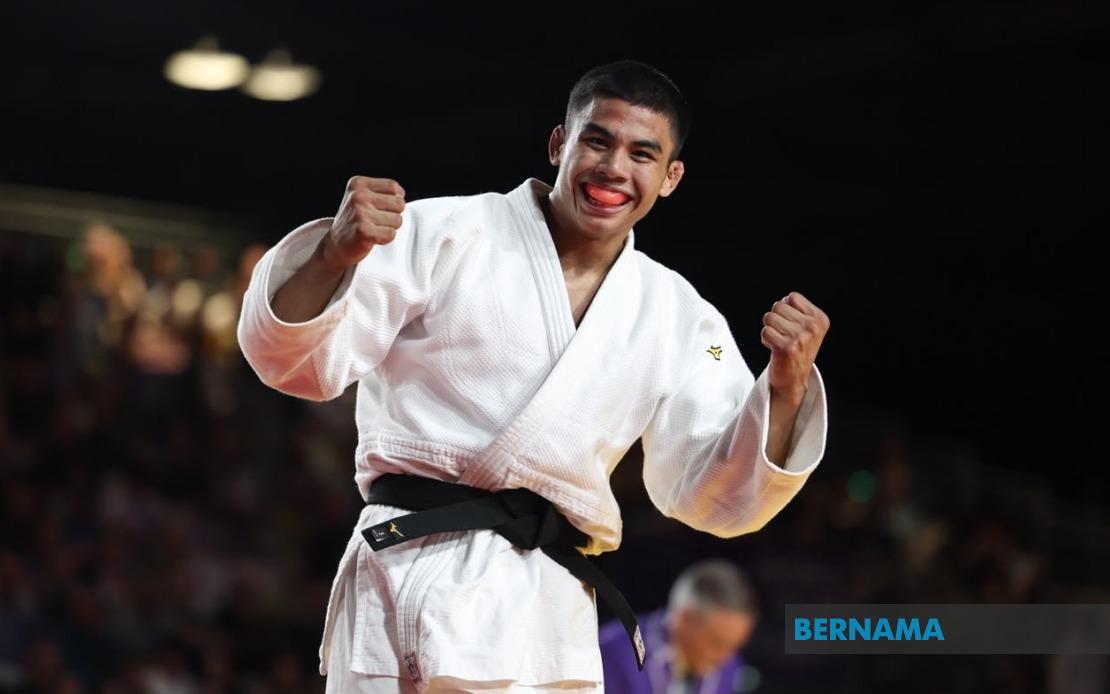
The path to sporting glory sometimes begins in the most unexpected ways. For 21-year-old Amir Daniel Abdul Majeed, Malaysia's newly minted Commonwealth Games judo champion, the journey towards athletic excellence started not with rigorous training or competitive ambition, but with a simple promise made by his mother when he was just four years old. His mother, Yeoh Suatkhim, observed that her young son possessed an almost stubborn streak of determination even then—a trait that would later define his approach to sport and shape a historic achievement at Glasgow 2026.
Yeoh recalls the pivotal moment when she recognised this intrinsic drive in her child. Faced with the challenge of breaking Amir Daniel's thumb-sucking habit, she employed a clever bargain: he could have the storybook he desperately wanted if he stopped the habit immediately. The result astounded her. Within a single day, Amir Daniel abandoned the behaviour entirely, motivated purely by the promise of a book. As Yeoh told reporters at the Games, such single-minded commitment is rare even in young children, and it provided an early glimpse into the character that would eventually propel him to the top of the podium decades later.
That initial spark of determination evolved into something far greater when Amir Daniel was introduced to judo at the age of five. Under the guidance of national coach Md Nashriq Md Nassir, who continues to direct his training today, the young athlete discovered a sport that would channel his natural perseverance into structured competition. The coach-athlete relationship that formed became central not only to his technical development on the mat but also to his personal growth. Md Nashriq assumed a role that extended well beyond tactical instruction, becoming a trusted figure in the family's decision-making regarding discipline, education, and character development.
Yeoh describes a partnership between coach and family that proved instrumental in preventing Amir Daniel from neglecting his studies in pursuit of sporting ambitions. Whenever major examinations loomed, she would coordinate with Md Nashriq, who would establish what she terms an "agreement" with her son to ensure academic commitments remained non-negotiable. The young judoka respected these arrangements with the same unwavering commitment he had shown towards that childhood storybook promise. According to his mother, Amir Daniel never breaks a commitment once he has made it to his coach—a consistency that speaks volumes about his personal integrity and the strength of his relationship with Md Nashriq.
On the mat at the Scottish Event Campus in Glasgow, those decades of discipline and dedication culminated in a historic moment for Malaysian sport. Amir Daniel defeated South Africa's Timothy Meuwsen in the men's under-81 kilogramme final to claim the gold medal that had eluded Malaysian judokas at the Commonwealth Games. With this victory, he delivered Malaysia's eighth gold medal at Glasgow 2026 whilst simultaneously becoming the nation's first judoka ever to win Commonwealth Games gold—a distinction that underscores both his individual achievement and judo's relative youth as a medal-producing sport for Malaysia at this level of competition.
The ascent to this peak was neither sudden nor unconsidered. Amir Daniel had already tasted Commonwealth Games competition at Birmingham 2022, where he earned a bronze medal in the men's under-73 kilogramme category at just 19 years old. That earlier result signalled the emergence of a serious international competitor, but it also carried the weight of unfinished business. His progression from bronze to gold, combined with the weight category change, demonstrates the systematic development of an athlete maturing within his sport and translating early promise into sustained performance at the highest amateur level.
Yeoh's philosophy regarding child development extends beyond the individual trajectory of her son. She believes firmly that exposing children to sports and structured learning from a young age creates a foundation for meaningful engagement and personal growth. She applied this principle consistently across her two children, first with her eldest daughter Nur Yasmeen before Amir Daniel eventually gravitated towards serious pursuit of judo. This parental approach—combining athletic exposure with educational commitment—represents a deliberate strategy to develop well-rounded young people rather than narrow specialists unprepared for life beyond competition.
The significance of Amir Daniel's achievement resonates throughout Malaysian sport at a moment when the nation seeks tangible success stories at major international competitions. His gold medal arrives during a Games where Malaysia has concentrated its medal-hunting efforts, and it symbolises not just individual sporting prowess but the effectiveness of structured coaching, family support, and sustained commitment over many years. For the judo community in Malaysia, his breakthrough performance opens new pathways for the sport's development domestically and raises expectations for future generations of Malaysian judokas competing internationally.
Looking ahead, Yeoh harbours considerably more expansive ambitions for her son beyond the Commonwealth stage. She envisions Amir Daniel competing at the Olympic Games—a goal that represents the ultimate aspiration for any elite athlete. In articulating this vision, she emphasises that her son shares these Olympic aspirations himself, viewing Glasgow 2026 not as a terminus but as a waypoint towards greater international achievement. Equally significantly, Yeoh notes that these ambitions coexist with continued emphasis on education and community contribution, reflecting the same balanced value system that has defined her family's approach since Amir Daniel was a thumb-sucking four-year-old convinced by the promise of a storybook.

