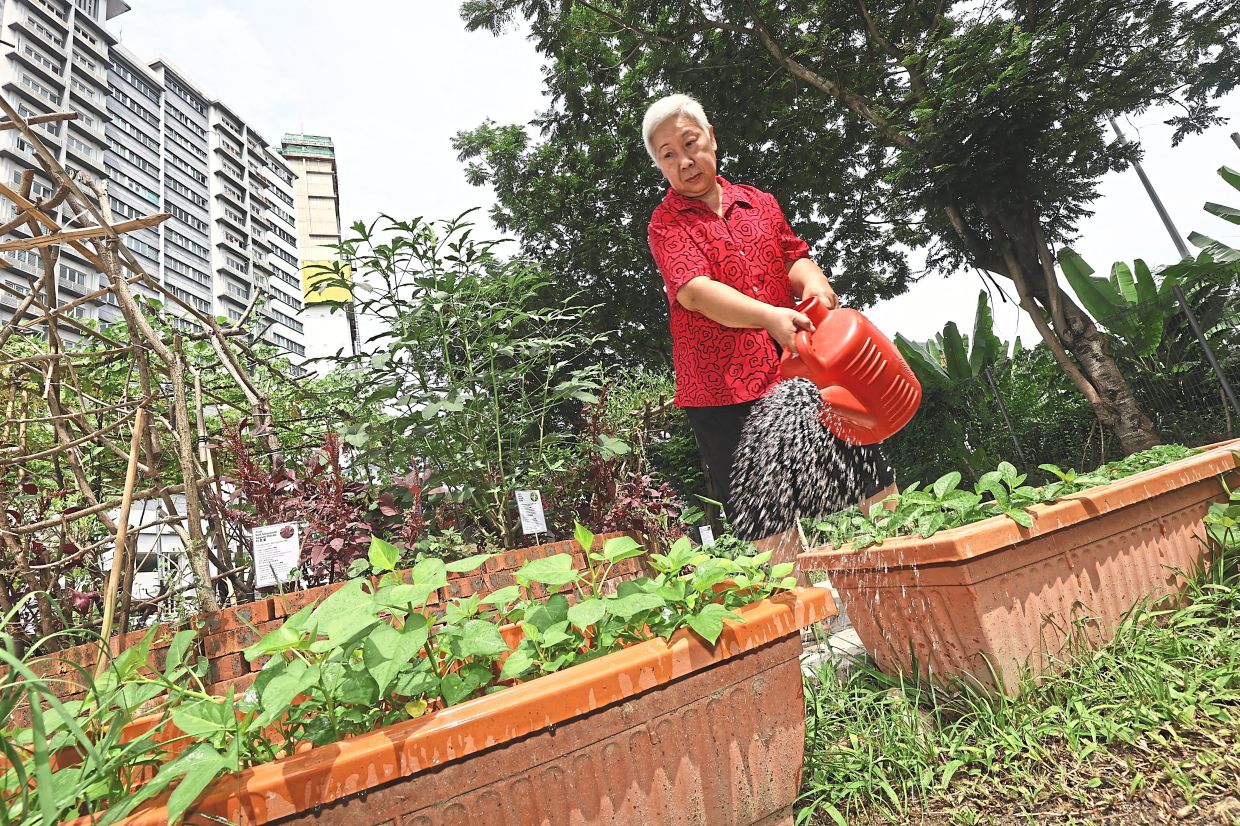
A derelict parcel of land concealed behind 1Razak Mansion in Kuala Lumpur has undergone a remarkable metamorphosis over the past half-year, evolving from an overgrown expanse of neglect into a productive agricultural space teeming with cultivated herbs, vegetables, fruit-bearing specimens and ornamental flowers. The transformation marks a significant intervention in urban community development, particularly given that approximately 80 percent of the residential population comprises senior citizens whose wellness depends on purposeful, meaningful engagement within their immediate environment.
The initiative, spearheaded by social enterprise PWD Smart FarmAbility in partnership with the residential management and engaged inhabitants, culminated in the official inauguration of the 1Razak Mansion Food Forest. During the launch proceedings, Minister in the Prime Minister's Department (Federal Territories) Hannah Yeoh emphasised the critical nexus between physical activity and mental wellbeing for aging populations, noting that whilst the residential community benefits from structured fitness programmes including tai chi classes, psychological health remains equally vital yet frequently overlooked in senior living environments. This recognition underscores a growing policy acknowledgment that holistic wellness extends beyond exercise regimens to encompass emotional fulfilment and cognitive stimulation.
For Alice Fernandez, a 64-year-old resident, the garden's establishment addresses multiple dimensions of quality of life simultaneously. She articulates how the space functions as both therapeutic environment and practical resource, allowing seniors to engage in gentler physical activity through plant maintenance whilst simultaneously reducing household food expenses through harvesting produce for personal consumption. The psychological dimensions prove equally substantial: the garden provides structured activity that combats the isolation and mental stagnation that can accompany retirement and reduced mobility. Fernandez's observation that the formerly desolate area, situated awkwardly near waste facilities, now attracts residents for leisurely walks and social gathering illustrates how environmental improvement catalyses behavioural change and community cohesion.
Fernandez has integrated the food forest into her daily existence, routinely visiting after morning exercise to tend plants and contribute to ongoing maintenance. Her voluntary participation exemplifies the self-sustaining community stewardship that successful urban gardens cultivate. The shift from avoidance—when the space served no purpose—to regular visitation demonstrates how purposeful design and greenification encourage participation across age groups and ability levels. For mobility-constrained elderly residents, the proximity and accessibility of the garden within the residential compound reduces barriers to outdoor engagement that might otherwise prove insurmountable.
Thieeben Sivabalasingam, aged 38, has laboured substantially throughout the project's realisation phase, managing logistical operations during the initial construction and material transportation phases. His perspective from project inception through completion provides valuable insight into the transformation's scale. What initially appeared as chaotic clearing operations, with difficulty visualising the intended outcome, gradually cohered into an organised space as fencing, materials and landscaping converged into purposeful arrangement. Standing within the completed garden alongside his three-year-old son, Sivabalasingam articulates the emotional satisfaction derived from witnessing collective effort manifest into tangible community asset. This intergenerational experience also illustrates how such projects educate younger residents about environmental stewardship and community contribution.
Sivabalasingam identifies productivity and psychological purpose as fundamental benefits extending beyond mere nutritional supplementation. Senior residents require meaningful daily occupation, concrete reasons to rise with enthusiasm and anticipation. The garden provides structured, purposeful activity that satisfies psychological needs often unmet in post-retirement existence. This observation resonates with gerontological research demonstrating that purposeful activity and horticultural engagement substantially improve mental health outcomes, reduce depression and anxiety, and enhance overall life satisfaction among elderly populations. Urban environments frequently isolate seniors from such opportunities, making community gardens particularly valuable interventions.
The project's impact resonates beyond the immediate residential complex. Jenny Wong, aged 70, and her spouse KC Wong, aged 76, residents of the neighbouring Razak City Residences, attended the launch and recognised both the environmental and recreational value of cultivated community spaces. Jenny emphasises how gardening transforms into meaningful hobby whilst simultaneously advancing environmental stewardship. KC, observing their retired status and abundance of available time, expressed enthusiasm for introducing similar initiatives within their own residential community. This spillover interest demonstrates how successful projects generate replicable models that other developments can implement, multiplying community benefits across metropolitan areas.
Dr Billy Tang Chee Seng, founder and social entrepreneur directing PWD Smart FarmAbility, envisions the food forest as foundational infrastructure for substantially expanded programming rather than culminating achievement. The enterprise recognises that agricultural spaces function optimally when integrated with educational components, skill development and intergenerational knowledge transfer. Forthcoming infrastructure improvements, including a dedicated kitchen hub, will facilitate practical cooking instruction utilising garden-harvested ingredients, directly connecting food production to nutritional application. The introduction of microscopic examination equipment serves educational purposes whilst introducing younger residents to soil science and microbiology, anchoring abstract scientific concepts in observable reality within their residential environment.
These pedagogical dimensions differentiate the project from purely productive gardens, transforming it into comprehensive community development infrastructure. By combining food security, mental health interventions, environmental education and intergenerational knowledge transfer, the food forest exemplifies integrated urban development that addresses multiple community needs simultaneously. The model proves particularly relevant for Malaysian metropolitan contexts where rapid urbanisation has frequently isolated elderly populations from meaningful engagement whilst simultaneously straining food budgets and environmental sustainability.
The 1Razak Mansion Food Forest demonstrates how strategic urban land utilisation can generate measurable improvements in resident wellbeing across physical, mental and economic dimensions. For a city navigating density pressures and aging demographics, such initiatives offer evidence-based pathways toward more liveable, inclusive urban environments. The project's success metrics extend beyond harvest quantities to encompass resident engagement, mental health improvements, skills development and community cohesion—outcomes that justify scaling and replicating successful models throughout Malaysia's residential developments.

