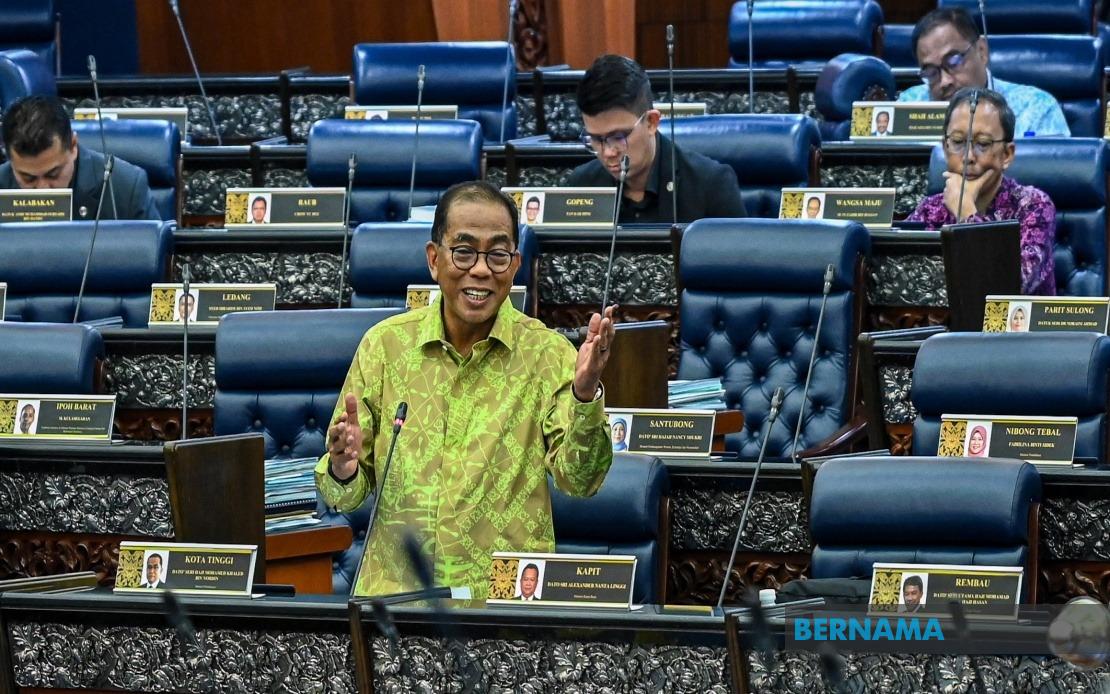
The Defence Ministry is preparing to conclude its investigation into a fatal grenade explosion that occurred at Hobart Camp Firing Range in Gurun, Kedah, with Defence Minister Datuk Seri Mohamed Khaled Nordin indicating that a complete report will be ready for submission on July 23. The incident, which claimed two lives during a military training exercise in June, has prompted a thoroughgoing examination spanning multiple investigative stages and witness interviews to establish the exact circumstances surrounding the explosion.
Mohamed Khaled explained that the rigorous nature of the inquiry reflects the complexity of determining root causes in such incidents. A board of inquiry was formally established on June 17, immediately following the explosion on June 16. The investigative body then submitted preliminary findings to both the 2nd Division Headquarters and Army Western Field Command Headquarters for detailed scrutiny. When the Defence Ministry received the compiled report from Army Western Field Command Headquarters on July 13, officials identified gaps requiring further investigation, necessitating the recall of several witnesses and the potential addition of new testimonies to shore up the investigation's conclusions.
The explosion occurred at approximately 10:57 am during a Combat Enhancement Training exercise, killing Lance Corporal Siti Khadijah Sungip and Sergeant Norazmi Abu Bakar, who was supervising the training. The grenade detonated inside a bunker, inflicting severe injuries on both personnel. Military responders immediately transported them to Sultan Abdul Halim Hospital in Sungai Petani, but both were pronounced dead upon arrival. The tragedy has reverberated through Malaysia's armed forces establishment and prompted heightened scrutiny of training protocols across combat units.
In response to parliamentary questioning from Datuk Mohd Isam Mohd Isa of Tampin, Mohamed Khaled outlined immediate safety interventions enacted in the aftermath. Army Chief General Tan Sri Azhan Md Othman moved swiftly to suspend all grenade-throwing exercises force-wide, preventing further exposure to potential hazards whilst the investigation remained ongoing. Additionally, the command directed a comprehensive special inspection of all remaining grenades held by the 1st Squadron of the Royal Engineer Regiment to identify any manufacturing defects, storage degradation, or handling irregularities that might compromise safety.
Beyond the immediate containment measures, Malaysia's Defence Ministry has signalled a broader modernization of training safety infrastructure. The ministry intends to install closed-circuit television cameras at all firing ranges, providing continuous visual documentation of exercises that can assist in incident reconstruction and identify procedural deviations. Body-worn cameras for instructors and trainees will create additional footage for post-exercise analysis, enhancing accountability and enabling trainers to identify unsafe practices in real time. These technological enhancements reflect international best practice in military training safety management.
A particularly significant policy development emerging from this tragedy is the introduction of a casting and service-life monitoring system for ammunition and explosives. Grenades, like all ordnance, degrade over time through chemical changes, environmental exposure, and storage conditions. Establishing clear parameters for serviceable lifespan and implementing mandatory inventory rotation should substantially reduce the risk of unpredictable detonations caused by unstable or deteriorated explosive materials. This systematic approach mirrors protocols adopted by militaries elsewhere managing large ordnance stockpiles.
The incident has raised broader questions about training intensity and risk management within Malaysia's armed forces. Combat Enhancement Training exercises, whilst essential for maintaining soldier readiness and tactical proficiency, necessarily involve inherent hazards when live ordnance is deployed. The investigation will likely examine whether current supervision ratios, safety briefing protocols, and emergency response procedures adequately protect personnel engaged in such high-risk activities. For a professional military maintaining readiness across an archipelago facing diverse security challenges, balancing training realism with personnel safety remains a perpetual tension.
For Malaysian defence observers and regional military analysts, this incident underscores the vulnerability of training operations even within ostensibly controlled environments. Hobart Camp, situated in Kedah's northern reaches, serves as a vital training facility for Malaysia's artillery and engineer units. The explosion's occurrence during daylight hours at a nominally supervised facility demonstrates that military fatalities can occur despite institutional safeguards. The subsequent investigation's thoroughness may provide templates for enhancing safety protocols across ASEAN militaries facing similar resource constraints and modernization pressures.
The delayed submission of the final report, pushed from an earlier timeline to July 23, reflects neither bureaucratic sluggishness nor investigative incompetence but rather the technical complexities inherent in explosion reconstruction. Forensic examination of blast sites requires specialist expertise, and witness recollection often improves through structured re-interviewing as investigators develop fuller contextual understanding. The Defence Ministry's willingness to extend the investigation period rather than rush preliminary conclusions suggests institutional confidence in the eventual findings' credibility and completeness.
Once released, the comprehensive report will likely become a reference document for military training safety discussions across Southeast Asia. Malaysia's openness in investigating military fatalities, contrasting with opacities in some regional counterparts, reflects evolving professional standards within the Malaysian Armed Forces. The findings may catalyze policy discussions within other ASEAN nations regarding ordnance management, training supervision, and technological integration in military safety systems. For Malaysian defence planners, the investigation concludes an intensely scrutinized chapter whilst potentially reshaping how future training exercises are conceptualized and executed.

