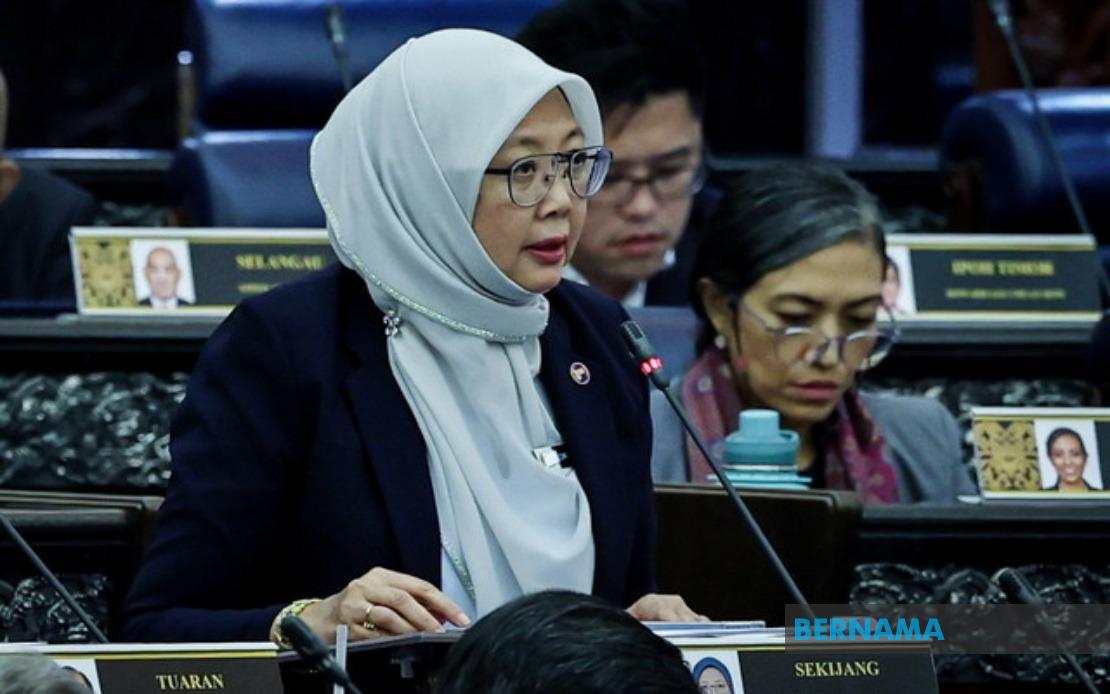
Datuk Seri Dr Zaliha Mustafa, chairman of the Government Backbenchers Club and MP for Sekijang, has pressed Parliament to demand comprehensive disclosure of progress on reforming Tabung Haji following its financial collapse. Speaking during a special Dewan Rakyat sitting in August, she insisted that complete transparency regarding implementation of the Royal Commission of Inquiry's 25 recommendations—alongside detailed accounts of loss recovery efforts—remains essential to restoring confidence among the millions of Muslim depositors whose savings remain at stake.
The case for transparency rests on Tabung Haji's unique position within Malaysia's financial and religious ecosystem. As the institution mandated to manage hajj savings for Malaysian Muslims, it commands not merely commercial importance but profound trust embedded in religious duty and national identity. The RCI's investigation into events between 2014 and 2020 revealed systemic failures that shattered this trust, making any path to rehabilitation contingent on demonstrable, verifiable action. Dr Zaliha's intervention signals growing parliamentary concern that rehabilitation efforts remain obscured from public view, even as officials claim substantial progress.
When the government established the RCI in 2021, appointing its members in January 2022, the inquiry was tasked with investigating the root causes of Tabung Haji's crisis. The commission completed its work and presented the 211-page report to Yang di-Pertuan Agong on 30 August 2022. However, the document only recently entered public circulation—a delay that itself prompted questions about official reluctance to confront findings. The report identified profound weaknesses across management and operations during the seven-year investigation window, ultimately proposing 25 distinct recommendations for systemic overhaul.
As of late July this year, Tabung Haji had formally implemented 75 per cent of those recommendations. While this metric suggests meaningful progress, the absence of granular public reporting leaves depositors uncertain about which specific reforms have taken root and which remain incomplete. Dr Zaliha's proposal that Parliament receive a detailed status report—complete with timelines for outstanding measures—directly addresses this informational vacuum. Such clarity would allow elected representatives and the public to assess whether remedial efforts genuinely address root causes or merely paper over institutional fractures.
Among her three primary concerns, governance accountability emerges as perhaps most damaging to institutional credibility. The RCI identified political pressure preceding a general election as a decisive factor in Tabung Haji's downward spiral, suggesting that short-term political imperatives subordinated sound fiduciary judgment. This finding illuminates a broader Malaysian governance challenge: how to insulate critical financial institutions serving religious and social functions from electoral cycles and factional pressures. Dr Zaliha's observation that calls for Muslim unity ring hollow when institutions betray that trust points toward a deeper legitimacy crisis.
The conduct of Datuk Seri Abdul Azeez Abdul Rahim, Tabung Haji's former chairman, occupies central stage in accountability discussions. Although formally designated non-executive, he maintained executive-level involvement in major investment negotiations and held simultaneous positions across multiple TH subsidiaries and related entities. Such concentrated authority contradicts elementary governance principles of separation of duties and conflict of interest mitigation. Most concerning is an allegation that cash holdings in accounts linked to the former chairman reached RM170 million at one point—a figure suggesting either extraordinary custodial authority or potential irregularities requiring authoritative clarification.
The investment portfolio constitutes a second pillar of Dr Zaliha's scrutiny. Tabung Haji's collapse centred partly on speculative or poorly-vetted investment decisions that eroded the capital base meant to guarantee depositor redemptions. Understanding precisely which investments triggered losses, why due diligence processes failed, and how governance structures permitted such decisions represents foundational knowledge for designing prophylactic reforms. Public disclosure of this analysis would enable Malaysian policymakers to identify similar vulnerabilities in other state-linked financial institutions.
Financial position and profit distributions—Dr Zaliha's third focus area—directly bear on depositor confidence. After years of losses and capital depletion, Tabung Haji's capacity to resume normal dividend distributions or honour redemptions at historical rates remains constrained. Transparent accounting of the institution's current balance sheet, realistic projections for recovery timelines, and candid acknowledgment of likely permanent value reduction would inform depositor expectations. Continued opacity invites speculation and rumour, corrosive to institutional legitimacy.
The timing of Dr Zaliha's intervention reflects mounting parliamentary impatience with gradualism and opacity. The RCI investigation concluded over two years ago; the recommendations have been known to government since mid-2022. Yet public understanding of implementation remains fragmentary, dependent on scattered official announcements rather than integrated reporting. For an institution entrusted with Islamic savings—a realm where trust constitutes the foundation of financial participation—this information deficit itself becomes a governance failure.
Beyond Tabung Haji specifically, Dr Zaliha's call for transparency addresses a systemic Malaysian concern regarding state-linked enterprises and their accountability. Government-linked companies and financial institutions frequently operate with reduced public scrutiny compared to listed corporations, even when they manage state resources or serve social functions. The Tabung Haji case demonstrates that such opacity can persist even after major crises and official inquiries. Establishing expectations that reform efforts be publicly tracked creates precedent for greater transparency across the broader landscape of state enterprise governance.
The political dimension merits recognition as well. Dr Zaliha's position as a Government Backbenchers Club leader—parliamentarians from the ruling coalition—indicates this is not partisan opposition but internal pressure for accountability. Such internal pressure often proves more consequential than external criticism, as it cannot be dismissed as political opportunism. The fact that government-aligned backbenchers demand transparency on TH suggests real concern that continued opacity might damage public confidence in government institutions more broadly.
Moving forward, the challenge for government remains substantiating claims of progress through documented evidence accessible to Parliament and the public. Dr Zaliha's proposal for comprehensive status reporting—detailing completed recommendations, ongoing initiatives, and outstanding timelines—provides a reasonable framework for such accountability. Implementation of this transparency principle would simultaneously serve multiple objectives: restoring depositor confidence, enabling Parliament to fulfill oversight functions, and establishing replicable standards for accountability across other state-linked financial institutions operating with systemic importance.

