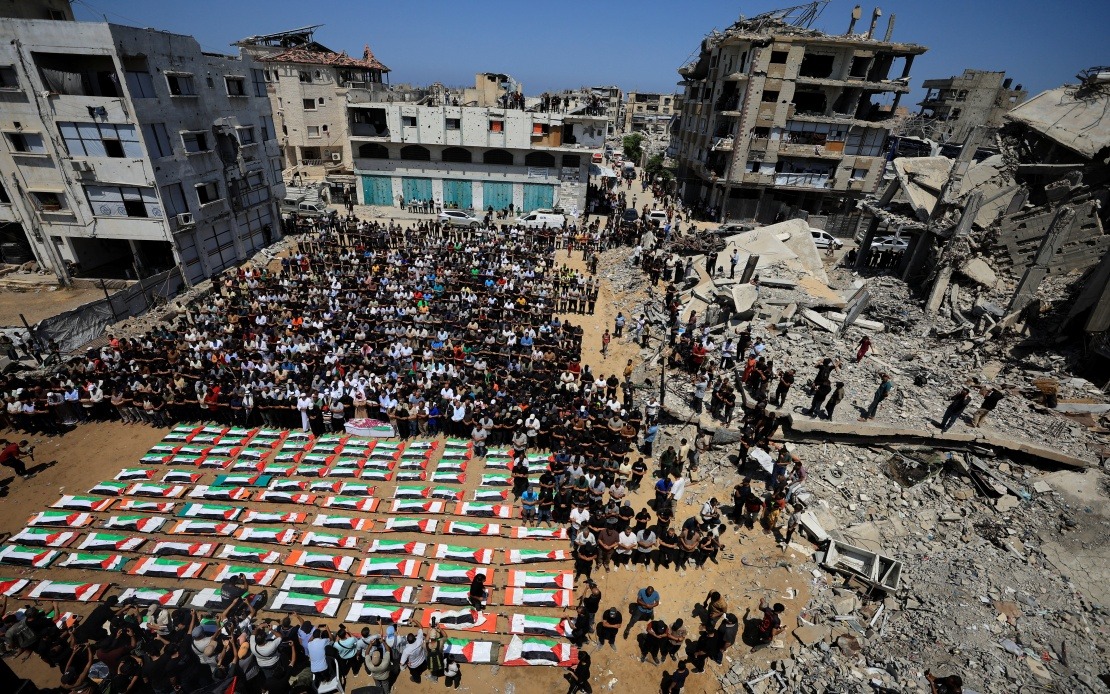
The fragile hopes of Gazans hinged on a breakthrough in second-phase ceasefire talks have fractured once again, as conflicting statements from negotiators and Israeli officials cast doubt over when restrictions on border crossings will lift. For families facing medical crises and displacement, each delay in diplomatic progress translates directly into deteriorating health outcomes and prolonged suffering, underscoring how political stalemate compounds an already catastrophic humanitarian situation.
Saeed Helles, a 55-year-old father of five, has experienced this cruel pattern firsthand. His 13-year-old daughter Saja requires life-saving cancer treatment that Gaza's depleted medical infrastructure cannot provide. When Hamas signalled acceptance of the mediators' proposal for the second phase, Helles allowed himself cautious optimism, beginning preparations for Saja's evacuation to Egypt for specialist care. That fragile relief evaporated as new complications emerged, each day of delay diminishing his daughter's chances of recovery. Saja now lies in a Gaza City hospital, clutching a doll while awaiting an evacuation that may never come, her case emblematic of thousands trapped between medical necessity and political uncertainty.
The medical dimension of Gaza's crisis has reached catastrophic proportions. Mohammed Abu Nada, medical director of the Gaza Cancer Centre, reports that approximately 11,000 cancer patients face severe medicine shortages, while roughly 4,000 patients with valid medical referrals remain unable to cross into Egypt or Israel for treatment. The daily toll is mounting—around three cancer patients die every day from inadequate treatment, a preventable tragedy that intensifies with each week of border restrictions. These figures reveal how the breakdown in ceasefire implementation transforms Gaza's health system from stressed to non-functional, where patients with treatable conditions become victims of diplomatic failure.
Recent statements from Israeli officials have introduced new obstacles to negotiations. Following a meeting between Nickolay Mladenov, described as a high representative for Gaza, and Prime Minister Benjamin Netanyahu, Israeli forces indicated they would withdraw beyond the so-called Yellow Line only after weapons decommissioning processes were completed, including dismantling of light and heavy weapons and tunnel destruction. This linkage between Israeli withdrawal and Palestinian disarmament has shifted the negotiating dynamic, granting Israel what political analysts describe as greater leverage over the timing and sequencing of the second phase. The condition essentially suspends border opening pending verification of weapons destruction—a process that could extend indefinitely.
Hamas, for its part, has taken a position that progress on second-phase negotiations, particularly discussions involving heavy weapons, cannot advance unless Israel halts military operations, fully implements the first-phase agreement, and withdraws from Gaza entirely. This fundamental disagreement over sequencing—whether disarmament must precede Israeli withdrawal or vice versa—has become the central impediment to moving forward. The dispute reflects deeper mistrust, with each side viewing the other's demands as cover for prolonging the conflict. For ordinary Gazans, these tactical disagreements are incomprehensible abstractions that translate into concrete deprivation.
The psychological toll on Gaza's displaced population adds another dimension to this humanitarian emergency. Mariam Qudaih, a 46-year-old mother of four displaced from Khan Younis in southern Gaza, has clung to the belief that the second phase would enable her family's return home. Though her house now stands as rubble, she dreamed of standing on its ruins, of rebuilding even if it meant living in a tent on her family's land. She had begun preparing her children emotionally, encouraging them to anticipate homecoming, imagining reunions with their former neighbourhood. Each announcement of negotiating progress reignited these hopes; each setback extinguished them anew. The cyclical nature of disappointment—rising hope followed by crushing letdown, repeated ad infinitum—inflicts psychological wounds alongside the material deprivation of displacement.
Political analysts suggest the current impasse reflects fundamental structural problems in the negotiating framework itself. Mustafa Ibrahim, a Gaza-based political observer, notes that the linkage between Israeli withdrawal and disarmament completion raises profound questions about whether the mediators' original roadmap remains viable. The arrangement essentially grants one party—in this case Israel—the ability to control the pace of implementation by setting conditions for the other party's compliance. This asymmetry in leverage explains why negotiations, despite multiple rounds and international mediation, have failed to produce concrete progress on enabling border crossings and medical evacuations.
For Malaysian and Southeast Asian observers, Gaza's medical crisis carries instructive lessons about the humanitarian costs of protracted conflict and negotiating paralysis. The situation demonstrates how technical disagreements over sequencing and verification can override the most urgent humanitarian imperatives. When diplomatic processes become decoupled from human suffering, they risk losing legitimacy not merely among conflict parties but among international audiences whose support depends on visible progress toward alleviating civilian hardship. The current trajectory suggests negotiations may continue indefinitely without producing the border openings and humanitarian access that would signal genuine movement toward resolution.
The broader regional context matters as well. Gaza's crisis occurs against a backdrop of Middle Eastern instability that affects global supply chains, energy markets, and refugee flows that eventually impact Southeast Asian economies and societies. Protracted humanitarian crises in conflict zones generate migration pressures, radicalization risks, and destabilization that ripple outward. Malaysia's experience with Palestinian solidarity and humanitarian concerns means that developments in Gaza resonate within domestic political discourse, making the failure to achieve humanitarian progress a matter of broader regional and even domestic relevance.
As negotiations continue their tortuous path, families like those of Saja Helles and Mariam Qudaih inhabit a space of perpetual limbo—neither at war nor at peace, neither able to access needed services nor able to return home. The second phase was supposed to represent transformation from conflict to reconstruction, from humanitarian emergency to normalisation. Instead, it has become a symbol of stalled diplomacy and human despair, a reminder that without decisive progress on concrete issues like border openings and medical access, ceasefire talks risk becoming exercises in futility, dragging out civilian suffering indefinitely.

