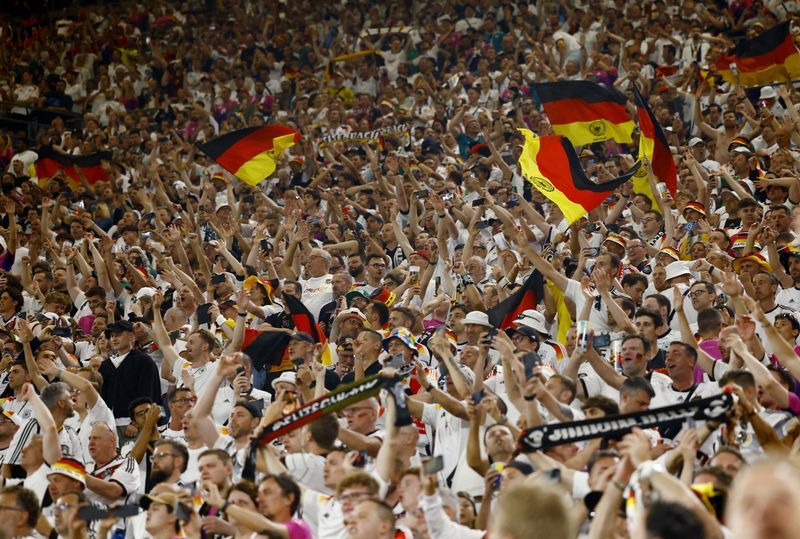
German law enforcement launched a nationwide operation on Wednesday that encompassed searches at the Deutsche Fussball-Bund (DFB) headquarters, according to reporting by Bild newspaper, as investigators pursued allegations of misconduct surrounding ticketing and hospitality arrangements at the 2024 European Football Championship. The coordinated raids represent a significant development in what appears to be a systematic examination of how match tickets and hotel accommodations were distributed before and during the continental tournament, which took place across ten German cities in summer 2024.
Prosecutors based in Bochum and the North Rhine-Westphalia state criminal office confirmed they were executing searches at several locations throughout Germany, though their official statement did not specifically name the DFB or detail the association's involvement. The investigation centers on what authorities describe as unauthorized distribution of benefits connected to international football matches, language that encompasses the suspected improper allocation of tickets and hospitality packages to preferred individuals and groups.
At the heart of the inquiry lies an allegation that hotel invitations and several thousand tickets were unlawfully channeled to selected guests ahead of matches during the Euro 2024 tournament. Rather than being made available through proper distribution channels accessible to the general public or legitimate hospitality partners, these resources appear to have been diverted through informal networks. The scale suggested by references to "several thousand tickets" indicates this was not merely isolated instances of minor misconduct but potentially a widespread pattern of preferential treatment.
Among those under investigation are a German national employed as a municipal official in Gelsenkirchen, one of the ten host cities, and a French national, according to Bild's reporting. The German official from Gelsenkirchen is suspected of receiving match tickets, travel arrangements, and hotel accommodations valued at approximately €2,400 (equivalent to about $2,736). This specific figure suggests the investigation has already conducted detailed accounting of benefits provided, indicating the probe has moved beyond initial suspicions to gathering concrete evidence.
The timing and scope of Wednesday's raids signal that German authorities have developed sufficient probable cause to expand their investigation beyond initial leads. The involvement of multiple jurisdictions—specifically the Bochum prosecutors and North Rhine-Westphalia state police—points to coordination across regional law enforcement, suggesting the suspected violations may be geographically dispersed across several host cities rather than concentrated in a single location. This multi-jurisdictional approach is typical when authorities suspect organized schemes rather than isolated improprieties.
The allegations carry particular significance for the DFB and the reputation of Euro 2024, an event that cost hundreds of millions of euros to organize and was viewed as a successful restoration of major football on German soil. The tournament's management and integrity become scrutinized when questions emerge about how its most precious resources—match tickets and hospitality access—were distributed. For the DFB, any finding of institutional involvement in improper ticket allocation could damage its standing and raise questions about governance during a major international event.
For Malaysian and Southeast Asian readers, this development illustrates how scrutiny of major sporting events extends beyond on-field performance to encompass financial governance and ethical distribution of benefits. As regional nations bid to host future tournaments, either unilaterally or collectively, the Euro 2024 investigation serves as a cautionary reminder that transparency in ticket allocation systems and clear separation between official distribution channels and informal networks remains essential. The potential for privileged access based on political or administrative position rather than merit or public lottery is a concern that transcends borders.
The DFB declined immediate comment when approached by journalists, a standard response when organizations face active investigations. The European football governing body UEFA similarly did not respond promptly to inquiries, though as the tournament organizer, UEFA's own accountability regarding oversight of ticketing practices may eventually come into question. Prosecutors in Bochum also refrained from elaborating beyond their initial statement, a typical approach when investigations remain active and authorities seek to preserve evidence integrity and avoid compromising prosecution efforts.
The investigation carries implications for how major sporting organizations worldwide approach the delegation of hospitality distribution. When thousands of prime tickets and hotel packages exist, the temptation for officials to distribute them through personal networks rather than transparent mechanisms becomes significant. The Euro 2024 case suggests that German authorities believe such informal distribution occurred, potentially benefiting officials and politically connected individuals at the expense of ordinary supporters and legitimate commercial partners.
What remains unclear at this stage is whether the investigation focuses solely on individuals who received improper benefits or whether it extends to the institutional frameworks and decision-making processes that may have enabled such distribution. The DFB's own officials and employees could potentially face questions about their roles in authorizing or facilitating the allocation arrangements, or alternatively the association may prove to be a victim of misuse of its authority by external actors. The raid on DFB offices will likely yield documents and communications that clarify these questions for investigators.
As the investigation proceeds, sports governance experts will be watching closely to understand what systemic weaknesses permitted suspected misconduct to occur during such a high-profile event. The lessons from this probe may inform how future tournaments, particularly those planned for Asia-Pacific nations, design their ticketing oversight mechanisms. For football supporters in Germany and across Europe, the investigation underscores broader concerns about equitable access to major matches and whether resources are distributed fairly or according to influence and position.

