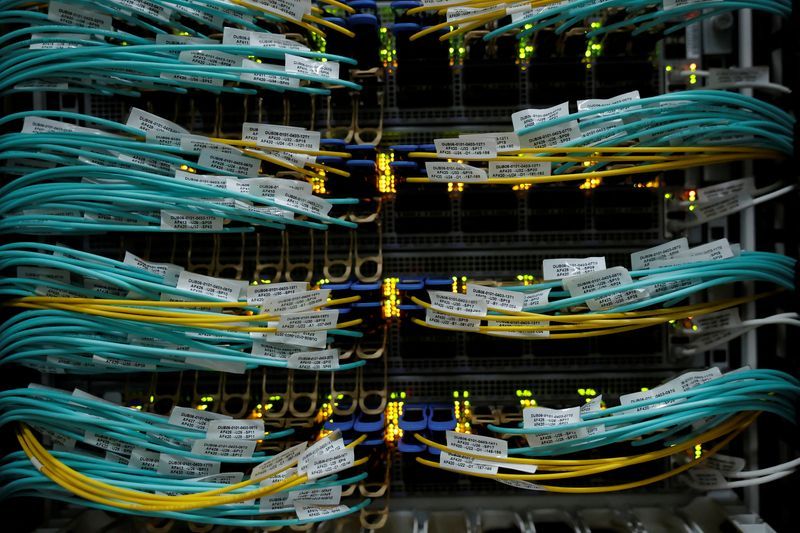
The race to build artificial intelligence infrastructure is colliding head-on with environmental and resource constraints, prompting governments across multiple continents to slam the brakes on new data centre construction. From the United States to Europe, regulatory authorities are adopting increasingly stringent measures—ranging from temporary moratoriums to permanent bans—to manage the explosive growth of facilities that power the AI revolution. This global crackdown reflects mounting concerns about electricity consumption, freshwater depletion, land use conflicts, and the cumulative strain placed on local communities and municipal infrastructure, signalling a fundamental tension between technological advancement and sustainable development.
In the United States, New York became the first state to enact a comprehensive moratorium when Governor Kathy Hochul imposed a one-year freeze on data centre construction for facilities consuming 50 megawatts or more of electrical power. The moratorium halts the issuance of new discretionary permits from the Department of Environmental Conservation while state officials devise a framework to evaluate the environmental consequences of such projects. This policy shift represents a decisive move by one of America's most economically influential states to reassert control over a sector that has been expanding with minimal regulatory oversight. The New York precedent may well influence other states grappling with similar infrastructure pressures and community concerns.
Maine presented a contrasting approach to the data centre question when Governor Janet Mills vetoed bipartisan legislation that would have introduced an 18-month moratorium on new facilities using more than 20 megawatts of power. Had it passed, Maine's measure would have marked the first such statewide ban in the United States. Mills acknowledged support for the moratorium concept in principle but objected to a provision that would have exempted a specific project planned for the Town of Jay, illustrating how local economic interests and broader environmental goals can become entangled in legislative processes. Her veto demonstrates that even bipartisan consensus may fracture when particular developments or communities stand to benefit from exemptions.
California's experience offers a glimpse into how direct democracy can reshape data centre policy. Monterey Park residents voted in June 2026 to permanently prohibit data centres within city limits, becoming the first American municipality to achieve such a ban through popular ballot initiative rather than city council action alone. The decision followed widespread community opposition to a proposed facility. Monterey Park's regulatory journey began with a modest one-year moratorium imposed in 2019, which evolved into a more restrictive April 2025 ordinance banning new data centres and expansions until at least 2030, eventually leading to the outright permanent prohibition endorsed by voters. This trajectory suggests that public sentiment against data centre development can intensify over time, particularly when residents perceive inadequate consultation or unfair distribution of environmental burdens.
Netherlands authorities took a different regulatory approach by implementing a national hyperscale data centre ban in 2022 that constrains large facilities to two designated geographic locations across the entire country. This centralized zoning strategy aims to concentrate environmental impacts in predetermined zones while protecting other regions from infrastructure sprawl. However, the policy's effectiveness has been tested by creative compliance efforts. Microsoft obtained approval in January 2026 for a data centre project designed as three separate towers, each individually sized below the regulatory threshold, thereby circumventing the overall facility restriction. This case exemplifies how companies frequently pursue technical workarounds to existing regulations, suggesting that static rules may require periodic refinement to address evolving market strategies.
Ireland confronted data centre expansion through grid capacity constraints rather than explicit construction bans. The nation's electricity grid operator effectively blocked new data centre connections in the Dublin region from 2021 onwards, responding to warnings that these energy-intensive facilities were destabilising the electrical distribution system. The freeze persisted for roughly four years until December 2025, when authorities lifted the blanket prohibition and introduced a modified framework requiring new connections to bring their own on-site power generation capacity. This requirement fundamentally shifts the infrastructure burden and investment responsibility from public utilities to private data centre operators, creating a market-driven mechanism for managing grid stability rather than relying on outright prohibition.
The underlying drivers of these restrictions reveal legitimate anxieties about the sustainability of unlimited data centre expansion. Electricity consumption remains the most visible concern, as large facilities operate continuously and consume power equivalent to small cities. Water usage compounds environmental anxiety, particularly in regions experiencing drought or competing demands from agriculture and municipal supplies. Land scarcity in densely populated jurisdictions raises questions about opportunity costs and urban sprawl. Communities adjacent to proposed facilities frequently report concerns about noise, traffic, electromagnetic effects, and the disproportionate concentration of industrial infrastructure in their neighbourhoods without corresponding economic benefits beyond temporary construction employment.
For Southeast Asian policymakers and investors, these international restrictions carry strategic implications. The region's combination of lower electricity costs, relative land availability, and emerging digital economies has already attracted significant data centre investment from global technology companies. However, the regulatory restrictions emerging in developed markets suggest that Southeast Asia may eventually face similar pressures as demand for computational resources grows and local environmental awareness intensifies. Countries such as Malaysia, Singapore, and Thailand should monitor regulatory trajectories in Europe and North America, consider the long-term sustainability of their existing infrastructure policies, and engage in proactive stakeholder consultation before local opposition reaches the intensity witnessed in communities like Monterey Park.
The divergent regulatory responses across jurisdictions reflect broader disagreements about how to balance technological innovation against environmental stewardship and community welfare. Outright bans provide maximum environmental protection but risk driving investment and economic opportunity to less-regulated jurisdictions, a classic regulatory arbitrage dynamic. Temporary moratoriums allow time for policy development but may be overtaken by rapid technological change. Mandatory on-site power generation shifts costs to operators but requires technological sophistication and availability of renewable energy sources. No single approach appears universally optimal, and the international patchwork of restrictions may eventually necessitate coordinated frameworks similar to those governing other transnational industries.
Looking forward, the tension between artificial intelligence infrastructure demands and environmental sustainability will likely intensify rather than resolve. Data centre efficiency improvements and renewable energy adoption may partially address electricity concerns, but fundamental constraints on water availability and land use may prove more intractable. Technology companies are increasingly forced to negotiate with local authorities and communities, incorporating mitigation measures and benefit-sharing agreements into their expansion plans. The transformation from permissive infrastructure frameworks to contested regulatory environments suggests that the era of unconstrained data centre growth has effectively ended, requiring industry participants to demonstrate genuine environmental responsibility rather than simply complying with minimal standards.

