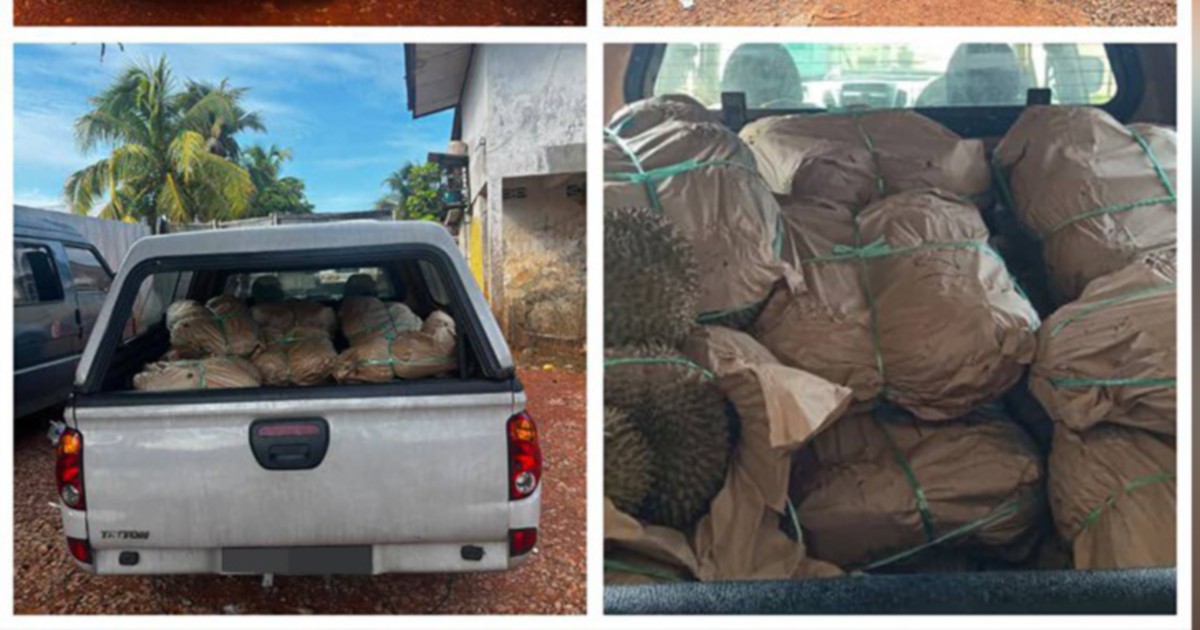
In a significant enforcement operation, the General Operations Force apprehended a young man attempting to transport a substantial cargo of durians through an unauthorised waterway entry point in Kelantan yesterday. The suspect, aged 20, was detained during an inspection at the Abe Li Posmen illegal jetty in Rantau Panjang, bringing to light yet another attempt to circumvent Malaysia's controlled border entry procedures through illicit trade channels.
The seized consignment totalled 350 kilogrammes of durians, the country's prized "king of fruits," which officials valued at more than RM50,000. Alongside the agricultural contraband, enforcement personnel also confiscated the four-wheel-drive vehicle utilised in the smuggling operation, compounding the financial impact of the interdiction for those involved in the illicit network.
The Abe Li Posmen location represents part of an established route through which contraband—both agricultural goods and other commodities—regularly attempts transit into Malaysian territory. The prevalence of such illegal jetties along the Kelantan coastline underscores the persistent challenge authorities face in monitoring Malaysia's extensive maritime borders, particularly in regions with established communities and complex waterway infrastructure that facilitate clandestine movements.
For Malaysian consumers and traders, durian smuggling operations carry multiple implications. The illicit trade undermines legitimate domestic producers and importers who comply with tariffs, quality controls, and phytosanitary standards designed to protect public health and fair market competition. Local durian farmers, particularly those in Pahang and Johor—traditional cultivation centres—contend with price suppression when unvetted foreign supplies bypass regulated channels.
The arrest illuminates operational tensions within Southeast Asia's agricultural trade ecosystem. Neighbouring countries with lower production costs and fewer regulatory constraints present constant incentives for smugglers to exploit price differentials and tariff structures. Durians, with their high value-to-weight ratio and strong demand in urban Malaysian markets, remain a frequent target for cross-border illicit commerce alongside other high-margin agricultural products.
The General Operations Force has intensified maritime patrols and jetty surveillance following escalating reports of smuggling activity. This particular interception demonstrates the efficacy of strategic positioning and intelligence-led enforcement, though the sheer volume of potential crossing points along Malaysia's maritime perimeter means such operations represent only a fraction of suspected trafficking flows. The individual detained will likely face charges under customs and smuggling legislation that carry substantial penalties including fines and imprisonment.
The incident arrives amid broader Malaysian government commitments to strengthen border security and enhance revenue collection through more rigorous import-export oversight. Durian smuggling specifically strains these resources because the commodity's perishability demands rapid transport, creating time-sensitive operational windows that smugglers exploit. Unlike static contraband, agricultural goods require expedited processing, complicating enforcement personnel's ability to conduct thorough inspections without significant economic loss to legitimate cargo holders.
Industry analysts note that genuine trade liberalisation and harmonised tariff structures across ASEAN could theoretically reduce incentives for smuggling by narrowing price gaps between markets. However, political sensitivities surrounding agricultural protection—particularly for commodities with strong cultural and economic significance—make such reforms politically contentious. Malaysia maintains substantial import duties and regulations on durians partly to shield domestic growers from external competition, creating the very conditions that motivate illicit trading networks.
The confiscation also raises questions about the downstream distribution networks that receive smuggled produce. Criminal syndicates operating across maritime borders typically maintain organised logistics involving warehousing, cold storage, and retail distribution channels. Understanding and disrupting these networks remains a significant investigative priority for authorities seeking to prevent future smuggling attempts.
Moving forward, the GOF's continued vigilance at unregulated entry points remains critical for maintaining border integrity and protecting domestic agricultural interests. Cooperation with state-level authorities, port operators, and intelligence agencies enhances the likelihood of detecting such operations before contraband reaches consumer markets. The Rantau Panjang apprehension exemplifies these collaborative efforts, though sustainable success will ultimately depend on adequate resource allocation and technological investment in monitoring Malaysia's vulnerable maritime approaches.

