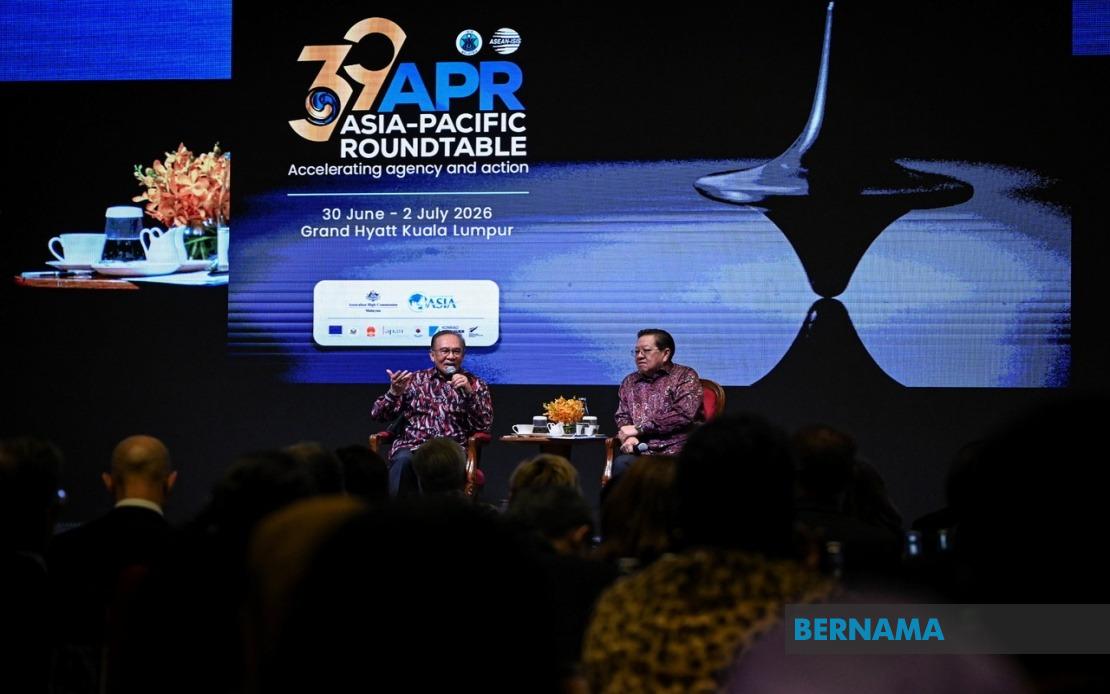
Prime Minister Datuk Seri Anwar Ibrahim has placed domestic governance at the centre of Malaysia's policy agenda, declaring that the nation cannot meaningfully contribute to global affairs without first addressing fundamental institutional weaknesses and internal challenges. Speaking at the 39th Asia-Pacific Roundtable in Kuala Lumpur on July 2, he articulated a vision of reform-led governance that prioritises the wellbeing of ordinary citizens over international posturing, a stance that reflects his government's broader development philosophy.
The Prime Minister outlined four interconnected pillars underpinning his administration's approach: strengthening governmental institutions, eliminating corruption from public systems, narrowing the gap between rich and poor, and guaranteeing every Malaysian access to education and healthcare. This bundled agenda suggests that Anwar views these challenges not as separate policy domains but as mutually reinforcing elements of a coherent reform programme. His emphasis on rooting out graft is particularly significant given Malaysia's historical struggles with institutional integrity and the public perception that corruption has long eroded trust in government.
Anwar's comments reflect a calculated repositioning of Malaysia's international role. Rather than seeking prominence through vocal engagement with global disputes, the government appears intent on demonstrating that a Muslim-majority nation can simultaneously maintain strong Islamic identity while upholding pluralist democratic institutions and moderate governance practices. This framing carries particular weight in contemporary international discourse, where questions about compatibility between Islam and liberal democracy remain contested. By pointing to Malaysia's lived example, Anwar presents a counternarrative to polarising civilisational frameworks that dominate some global conversations.
In rejecting the notion of inevitable "clash of civilisations," the Prime Minister drew on intellectual authority by referencing Edward Said, the late postcolonial theorist, to reframe international conflicts as rooted in ignorance and misunderstanding rather than fundamental incompatibility of value systems. This rhetorical move serves multiple purposes: it depoliticises religious and cultural differences by attributing tensions to correctable failures of comprehension, and it positions Malaysia as intellectually sophisticated rather than merely reactive to global tensions. The invocation of Said also signals openness to scholarly and nuanced thinking about complex international issues.
Central to Anwar's articulation is Malaysia's MADANI framework, a governance model that attempts to harmonise technological progress with what he calls human values. The framework's dual focus suggests recognition that prosperity achieved through innovation means little if it fails to strengthen social bonds or erodes cultural cohesion. For Malaysian policymakers grappling with rapid digitalisation and economic transformation, this balancing act represents a substantive challenge that extends beyond rhetorical commitment.
The Prime Minister invoked the Quranic concept of "li ta'arafu," roughly understood as mutual recognition and understanding, to underscore his vision for multiethnic coexistence. This theological grounding distinguishes his approach from secular multiculturalism frameworks, anchoring inclusive governance within Islamic thought itself. For a Muslim-majority electorate, such framing normalises pluralism not as a Western import but as authentically rooted in Islamic tradition. The distinction between mere tolerance and active appreciation of difference, which Anwar emphasised, also sets a higher bar than passive acceptance, demanding genuine engagement across communities.
The timing and venue of these remarks deserve consideration. The Asia-Pacific Roundtable traditionally brings together regional policymakers, academics, and strategists to debate pivotal questions shaping the region's trajectory. By prioritising domestic governance at such a forum, Anwar signalled that Malaysia will not pursue regional influence through military buildups, strategic hedging, or alignment competition. Instead, the nation's contribution to Asian stability and development flows from internal institutional strength and demonstrated capacity to manage complexity at home.
For Malaysian readers, this positioning carries immediate implications. Government agencies face heightened accountability expectations as Anwar commits publicly to anti-corruption drives and service delivery improvements. Citizens in provinces beyond Kuala Lumpur may scrutinise whether education and healthcare enhancements materialise beyond announcements. Business communities will watch whether governance reforms create clearer regulatory environments or whether institutional instability persists. Teachers, doctors, and social workers will assess whether the rhetorical commitment to their sectors translates into resource allocation and professional recognition.
Regionally, Anwar's emphasis on internal consolidation provides a counterweight to the militarisation and strategic competition increasingly characterising Asian geopolitics. By arguing that governance strength rather than strategic assertiveness defines national contribution, the Prime Minister offers an alternative model to younger Southeast Asian leaders weighing their own policy priorities. This approach may prove particularly resonant in contexts where state capacity remains contested and citizens demand basic service delivery before government pursues external ambitions.
The intellectual architecture Anwar constructed through reference to Said and Islamic theology also attempts to elevate Malaysia's governance conversation above partisan domestic politics. By grounding reform imperatives in universal principles recognisable across ideological divides, he positions governance strengthening as a national project transcending electoral cycles. Whether such framing can overcome entrenched political scepticism among opposition constituencies remains uncertain, but the rhetorical move itself reflects sophisticated understanding that sustained reform requires broad social consensus.
Moving forward, the practical challenge for Malaysia's government involves translating these carefully articulated principles into institutional mechanisms that resist backsliding and ensure continuity across leadership transitions. Anti-corruption architecture, education curriculum overhauls, and healthcare system reforms all demand sustained investment and political protection from powerful interests benefiting from status quo arrangements. The gap between Anwar's eloquent vision and messy implementation will ultimately determine whether this governance-first agenda becomes a defining characteristic of Malaysian development or remains principally rhetorical.

