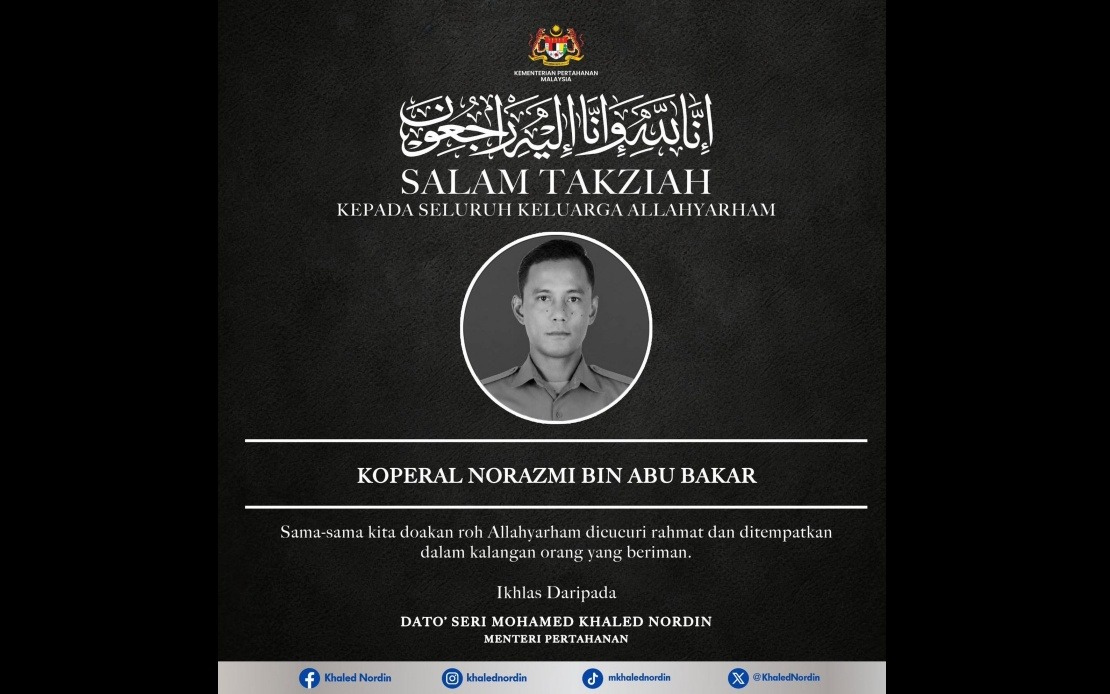
A tragic incident at a military training facility in Kedah has claimed the lives of two servicemen, prompting expressions of grief and support from Malaysia's highest government officials. Corporal Norazmi Abu Bakar of the 6th Battalion, Royal Malay Regiment, and Private Siti Khadijah Sungip of the 1st Squadron, Royal Army Engineers Regiment, were fatally injured during a grenade-throwing exercise at Hobart Camp firing range in Gurun on June 16. The blast occurred at 10.57 am, and despite immediate medical intervention, both personnel succumbed to their injuries while being transported to Sultan Abdul Halim Hospital in Sungai Petani.
Defence Minister Datuk Seri Mohamed Khaled Nordin issued an official statement expressing the government's profound sorrow over the losses. In his message posted on social media, the minister emphasised that the ministry and government stand united in prayer with the bereaved families during this difficult period. The statement conveyed hopes that the families would find the spiritual fortitude necessary to endure their loss, acknowledging the gravity of the tragedy not merely as an institutional matter but as a human loss affecting multiple households.
The Defence Minister's remarks extended beyond formal condolences, incorporating religious sentiments reflecting Malaysia's Islamic heritage. He prayed that Allah would grant mercy to the departed souls, forgive their transgressions, and welcome them among His righteous servants. This approach underscores how state institutions in Malaysia integrate faith-based expressions of sympathy alongside official protocols, a practice that resonates deeply within the predominantly Muslim Malaysian society and military establishment.
The incident underscores the inherent dangers associated with live-fire and explosive ordnance training, exercises that remain essential components of military readiness and personnel competency. Training accidents, though statistically uncommon when proper safety protocols are maintained, represent one of the sobering realities military personnel confront. The occurrence at Hobart Camp raises questions about whether existing safety measures were fully implemented or whether additional protective procedures might be warranted for such high-risk activities.
General Tan Sri Azhan Md Othman, the Malaysian Army Chief, has initiated a comprehensive investigation to establish what led to the fatal explosion. This directive signals the military's commitment to identifying potential systemic failures, procedural lapses, or equipment malfunctions that may have contributed to the tragedy. Such inquiries typically examine multiple factors including weather conditions, equipment maintenance records, personnel training status, and adherence to established safety protocols during the exercise.
The loss of these two soldiers carries particular significance given the composition of the Malaysian armed forces. Private Siti Khadijah's presence in the Royal Army Engineers Regiment reflects the increasingly integrated role women now occupy within Malaysia's defence establishment. Her death represents not only a personal tragedy but also underscores the shared risks that all military personnel, regardless of gender, willingly assume when serving their nation. The incident may prompt broader discussions within military circles regarding whether training procedures adequately account for all participants' safety needs.
Hobart Camp in Gurun, Kedah, serves as a critical training facility for the Malaysian Army's live-fire exercises and ordnance training. The location's continued operation despite this incident suggests that preliminary assessments did not identify facility-wide structural or operational defects. However, the investigation may reveal whether specific training protocols require modification or whether equipment requiring maintenance had been overlooked prior to the scheduled exercise.
For the broader Malaysian military community, such tragedies carry ripple effects beyond immediate mourning. Servicemen and women across the armed forces recognise the inherent risks their profession entails, yet incidents during training—where participants expect controlled conditions and supervised safety measures—particularly impact morale and institutional confidence. The manner in which military leadership responds to these events, including transparency regarding investigation findings and any implemented corrective measures, significantly influences how personnel perceive institutional commitment to their welfare.
The Malaysian government's swift and public acknowledgment of the tragedy through the Defence Minister's statement demonstrates institutional responsiveness to such emergencies. In an era when information spreads rapidly through digital channels, authorities recognised the necessity of addressing the incident promptly with official communications rather than allowing speculation or misinformation to circulate unchecked among the public and military families.
From a regional perspective, military training accidents across Southeast Asia periodically trigger discussions about standardising safety protocols and sharing best practices among allied nations' defence establishments. Malaysia, as a key member of regional security architecture and a participant in various multilateral defence agreements, maintains training standards that generally align with international best practices. Whether this incident will catalyse any regional initiatives toward enhanced training safety remains to be determined as investigation results become available.
The investigation's findings will likely inform policy adjustments within the Malaysian Army regarding grenade-throwing exercises and similar high-risk training activities. Previous incidents across various military establishments globally have frequently resulted in enhanced pre-exercise safety briefings, more rigorous equipment inspections, and stricter protocols governing maximum participant distances from blast zones. Whatever measures emerge from this investigation will serve as painful reminders of the costs associated with military preparedness.
As the investigation proceeds, the focus remains on supporting the bereaved families and honouring the service of Corporal Norazmi Abu Bakar and Private Siti Khadijah Sungip. Their deaths, occurring during exercises designed to enhance national defence capabilities, represent the ultimate sacrifice that military personnel occasionally make in service to their country. The incident will undoubtedly become a sobering reference point within military training circles, reinforcing that even routine, well-established exercises demand unwavering commitment to safety protocols and continuous reassessment of risk factors.