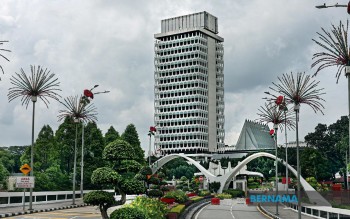
The Malaysian government has moved to dispel allegations of impropriety in the deployment of Asset Recovery Trust Account funds, with the Ministry of Finance clarifying that every disbursement from the account operates strictly within the parameters of an approved Trust Directive. In a parliamentary response tabled on July 16, the ministry emphasised that the financial resources held within this account have been allocated exclusively for legitimate and sanctioned purposes, encompassing both the administrative expenses required to maintain operations and the systematic reduction of outstanding liabilities tied to 1Malaysia Development Bhd and SRC International Sdn Bhd.
The nature of these debt obligations extends beyond the companies' direct borrowings. The ministry elaborated that a portion of the funds has been channelled toward repaying shareholders' advances previously supplied by the Minister of Finance (Incorporated), an entity created specifically to bridge shortfalls in meeting the financial commitments of 1MDB and SRC. This layered structure reflects the complexity of Malaysia's efforts to unwind the financial entanglements created by these two entities, which have become synonymous with governance challenges that have shaped public discourse for nearly a decade.
These clarifications emerged in response to parliamentary questioning from Datuk Mohd Isam Mohd Isa, a Barisan Nasional member representing Tampin, who sought assurances regarding the legitimacy of fund utilisation. The parliamentarian's inquiry reflected broader public and political concerns about whether resources recovered through anti-corruption efforts and asset seizures were being deployed appropriately. The timing of such questions underscores the persistent scrutiny surrounding 1MDB and SRC, both institutions whose financial mismanagement precipitated significant reputational damage to Malaysia's governance standards globally.
The ministry's position rests fundamentally on the assertion that all expenditures conform to established governance frameworks. The Trust Directive governing the Asset Recovery Trust Account, according to the ministry's statement, delineates precise boundaries for permissible uses, and the government maintains that its spending decisions fall comfortably within these prescribed limits. The categorical rejection of misuse allegations carries implicit confidence in the oversight mechanisms purportedly embedded within the account's management structure, though the opacity surrounding these details continues to invite scepticism from observers of Malaysia's fiscal transparency.
Contextualising this response requires understanding the broader financial picture that the government presented simultaneously. The ministry released data from the Malaysia Economic Report for the first quarter of 2026, revealing that Malaysia's total estimated revenue for the calendar year stands at RM343.1 billion, subdivided into RM270.4 billion from conventional taxation and RM72.7 billion from non-tax sources. This bifurcation between tax and non-tax revenue represents a fundamental distinction in public finance management, with non-tax income increasingly critical to bridging budgetary requirements in an environment of constrained tax bases and competing spending pressures.
The first quarter performance of non-tax revenue demonstrated notable acceleration, expanding by 22.9 per cent year-over-year to reach RM18.8 billion from RM15.3 billion in the corresponding 2025 period. This substantial growth trajectory reflects Malaysia's diversified approach to revenue generation beyond conventional income and corporate taxation, tapping into licensing regimes, registration and permitting systems, charges for governmental services, asset sales, rental income streams, and returns generated from financial investments and shareholdings. The composition of non-tax revenue also encompasses penalties and fines, alongside philanthropic contributions, creating a revenue mosaic that reflects the government's multiple revenue-raising mechanisms.
Among the identifiable drivers of this 2026 first-quarter non-tax revenue surge were receipts from licenses and permits, which form the backbone of regulatory revenue collection in Malaysia's federal system. Equally significant were dividend transfers from Petronas, the national petroleum corporation whose profitability fluctuates with global energy markets and production dynamics. Bank Negara Malaysia's dividend contributions also featured prominently, reflecting the central bank's accumulation of financial surpluses that the government periodically draws upon to supplement fiscal resources. These three revenue streams collectively demonstrate how Malaysia's non-tax income remains substantially dependent on the performance and policy decisions of major state-linked entities.
For Malaysian readers and regional observers, the ministry's stance on Asset Recovery Trust Account utilisation carries implications extending beyond mere fiscal accounting. These funds represent tangible recoveries from the 1MDB and SRC episodes, which resulted in multiple international investigations, criminal prosecutions, and substantial reputational costs to Malaysia's standing in global financial governance. The transparent and appropriate deployment of such recovered assets carries symbolic weight, signalling whether Malaysia's institutional mechanisms can effectively manage the financial wreckage of major governance failures.
The government's assertion that all spending aligns with approved directives, while formally reassuring, does not necessarily address the substantive question of whether the Trust Directive itself reflects appropriately rigorous oversight standards. The Asset Recovery Trust Account occupies a somewhat liminal space within Malaysia's fiscal architecture, distinct from conventional budgetary allocations yet substantially funded by extraordinary asset seizures. The governance question ultimately transcends mere compliance with existing directives to encompass whether those directives themselves embody sufficiently robust safeguards against future diversion or misallocation.
The parliamentary exchange exemplifies an ongoing tension within Malaysian governance discourse between the government's preference for consolidated institutional narratives and opposition and civil society demands for granular transparency regarding the disposition of consequential financial resources. As Malaysia continues managing the protracted resolution of 1MDB and SRC liabilities, the credibility of such resolution depends significantly on public confidence that recovered funds and related financial mechanisms operate within genuinely rigorous oversight frameworks. The government's parliamentary responses provide formal assurance but may require supplementation through more expansive disclosure of the specific mechanisms and periodic external audits that substantiate compliance claims.

