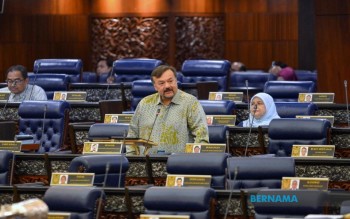
The Malaysian government has accelerated its support for micro-entrepreneurs, approving more than RM500 million in micro-financing loans within a six-week window from May 15 to June 26, 2026. Finance Minister II Datuk Seri Amir Hamzah Azizan disclosed the achievement during parliamentary Question Time, signalling the administration's commitment to sustaining small business operations despite mounting cost pressures across the economy. The rapid deployment of funds demonstrates the government's recognition of urgent financing needs among Malaysia's vast micro-enterprise sector, which collectively forms the backbone of the informal and formal retail economy.
The approved financing reached more than 30,000 entrepreneurs through the Micro Financing Facility Programme, part of a larger RM5 billion allocation designed specifically to shield vulnerable businesses from economic shocks. This initiative represents a substantial government intervention in the credit markets, effectively complementing conventional banking channels that may impose stricter collateral and documentation requirements on informal traders and hawkers. The scale of disbursement—achieving over 10 per cent of the five-billion-ringgit commitment in just six weeks—suggests administrative efficiency and strong uptake from eligible applicants across Malaysia's regions.
The government channelled micro-financing through an established network of state-backed lending institutions including Amanah Ikhtiar Malaysia, Agrobank, Bank Simpanan Nasional, Bank Rakyat, MARA and TEKUN Nasional. This multi-institution approach ensures geographic reach into underserved areas while leveraging each lender's existing relationships with their respective client bases. For Malaysian entrepreneurs in smaller towns and rural areas, access to capital through MARA and TEKUN Nasional has historically been critical; the strengthened funding allows these institutions to process applications more expeditiously and approve larger loan amounts to deserving applicants.
Parallel to the micro-financing scheme, the government activated the RM5 billion MADANI Government Assistance Guarantee Scheme, administered through Syarikat Jaminan Pembiayaan Perniagaan Bhd. This guarantee programme reduces lender risk by backing a portion of loan losses, thereby encouraging commercial banks to extend credit to small and medium enterprises that might otherwise face rejection due to limited collateral or credit history. Between mid-May and mid-June 2026, the scheme had already facilitated RM219 million in approved financing guarantees benefiting over 300 MSMEs, predominantly concentrated in agriculture, construction, logistics and tourism sectors—industries critical to Malaysia's economy and employment but frequently vulnerable to external shocks.
The targeting of these four sectors reflects deliberate policy prioritisation. Agriculture remains strategically important for domestic food security and rural livelihoods; construction drives infrastructure development and employment; logistics underpins Malaysia's position as a Southeast Asian trade hub; and tourism represents significant foreign exchange earnings and multiplier effects across hospitality and transport. By concentrating guarantee support in these areas, the government addresses both macroeconomic resilience and sectoral vulnerabilities, recognising that MSME weakness in these industries could cascade into broader economic contraction.
Beyond guarantees and direct micro-financing, the government launched the RM5 billion SME Stabilisation Relief Facility in mid-May 2026 through Bank Negara Malaysia. This specialised programme had approved nearly RM1 billion for more than 1,500 MSMEs by late June, indicating strong demand and relatively smooth implementation. The relief facility appears designed to address cash flow crises and operational continuity among registered small and medium enterprises, complementing the micro-financing programme's focus on informal traders and self-employed entrepreneurs. Together, these schemes create a tiered safety net spanning the entire spectrum of small business sizes.
Amir Hamzah emphasised that Syarikat Jaminan Pembiayaan Perniagaan Bhd is actively engaging commercial banks to restructure and reschedule existing MSME loans while providing targeted repayment assistance. This component acknowledges that many struggling businesses do not require new capital but rather breathing room to service existing debt obligations. Loan restructuring—extending terms, reducing monthly instalments, or temporarily deferring payments—can prove more cost-effective than permitting defaults and business failures, which destroy jobs and trigger broader economic contraction. Such measures reflect sophisticated policymaking that distinguishes between liquidity crises, which restructuring addresses, and solvency crises, which require different interventions.
The Finance Minister confirmed that approximately RM4 billion in funding remains available across the various schemes, providing substantial capacity for future applications. This buffer signals that the government is not operating under artificial funding constraints and will continue approving eligible requests without rationing scarce capital. For Malaysian entrepreneurs still considering applications, the availability of ample reserves should reduce perception of competitive scarcity and encourage submission of funding requests. The persistent availability of funds also suggests the government views these programmes as structural responses to economic challenges rather than temporary crisis measures with fixed completion dates.
The comprehensive nature of these support mechanisms reflects recognition that Malaysia's MSME sector—encompassing hawkers, small traders, family businesses and registered SMEs—faces genuine headwinds from rising input costs, higher energy prices, elevated financing costs from previous monetary tightening, and competitive pressures from larger enterprises and e-commerce platforms. A single policy instrument could not address such multifaceted challenges; instead, the government deployed parallel schemes targeting different business segments, financing requirements and sectoral priorities. This diversified approach maximises the probability that individual entrepreneurs can access support suited to their specific circumstances and creditworthiness profiles.
For Southeast Asian observers, Malaysia's MSME support package illustrates broader regional tensions between market mechanisms and state intervention during economic stress. While some economists caution that extensive government financing risks moral hazard and inefficient capital allocation, Malaysian policymakers appear to have concluded that the social and political costs of widespread small business failure outweigh such theoretical concerns. The visible commitment to MSME survival, demonstrated through rapid fund disbursement and multiple support pathways, also serves political objectives by visibly demonstrating government responsiveness to constituents' economic distress—a consideration relevant to Amir Hamzah's response to the parliamentary question from a Sabah backbencher representing constituents dependent on small commerce and agriculture.
The true test of these initiatives will emerge over coming months as the business environment either stabilises or deteriorates further. If global economic conditions improve and input costs moderate, the MSME programmes may be retrospectively viewed as well-timed preventive measures that forestalled unnecessary failures. Conversely, if economic pressures intensify, demand for support will likely exceed available funding, requiring difficult decisions about allocation and potentially forcing government budget reallocation toward this priority. Regardless of outcomes, Malaysia's willingness to mobilise over RM5 billion in dedicated MSME financing acknowledges that small business health constitutes a legitimate focus of economic governance, particularly when market mechanisms alone prove insufficient to maintain entrepreneurial viability.

