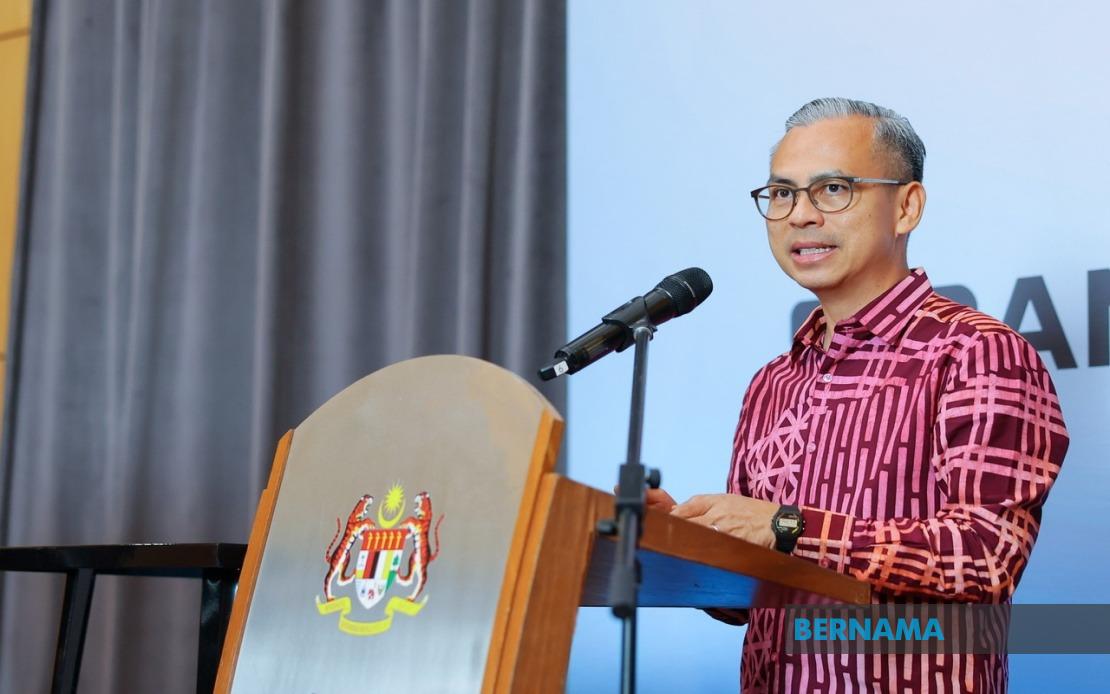
The Malaysian government has unveiled an ambitious new framework to confront the growing menace of online fraud, establishing a specially-convened working committee and technical support group designed to marshal resources across multiple sectors and institutions. Communications Minister Datuk Fahmi Fadzil disclosed the development following a strategic Cabinet retreat in mid-June that examined the alarming trajectory of digital scam-related offences affecting Malaysian citizens.
The formation of this cross-agency alliance represents a significant shift in how authorities approach cybercrime prevention, moving beyond traditional government-only responses toward a collaborative ecosystem model. For the first time, the initiative explicitly incorporates participation from the private banking sector, telecommunications companies, and major digital platforms including social media networks. This horizontal integration signals recognition that online fraud thrives in the spaces where government jurisdiction ends and commercial platforms begin, making corporate cooperation essential to effective mitigation.
Fahmi, who serves as spokesperson for the MADANI Government, outlined the committee's three-pronged strategic focus: strengthening law enforcement operations, refining existing legislative frameworks, and enhancing investigative capabilities across jurisdictions. The minister emphasised that the government views this as a proactive stance rather than reactive damage control, seeking to identify vulnerabilities in Malaysia's digital infrastructure before scammers can exploit them further. This preventive orientation contrasts with earlier approaches that often emphasised prosecution after victimisation occurred.
The inaugural meeting of the working committee is scheduled to proceed imminently, bringing together representatives from various government departments alongside private sector stakeholders. The decision to include banking and telecommunications firms acknowledges these institutions' direct visibility into transaction patterns, communication metadata, and customer behaviour that could reveal emerging scam methodologies. Social media platforms' participation is equally crucial, given their role as both conduit for scam dissemination and potential source of investigative intelligence through user reports and content analysis.
Fahmi acknowledged that specific operational strategies and tactical approaches cannot be publicly disclosed, noting that transparency regarding enforcement methods could inadvertently provide roadmaps to criminal operators. This calculated discretion reflects the cat-and-mouse dynamics of cybercrime, where scammers actively monitor government announcements and media coverage to adjust their techniques. The minister's candour about this information asymmetry demonstrates sophisticated understanding of how public communication can undermine security objectives.
The government has articulated expectations for tangible, near-term outcomes emerging from the committee's work, though precise metrics and timelines remain undisclosed. These anticipated achievements likely encompass accelerated investigation turnaround times, coordinated takedown operations targeting scam infrastructure, and harmonised victim support protocols across agencies. The success of such initiatives depends heavily on whether participating institutions can overcome traditional bureaucratic silos and proprietary corporate information barriers to share relevant data meaningfully.
Parallels exist with previous government efforts to address child sexual exploitation crimes, where cross-agency coordination yielded demonstrable operational successes through specially-mounted task forces and intensive enforcement campaigns. Fahmi referenced this precedent to illustrate how integrated, multi-sector approaches can achieve outcomes that individual agencies acting independently could not match. The committee's architects appear confident that similar collaborative mechanisms can be adapted and scaled for online fraud prevention.
The broader context involves Malaysia's expanding digital economy and corresponding vulnerability of increasingly connected citizens to sophisticated scam networks. Rapid mobile adoption, growing e-commerce participation, and expanding digital financial services have created vast populations of potential victims with varying cybersecurity awareness. Scammers exploit this heterogeneous threat landscape through investment fraud schemes, phishing operations, fake marketplace listings, and impersonation tactics that mutate rapidly as defences improve.
For Malaysian consumers and businesses, the committee's establishment signals governmental acknowledgment of online fraud as a systemic national concern warranting institutional prioritisation and resource allocation. This recognition may catalyse downstream benefits including improved consumer protection frameworks, enhanced platform accountability standards, and more sophisticated law enforcement training in digital investigation techniques. However, the ultimate effectiveness depends on implementation fidelity and whether participating agencies can subordinate territorial concerns to collective objectives.
The inclusion of private sector players introduces both opportunities and complications. Banks and telcos possess sophisticated fraud detection infrastructure and can implement blocking mechanisms against known scammer accounts and infrastructure. Social media platforms control visibility and distribution of scam content. Yet corporate participation also raises questions about data sharing protocols, privacy implications, and whether commercial interests might diverge from public safety objectives in specific scenarios. Clear governance structures within the committee will determine whether public-private integration strengthens or compromises the initiative.
International precedents suggest that sustained commitment, adequate funding, and regular strategic recalibration are essential for such committees to avoid becoming ceremonial bodies that produce little substantive change. Malaysia's task force will require ongoing political backing even as attention inevitably shifts to other policy priorities. Building institutional capacity, recruiting specialised talent, and maintaining momentum through inevitable setbacks and adaptation cycles demands sustained leadership commitment.
The announcement also implicitly acknowledges that scam victimisation carries social and economic consequences extending beyond individual losses. Large-scale fraud undermines trust in digital systems, discourages online economic participation among risk-averse populations, and diverts household resources from productive investment toward risk mitigation. For Southeast Asia's broader digital economy aspirations, tackling fraud at scale becomes prerequisite infrastructure rather than optional policy add-on.

