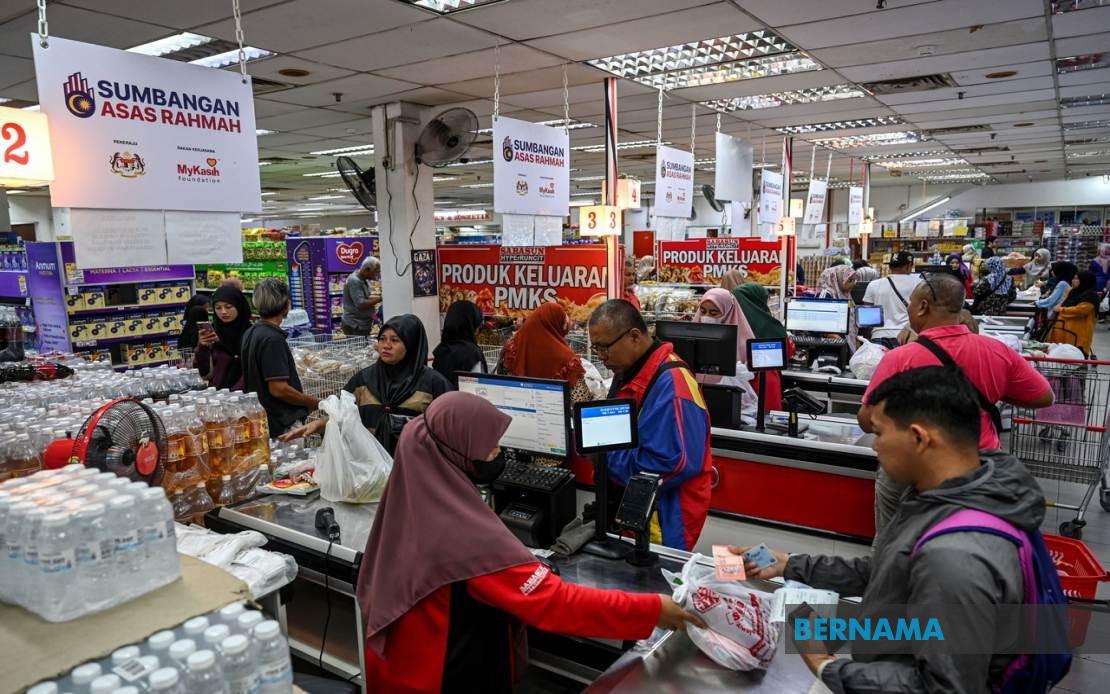
Prime Minister Datuk Seri Anwar Ibrahim has signalled that the MADANI Government remains open to expanding its flagship cash assistance programmes if Malaysia's economic trajectory strengthens sufficiently. Speaking at a community event in Ipoh on July 19, Anwar disclosed that conversations with Treasury officials have already begun exploring whether higher allocations to the Sumbangan Tunai Rahmah (STR) and Sumbangan Asas Rahmah (SARA) schemes are feasible within the broader fiscal framework.
The timing of these remarks carries particular significance for recipients of the dual welfare initiatives, which have become central pillars of the government's social safety net since the MADANI administration took office. Rather than dismissing the possibility outright, Anwar positioned potential increases as dependent upon demonstrable improvements in the nation's economic fundamentals—a conditional undertaking that suggests the government is actively monitoring both macro-level growth indicators and sectoral performance to determine when enhanced support might be viable.
During discussions with Treasury secretary-general Tan Sri Johan Mahmood Merican, officials examined the mechanics and feasibility of raising benefit levels. Anwar emphasised that any decisions would ultimately be reflected in the government's spending blueprint, indicating that the Budget cycle will serve as the formal mechanism for announcing concrete changes. This approach signals that those depending on STR and SARA support should expect clarity within the budgetary process rather than through interim policy pronouncements.
For the millions of Malaysians who rely on these cash transfers—particularly lower-income households, pensioners, and vulnerable groups—the prospect of enhanced assistance addresses ongoing cost-of-living pressures. Since their introduction, STR and SARA have functioned as direct relief mechanisms during periods of economic uncertainty and inflation. The government's willingness to consider expansion demonstrates recognition that current disbursement levels may not fully offset purchasing power erosion in the domestic economy.
The economic condition qualifier, however, introduces an element of contingency that warrants scrutiny. Malaysia's growth trajectory, inflation management, and fiscal deficit reduction remain interlinked variables influencing the government's capacity to commit additional resources to welfare spending. The invocation of economic permissibility suggests that policymakers are calibrating social expenditure against multiple competing priorities, including debt servicing obligations and infrastructure investment.
Beyond the assistance schemes, Anwar reaffirmed the government's commitment to supporting security and emergency response personnel, particularly volunteers under the Malaysian Volunteer Corps (RELA). He disclosed that the annual allocation for RELA member welfare stands at RM3 million, acknowledging this figure as insufficient but confirming the government's intention to sustain the programme. This dual focus on civilian welfare and security sector support reflects a broader policy emphasis on social cohesion and institutional resilience.
RELA's expanded role in both security and disaster response has elevated its operational demands. The RM3 million allocation, while maintained, underscores a tension between acknowledged needs and available resources—a dynamic that parallels broader government budgeting challenges. By pledging continuity of support even as acknowledging inadequacy, Anwar balanced recognition of constraints with political commitment to key constituencies.
The announcement occurs within Malaysia's ongoing economic recovery narrative. While growth has resumed post-pandemic, inflationary pressures and external headwinds continue affecting household finances and business sentiment. The government's measured approach to expanding cash assistance—contingent rather than immediate—reflects cautious optimism tempered by fiscal prudence. This positioning may resonate differently across Malaysian demographics, with proponents viewing it as responsible governance and critics interpreting it as insufficient urgency in addressing living cost pressures.
The trajectory established by these discussions will likely shape upcoming Budget deliberations, with economists, advocacy groups, and opposition figures scrutinising the government's allocation choices. For Southeast Asian observers, Malaysia's approach to welfare expansion amid economic uncertainty provides instructive parallels for regional governance debates surrounding the balance between social spending and fiscal sustainability.
Anwar's remarks ultimately represent a middle position: neither closing the door to enhanced support nor committing unconditionally to immediate increases. This rhetorical stance allows the government flexibility while signalling responsiveness to recipient concerns. Whether improved economic data subsequently translates into concrete benefit enhancements will constitute a significant test of the government's stated priorities and its capacity to translate policy intentions into budgetary reality during the next fiscal cycle.

