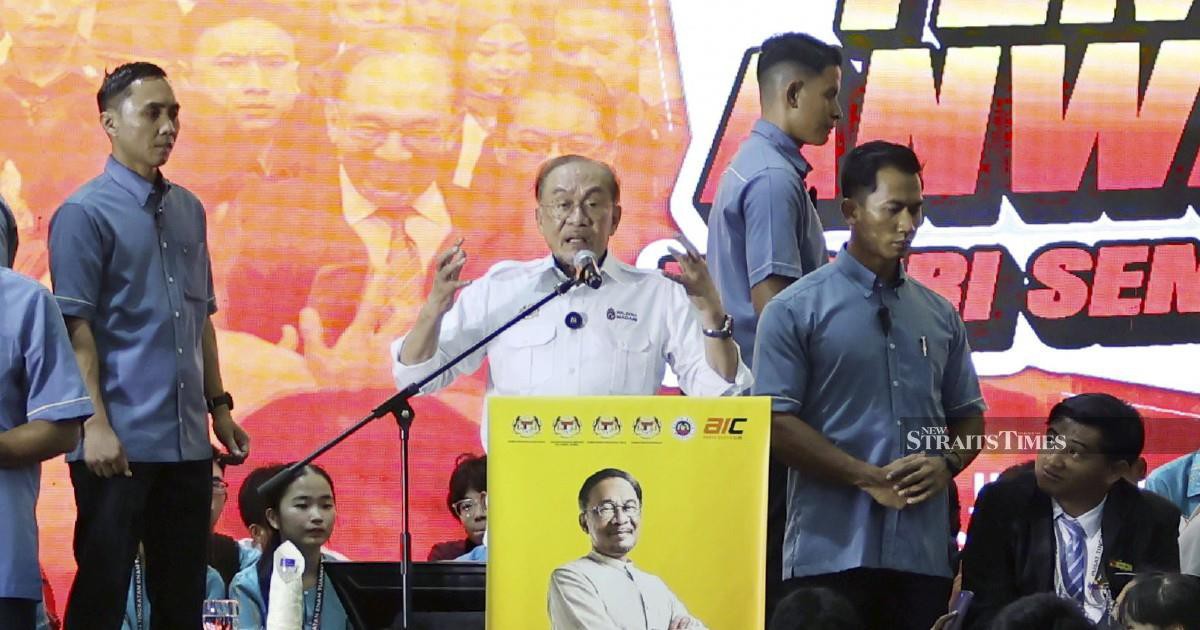
Prime Minister Datuk Seri Anwar Ibrahim has defended the government's decision to channel funds into Tabung Haji, describing the intervention as unavoidable given the severity of the Islamic pilgrimage fund's financial predicament. Speaking in Seremban, the Prime Minister emphasised that without immediate government support, the institution would have faced catastrophic insolvency, leaving millions of Malaysian pilgrims and investors exposed to significant losses.
The Tabung Haji crisis represents one of Malaysia's most significant financial management failures in recent years. The fund, which has served as both an investment vehicle and savings mechanism for Malaysians seeking to perform the hajj pilgrimage, accumulated substantial losses through a combination of poor investment decisions, asset mismanagement, and inadequate governance oversight spanning multiple administrations. The scale of deterioration necessitated urgent corrective action to protect the interests of account holders who had entrusted their life savings with the institution.
Anwar's statement underscores the difficult position the government faced in deciding whether to allow market forces to determine Tabung Haji's fate or intervene directly. Permitting the fund to collapse would have triggered broader financial system concerns, potentially undermining confidence in other government-linked investment vehicles and religious institutions managing public money. The psychological impact on Muslim Malaysians specifically, many of whom view Tabung Haji as a quasi-religious trust, would have extended beyond mere financial considerations to touch on matters of faith and institutional reliability.
The Prime Minister's acknowledgment that intervention was necessary rather than optional reflects a pragmatic recognition that Tabung Haji operates within a distinctive context. Unlike conventional financial institutions that might be allowed to fail through normal market mechanisms, Tabung Haji carries significant cultural and religious weight in Malaysian society. The fund represents a sacred obligation in Islamic tradition, and its collapse would have created profound societal disruption affecting millions of families planning their hajj journeys.
For Malaysian readers accustomed to narratives around government expenditure and fiscal discipline, Anwar's framing also addresses the inevitable criticism that public funds should not be deployed to rescue mismanaged entities. The Prime Minister's position implicitly argues that certain institutions transcend ordinary budgetary considerations because their failure carries systemic consequences disproportionate to their accounting size. This distinction matters as Malaysia navigates broader questions about moral hazard and appropriate boundaries for government bailouts.
The financial rehabilitation of Tabung Haji will likely extend across multiple budget cycles, placing ongoing pressure on government finances already stretched by competing demands for defence, healthcare, education, and infrastructure investment. The opportunity cost of diverting resources toward recovery of a failed institution remains significant, particularly given Malaysia's fiscal consolidation objectives and the need to maintain investor confidence in government debt markets.
From a regional perspective, the Tabung Haji situation carries implications beyond Malaysia's borders. Other Muslim-majority nations operate similar pilgrimage savings schemes and investment vehicles, and the Malaysian experience provides cautionary lessons about governance standards and regulatory oversight. The visibility of this rescue operation within Southeast Asia and the broader Islamic financial world influences perceptions of Malaysian institutional competence and financial regulation sophistication.
The crisis also highlights persistent weaknesses in governance frameworks affecting government-linked companies and funds. Institutional accountability mechanisms failed to detect or adequately address deteriorating financial conditions over extended periods. Regulatory authorities operated with insufficient authority or political will to implement corrective measures before the situation reached critical stages. These systemic failures demand structural reforms to prevent recurrence, not merely financial injections to manage immediate crises.
Looking forward, the successful stabilisation of Tabung Haji depends on more than government cash injections. Comprehensive restructuring of investment strategies, administrative personnel, and governance architecture is essential. The fund must rebuild credibility with account holders through transparent reporting, prudent asset allocation, and demonstrated commitment to fiduciary responsibilities. This recovery process will unfold against the backdrop of Malaysia's broader efforts to strengthen institutional governance and restore public confidence in state-managed entities.
The government's intervention decision, while defensible given the circumstances, also raises questions about preventative governance that deserve serious policy attention. Investment in better regulatory frameworks, enhanced board oversight, and earlier warning systems might have forestalled the crisis entirely. As Malaysia continues managing the Tabung Haji recovery, authorities should simultaneously implement reforms addressing root causes of institutional failure rather than simply addressing symptoms.
For pilgrims and investors who depended on Tabung Haji's reliability, the government rescue provides reassurance about their financial commitments. However, the experience has fundamentally altered perceptions of the institution's trustworthiness and management competence. Restoring these perceptions requires sustained performance improvements and institutional transparency that extends well beyond the current crisis period.

