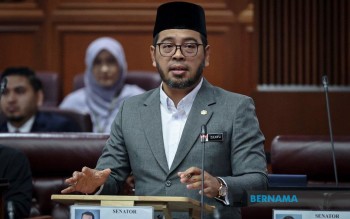
The Malaysian government has committed over RM10 billion in financial support to stabilize Lembaga Tabung Haji following a severe financial crisis rooted in institutional mismanagement and fraud. Addressing parliament in a special sitting, Dr Zulkifli Hasan, the Minister in the Prime Minister's Department (Religious Affairs), clarified that the massive intervention was designed to restore the hajj savings institution's solvency and ensure its operational continuity, not to seize control of its asset portfolio. The disclosure comes after intense scrutiny of the bail-out decision and widespread speculation about the government's intentions regarding Tabung Haji's substantial property and investment holdings.
By the fourth quarter of 2018, Tabung Haji's financial position had deteriorated dramatically, with the institution facing a deficit exceeding RM10 billion—the gap between declared assets and accumulated liabilities. This devastating shortfall emerged suddenly, leaving authorities with only three months to devise a rescue strategy before the institution's collapse became imminent. The severity of the situation forced the Pakatan Harapan Government at the time to move swiftly, recognizing that without intervention, millions of Malaysian Muslims who had entrusted their pilgrimage savings with the institution would face catastrophic losses. The financial emergency underscored systemic vulnerabilities that had accumulated over years of inadequate oversight and operational mismanagement at the institution.
Dr Zulkifli emphasized that the government's rescue package was fundamentally a restructuring initiative aimed at returning the institution to financial sustainability. Rather than absorbing Tabung Haji's assets as some critics had alleged, the government sought to preserve the institution's independence and restore it to a solvent footing. This distinction proved significant given the sensitive nature of Tabung Haji's role as a trusted custodian of Muslim Malaysians' savings earmarked for the Hajj pilgrimage—one of the Five Pillars of Islam and a spiritual obligation of immense importance to the community.
Meanwhile, Dr Zulkifli firmly rebutted misinformation circulating about the nature of asset transfers during the restructuring process. He explicitly denied claims that Tabung Haji had sold assets to non-Muslims or Chinese individuals, characterizing such allegations as irresponsible falsehoods designed to inflame communal tensions and manipulate public opinion. The minister's forceful rejection of these narratives reflected growing concern within government circles about the weaponization of the Tabung Haji crisis for political purposes and the deliberate spread of sectarian narratives that misrepresented the rescue operation's mechanics and intentions.
Crucially, Dr Zulkifli clarified the legal ownership structure of assets removed from Tabung Haji's direct control as part of the restructuring. These holdings had been transferred to Urusharta Jamaah, a company wholly owned by the Minister of Finance Incorporated—a government entity rather than private individuals or external parties. This arrangement ensured that the assets remained under government stewardship and could be managed strategically as part of the broader financial recovery programme. The institutional framework prevented any suggestion that assets had been privatized or transferred to parties without appropriate fiduciary responsibility to Muslim depositors.
The Royal Commission of Inquiry findings that prompted the parliamentary briefing had exposed the depth of institutional failure at Tabung Haji. The investigation revealed how years of inadequate governance, insufficient financial controls, and insufficient risk management had allowed problematic practices to proliferate. These weaknesses created the conditions under which mismanagement and embezzlement could occur on a scale significant enough to nearly destroy the institution entirely. The RCI's conclusions validated the government's decision that a comprehensive restructuring rather than piecemeal reforms was necessary to address systemic deficiencies.
For Malaysian Muslims, the Tabung Haji bailout carried profound implications beyond mere financial statistics. The institution had functioned as a dedicated savings vehicle through which millions of Malaysians accumulated capital toward fulfilling the Hajj obligation. The prospect of the institution's collapse would have devastated countless families' long-term religious and financial planning. The government's intervention, therefore, represented not simply an economic rescue but a means of protecting a spiritually significant institution that held deep cultural and religious meaning for the Muslim-majority population.
The restructuring strategy reflected a recognition that Tabung Haji could not be permitted to fail given its unique role within Malaysia's Islamic financial ecosystem and its importance to social welfare. The institution occupies a niche that commercial banks cannot fill, as it combines explicit Islamic principles with social purpose—enabling ordinary Malaysians to accumulate hajj savings while receiving returns that support the institution's operational capacity. The government's commitment to restoration rather than dismantling sent a clear signal that such institutions would be supported through crises when their failure would create broader societal damage.
Looking forward, the bail-out raised questions about future governance and oversight mechanisms at Tabung Haji. The scale of the financial crisis and the mismanagement that preceded it suggested that structural reforms in institutional accountability, financial reporting standards, and management oversight would be essential to prevent recurrence. The government's willingness to commit RM10 billion effectively shifted responsibility for long-term institutional stability onto the state, making clear that operational excellence and transparent governance would become non-negotiable expectations for the institution's leadership going forward.

