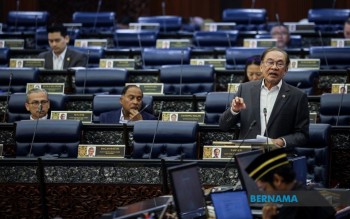
Prime Minister Datuk Seri Anwar Ibrahim has rolled out a penalty-free compliance window for e-invoice implementation, a move designed to substantially reduce the regulatory and financial pressure facing Malaysia's vibrant ecosystem of small and medium-sized businesses. Speaking during parliamentary question time, the Finance Minister outlined the e-Invoice Voluntary Declaration Programme, which will remain accessible to enterprises through the end of 2027, representing a notably lenient approach to tax administration that rarely appears in income tax enforcement globally.
The voluntary declaration framework permits businesses to voluntarily correct, update, or revise their e-invoice submissions without fear of financial penalties from the Inland Revenue Board of Malaysia. This departure from customary tax administration reflects the government's recognition that many enterprises, particularly those operating at smaller scales, have struggled with the operational and technical complexities of transitioning to digital invoicing systems. By removing the threat of punitive action during this extended window, the initiative seeks to encourage honest compliance rather than discourage businesses from engaging with tax authorities altogether.
The policy addresses concerns raised by Lee Chuan How, a Pakatan Harapan MP representing Ipoh Timor, who questioned the government's response to mounting challenges within the business community as enterprises navigate uncertain international economic conditions. His inquiry underscored growing anxiety among MSME operators about their capacity to absorb implementation costs whilst simultaneously maintaining operational viability and meeting existing tax obligations. The government's response demonstrates an effort to recalibrate policy toward supporting business sustainability during this period of global economic volatility.
Complementing the amnesty framework, the administration has simultaneously accelerated tax incentives that allow businesses to claim full capital allowances on eligible e-invoice implementation expenses within a single financial year. This condensed timeline for capitalisation deductions substantially improves cash flow predictability for investing enterprises, as companies can immediately offset implementation costs against taxable income rather than spreading deductions across multiple years. The measure effectively subsidises the transition to digital systems by reducing the net cost burden through faster tax relief.
Into December 2025, the government had previously expanded the revenue threshold for e-invoice system exemptions from RM500,000 to RM1 million, immediately benefiting more than one million taxpayers who previously faced compliance obligations. This threshold adjustment recognised that many genuinely small operators lacked the technical infrastructure and administrative capacity to implement sophisticated invoicing systems proportionate to their business scale. The expanded exemption dramatically narrowed the population of mandatory participants, focusing compliance resources on enterprises with greater operational complexity and capacity.
The cumulative effect of these layered initiatives—the voluntary declaration programme, accelerated capital allowances, and expanded exemption thresholds—creates a substantially more permissive regulatory environment than previously existed. The government's approach reflects a pragmatic acceptance that heavy-handed enforcement during a critical implementation phase could trigger widespread non-compliance, business closure, or deliberate avoidance strategies that ultimately damage the tax base more severely than temporary leniency would. By front-loading incentives and penalty forbearance, authorities attempt to establish cooperative compliance behaviours that persist after the amnesty period expires.
For Malaysian MSMEs, the policy bundle addresses persistent concerns about implementation costs and technical capability gaps that have constrained digital adoption across the sector. Many smaller enterprises operate with minimal IT infrastructure or dedicated compliance staff, making the transition to mandated e-invoice systems genuinely burdensome relative to their administrative capacity. The government's acknowledgement of these asymmetries through both incentive structures and extended implementation timelines signals a shift toward proportionate regulation that accounts for business size and sophistication.
The regional dimension of this policy choice merits consideration as well. Southeast Asian economies face increasingly intense competition for foreign direct investment and regional business headquarters functions, with regulatory burden significantly influencing location decisions for multinational operations and regional consolidation centres. Malaysia's demonstrated willingness to implement tax administration flexibility during digital transitions may enhance its appeal to businesses evaluating regional hubs, particularly for enterprises coordinating operations across multiple ASEAN jurisdictions where tax compliance complexity multiplies dramatically.
Looking forward, the extended timeline to December 2027 provides a substantial runway for technology providers, accounting firms, and business associations to support enterprise adoption across the MSME population. The policy window effectively permits market-driven solutions to develop and mature before stricter enforcement mechanisms inevitably activate. Businesses demonstrating compliance during the voluntary period likely establish institutional practices that persist independently of the amnesty framework, potentially achieving the government's underlying objective of normalising digital tax administration across the broader economy.
The government's willingness to deploy such extensive concessions simultaneously reveals anxieties about economic resilience within the MSME sector, which collectively represents a substantial employment base and tax revenue source for Malaysia. The initiatives implicitly acknowledge that aggressive compliance enforcement during periods of business uncertainty risks destabilising an already fragile economic segment. By prioritising compliance encouragement over penalty maximisation, policymakers appear to have calculated that long-term tax base sustainability requires shorter-term accommodation of implementation challenges.

