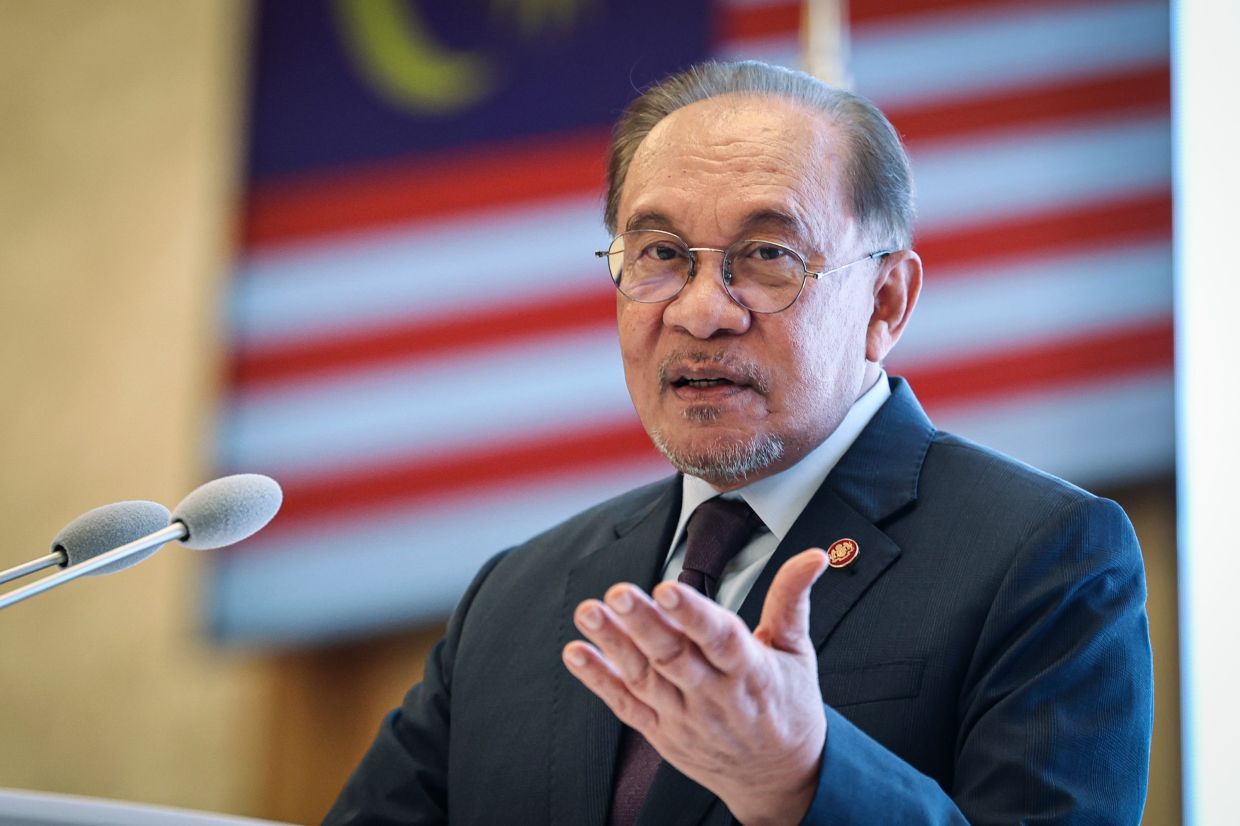
Malaysia's government is signalling openness to a nuanced approach on tax policy, with Prime Minister Datuk Seri Anwar Ibrahim indicating that policymakers will examine how elements of the Goods and Services Tax might be incorporated into the existing Sales and Service Tax framework. Speaking at the closing of the Budget 2027 engagement session in Putrajaya, Anwar, who also holds the Finance portfolio, suggested that while Malaysia would continue using SST as its foundational tax system, selective features from the GST model could merit consideration if they strengthen the overall progressivity of the nation's taxation structure.
The distinction Anwar drew reflects a strategic middle ground between competing economic philosophies. The GST, when implemented globally, typically functions as a value-added tax applied broadly across all economic transactions and consumer segments, generating substantial government revenue through comprehensive coverage. The SST, by contrast, targets specific goods and services, allowing policymakers to exempt essential items and protect vulnerable populations from additional tax burdens. By studying a potential hybrid approach, the government appears to be seeking mechanisms that could enhance tax efficiency while preserving the targeted nature of Malaysia's current system.
Crucially, Anwar made explicit his fundamental objection to a fully fledged GST structure, emphasising that he will not endorse any taxation model that casts a wide net across Malaysian society indiscriminately. His concern centres on the regressive nature of broad-based consumption taxes, which impact all citizens regardless of their economic circumstances. During his remarks to media representatives, he underscored that such an approach would inevitably burden lower-income households and those already struggling with elevated living costs, a consideration he views as untenable given current economic pressures facing ordinary Malaysians.
The Prime Minister's historical opposition to GST reflects broader public sentiment that crystallised during Malaysia's previous experiment with the tax. When the GST was introduced at 6 per cent in 2015, it triggered widespread discontent among consumers and small business operators who viewed it as inflationary and economically destabilising. The subsequent government reversed the policy in 2018, reintroducing the SST as a replacement. That political reversal demonstrated the electoral risks associated with broad-based consumption taxes in the Malaysian context, where income inequality and cost-of-living concerns remain persistent voter priorities.
Anwar's openness to studying hybrid mechanisms suggests the administration recognises legitimate critiques of SST's current design while remaining cognisant of public resistance to GST-style systems. The SST framework, despite its targeted approach, has faced criticism from economists and business groups who argue it creates inefficiencies, complicates compliance for retailers, and potentially distorts consumer behaviour through selective exemptions. A refined model that incorporates GST's administrative clarity while preserving SST's capacity to shield necessities could theoretically address both concerns.
The timing of this discussion, occurring during Budget 2027 consultations, indicates taxation reform occupies active consideration within government circles as officials prepare the nation's fiscal roadmap. The engagement session brought together an extensive coalition of stakeholders including Minister II Datuk Seri Amir Hamzah Azizan, Deputy Finance Minister Liew Chin Tong, Bank Negara Malaysia Governor Datuk Seri Abdul Rasheed Ghaffour, and representatives from industry associations, NGOs, and economic research institutions. This convening of diverse perspectives suggests the government is approaching tax policy as a matter requiring broad consensus-building rather than unilateral imposition.
For Malaysian businesses and consumers, the distinction between studying hybrid approaches and implementing them remains significant. The government's willingness to examine GST-SST combinations does not signify imminent policy change but rather signals that officials are actively exploring technical solutions to longstanding complaints about tax system efficiency and fairness. Any eventual modifications would require parliamentary approval and would likely be phased gradually to prevent economic disruption.
The progressivity dimension that Anwar emphasised deserves particular scrutiny. A truly progressive taxation system should impose proportionally higher burdens on those with greater ability to pay while protecting lower-income households from regressive effects. SST, when properly structured with generous exemptions on essential goods, can achieve progressive outcomes. A hybrid model incorporating GST features might enhance progressivity by establishing clearer exemption categories or differentiated rates based on whether items are classified as necessities or luxuries.
Regionally, Malaysia's tax debate resonates within a broader Southeast Asian context where nations grapple with balancing revenue generation, economic competitiveness, and social equity. Several ASEAN neighbours employ hybrid tax systems or have experimented with GST variants, offering potential lessons. Singapore, Thailand, and Vietnam have different consumption tax structures that accommodate their specific economic circumstances and political priorities. Malaysia's careful approach reflects recognition that taxation policy cannot be transplanted wholesale from other contexts but must account for local conditions, income distribution patterns, and public expectations.
The Budget 2027 framework itself, themed 'Malaysia MADANI: Menggapai di Langit, Mengakar di Bumi,' emphasises balancing aspirational development goals with grounded, people-centric policies. Within that conceptual framework, taxation discussions become emblematic of how the government balances fiscal sustainability with social protection. Anwar's explicit commitment to studying rather than implementing radical reform suggests the administration intends to move deliberately on tax matters, prioritising consultation and consensus over rushed restructuring.
Looking forward, the government's stated willingness to examine GST-SST hybrid mechanisms creates space for expert technical committees to develop detailed proposals without immediate political pressure. Such deliberation could ultimately produce a refined taxation framework more efficient than current SST arrangements while maintaining the protective features that safeguard Malaysian households from broad-based consumption tax burdens. Whether any such study yields concrete legislative proposals for Parliament's consideration in coming budget cycles remains to be determined, but the dialogue itself represents a shift toward evidence-based tax policy development in Malaysia.

