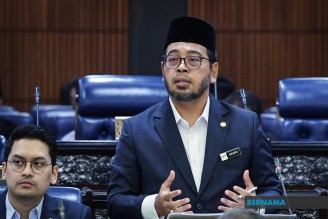
During an extended special parliamentary sitting that stretched over ten hours, the government articulated its commitment to comprehensive overhaul of Tabung Haji, signalling that the institution faces fundamental restructuring designed to avert another financial catastrophe. The revelations about mismanagement and investment losses at Malaysia's Islamic pilgrimage fund have become one of the defining policy challenges for the MADANI administration, requiring coordinated action across multiple regulatory agencies to restore confidence among millions of depositors.
The backbone of this reform programme centres on amendments to the Tabung Haji Act 1955, with specific measures drawn from the 211-page Royal Commission of Inquiry report released in late July. Minister in the Prime Minister's Department (Religious Affairs) Dr Zulkifli Hasan outlined how a high-level task force chaired by TH chairman Tan Sri Abdul Rashid Hussain, and comprising Bank Negara Governor Datuk Seri Abdul Rasheed Ghaffour and Securities Commission chairman Datuk Mohammad Faiz Azmi, has been tasked with implementing the RCI's 25 recommendations. The commission's findings exposed serious governance and operational weaknesses spanning the 2014-2020 period, identifying catastrophic misallocations of capital that placed the entire institution at existential risk.
Under the proposed new framework, supervision of TH's funds and investment activities will transfer to the Securities Commission, while the Religious Affairs Ministry maintains jurisdiction over pilgrimage operations and religious matters. This division of regulatory responsibility addresses a critical vulnerability identified by the RCI—the absence of adequate professional oversight of investment decisions made at the institution. By keeping TH operational as a unified entity whilst introducing external financial supervision, the government intends to preserve depositor protection mechanisms whilst preventing future rogue investment behaviour. The task force has begun preparing detailed recommendations for Cabinet approval, indicating that legislative amendments may be tabled within months.
The financial dimensions of the crisis remain sobering. TH's accumulated losses approached RM13 billion, while the government faced potential exposure of approximately RM74.5 billion in liabilities had panic withdrawals among depositors escalated in 2018. Finance Minister II Datuk Seri Amir Hamzah Azizan disclosed that seven of the fourteen troubled investments resulted in complete capital destruction, illustrating how institutional governance failures translated into tangible wealth destruction for millions of Malaysian Muslims saving for pilgrimage. The revelation that TH's investments inadvertently enmeshed the organisation with 1Malaysia Development Bhd—itself at the epicentre of Malaysia's largest financial scandal—underscores the risks of inadequate due diligence and board-level oversight of major capital commitments.
Legislative safeguards constitute the second pillar of the reform agenda. The government announced that amended legislation will explicitly prohibit sitting politicians from serving on TH's board of directors, addressing a perennial governance hazard in Malaysian state-linked enterprises. This represents acknowledgment that political appointment processes have historically prioritised patronage over professional competency. Additionally, profit distributions to depositors, previously calculated using flexible accounting methodologies, will henceforth derive exclusively from audited financial accounts. This seemingly technical change carries profound implications, as it removes discretion from management regarding hibah distributions and anchors depositor returns to independently verified financial performance. Every major institutional decision will be evaluated against a single criterion: the interests of the Muslim community and pilgrims.
Parliamentary debate surfaced additional systemic vulnerabilities in Malaysia's non-bank financial institution architecture. Sri Gading MP Aminolhuda Hassan proposed establishing a single regulatory authority overseeing all major non-bank financial institutions, including the Employees Provident Fund, Permodalan Nasional Bhd, retirement and military pension funds, and Tabung Haji. Currently, these institutions operate under fragmented supervisory regimes lacking coordinated prudential oversight, systemic risk assessment, or integrated governance standards. Such fragmentation created conditions enabling TH's deterioration to proceed without adequate regulatory intervention. Bentong MP Young Syefura Othman raised concerns about TH's excessive dependence on income from UJSB sukuk, which contributed approximately 26 per cent of annual revenues—a concentration risk that reflected inadequate portfolio diversification.
The government's public stance emphasises transparency and accountability despite the reputational damage accompanying disclosure of these failures. Finance Minister Amir Hamzah explicitly rejected any suggestion of concealment, acknowledging that numerical revelations regarding investment losses and bailout requirements were painful to articulate. Importantly, he signalled that accountability proceedings would proceed without favouritism, with comprehensive investigations conducted and sanctions imposed on all parties found culpable. This commitment to impartial enforcement addresses public scepticism about whether politically-connected figures involved in investment decisions would escape consequences.
The RCI's findings revealed that approximately 75 per cent of its recommendations had been implemented by Tabung Haji as of late July, suggesting the institution has begun self-remediation efforts. However, the government's decision to pursue legislative amendment rather than relying solely on administrative action indicates assessment that statutory change provides more durable protection against backsliding or future administrative reinterpretation. The extended parliamentary sitting and cabinet-level task force deployment signal that senior political leadership recognises the stakes involved—loss of confidence in Tabung Haji carries implications far beyond a single institution, potentially undermining faith in government-linked entities managing retirement savings for broader Malaysian population segments.
For Malaysian and Southeast Asian observers, the Tabung Haji restructuring offers lessons regarding institutional governance of large financial intermediaries managing public savings. The crisis exposed vulnerabilities common across the region: insufficient regulatory separation between political appointees and professional management, inadequate external oversight of investment decisions, concentration of risk in politically-connected enterprises, and opacity in financial accounting methodologies. Malaysia's response through legislative amendment, external regulatory oversight, and explicit governance guardrails may provide a template for other regional governments operating similar institutions. The reforms underscore that effective financial system architecture requires clear regulatory boundaries, professional competency standards, and mechanisms constraining political interference in day-to-day institutional operations.
The task force's pending recommendations will shape institutional development over coming years. If implemented comprehensively, they represent a fundamental recalibration of how Malaysia supervises and governs state-linked financial intermediaries. The specific mechanisms—Securities Commission oversight, statutory prohibition on active politician board membership, audited account-based distributions—address identifiable governance failures that permitted billions in losses. However, institutional reform ultimately depends on consistent political commitment to maintaining these safeguards even when they constrain executive prerogatives or expose connected parties to accountability. The government's parliamentary commitment now faces the practical test of whether political incentives align with stated reform objectives when pressure mounts or connected interests petition for exemptions.

