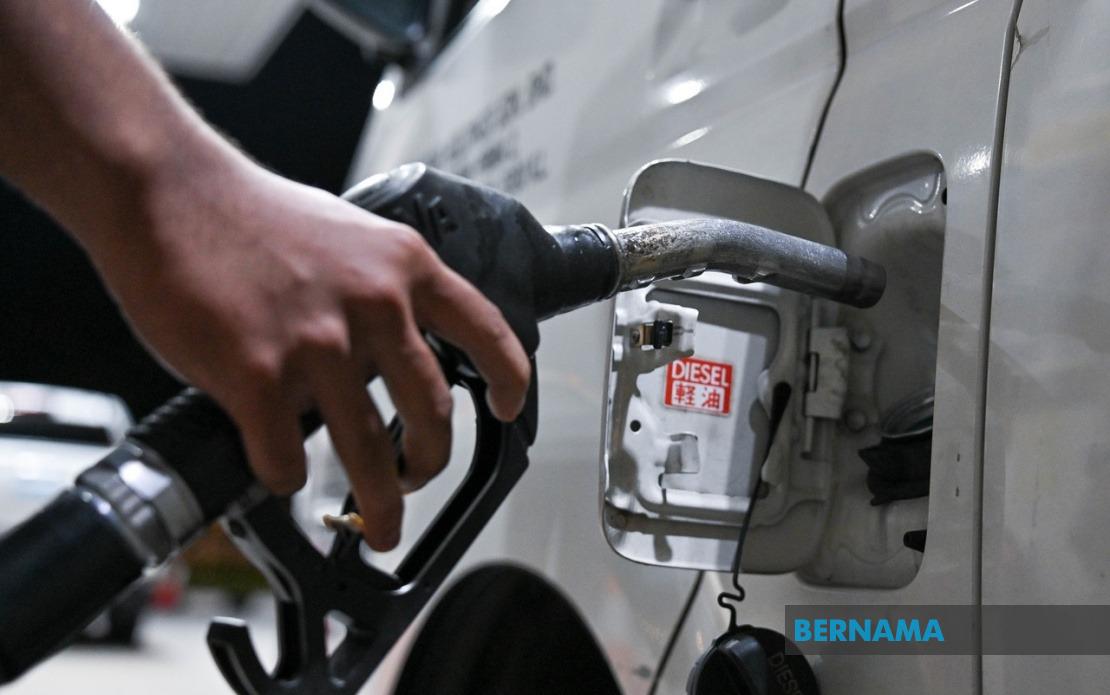
Malaysia's government is adopting a pragmatic, evidence-based strategy to oversee the BUDI Diesel initiative, according to Finance Minister II Datuk Seri Amir Hamzah Azizan, who emphasized that policy refinements will be driven by field data rather than preset timelines. Speaking in Kota Kinabalu on July 5, he stressed that the administration remains committed to monitoring implementation metrics across Sabah and Sarawak since the scheme's launch on July 1, with continuous assessment of consumption trends and input from relevant stakeholders forming the backbone of future policy decisions.
The minister's remarks signal a measured approach to managing one of the government's flagship fuel subsidy programmes, particularly as concerns mount about quota sustainability and equitable access across Malaysia's diverse population. Rather than imposing rigid review deadlines, Amir Hamzah outlined a flexible framework whereby adjustments emerge organically from accumulated usage intelligence, ensuring that any structural modifications reflect genuine consumer patterns rather than top-down assumptions about how drivers will interact with the subsidy system.
A compelling example of this data-centric methodology emerged from the performance of BUDI95, the petrol variant of the scheme. Initially, the government had allocated a quota of 300 litres per user, but subsequent analysis of actual consumption revealed that more than 94 to 95 per cent of motorists consumed less than 300 litres monthly, while fewer than one per cent consistently exceeded 200 litres. This evidence prompted officials to recalibrate the quota downward to 200 litres, a move framed not as a punitive measure but as a necessary refinement to align policy with observable behaviour and ensure the subsidy's long-term fiscal viability. Such precedent suggests that the BUDI Diesel programme may undergo similar recalibrations if ground-level data warrants intervention.
The government's emphasis on system stability during the early operational phase reflects awareness that the scheme's credibility hinges on technical reliability and seamless user experience. According to Amir Hamzah, all petrol stations nationwide have executed system operations without disruption throughout the five-day rollout period, with cardholders able to complete transactions ordinarily. This technical success, though taken for granted by some observers, represents a substantial logistical achievement given the complexity of integrating digital eligibility verification across Malaysia's network of fuel retailers, particularly in remote regions where connectivity and infrastructure present formidable challenges.
Beyond broad-brush quota adjustments, the government is actively addressing granular concerns raised by stakeholders in the field. Government teams have been deployed to engage with communities and service providers, investigating specific grievances such as vehicle ownership disputes that may affect subsidy eligibility. This ground-level engagement reflects recognition that top-line policy metrics often obscure localized friction points that, if unaddressed, can undermine public confidence and create equity gaps. The government's willingness to deploy personnel for such targeted problem-solving suggests a commitment to making the scheme functional across Malaysia's heterogeneous landscape.
Flexibility in implementation mechanisms represents another key dimension of the government's adaptive strategy. While the MyKad system serves individual consumers, officials have signalled openness to alternative arrangements, including fleet cards for service providers and commercial operators, particularly those servicing rural communities where subsidized fuel is economically critical. This consideration of institutional variants underscores awareness that a one-size-fits-all digital architecture may inadvertently exclude legitimate users whose operational structure differs from typical individual motorists, such as taxi associations, shuttle operators, and agricultural enterprises that depend on reliable fuel access for their livelihoods.
Public communication and transparency mechanisms are receiving corresponding attention from policymakers. The government plans to enhance the BUDI Diesel inquiry counter initiative at petrol stations, working collaboratively with oil companies and station operators to clarify eligibility criteria for consumers. Integration of QR code technology and online application platforms aims to democratize access to programme information, reducing administrative friction and enabling quick eligibility self-checks. Such infrastructure investments in public understanding address a critical vulnerability: even well-intentioned policies falter when beneficiaries remain confused about qualification requirements or operational procedures.
The Malaysian case offers instructive parallels for other Southeast Asian economies grappling with fuel subsidy design. Unlike programmes that lock in quotas and adjustment mechanisms at inception, the BUDI Diesel approach treats policy architecture as iterative, subject to revision as empirical evidence accumulates. This epistemological posture—treating subsidy policy as a hypothesis to be tested against reality—contrasts sharply with more rigid frameworks that prioritize consistency over responsiveness. For a nation with Malaysia's fiscal constraints and diverse economic geographies, such adaptability may prove essential to balancing affordability objectives with fiscal sustainability.
The timeline for comprehensive quota structure reassessment remains deliberately open-ended, reflecting acknowledgment that meaningful patterns emerge gradually. Amir Hamzah cautioned against premature overhaul, emphasising that the government requires sustained observation periods to distinguish genuine usage trends from temporary behavioural anomalies. This patience reflects sophisticated policy thinking: rushing to adjust quotas based on initial two-week data risks chasing statistical noise, whereas multi-month observation captures seasonal variations, macroeconomic shocks, and stabilization effects that shape actual subsidy utilisation.
Looking ahead, the success of the BUDI Diesel programme will likely hinge on whether the government's declared commitment to data-driven flexibility translates into institutional practice. Bureaucratic inertia, political pressure for rapid headline-grabbing changes, and entrenched interests may all conspire to undermine the technocratic ideal outlined by Amir Hamzah. Nevertheless, the framework he articulated—rooted in empirical observation, stakeholder engagement, and institutional flexibility—provides a template that officials and analysts across the region might study as they design fuel subsidy systems capable of serving expanding populations while maintaining fiscal discipline.

