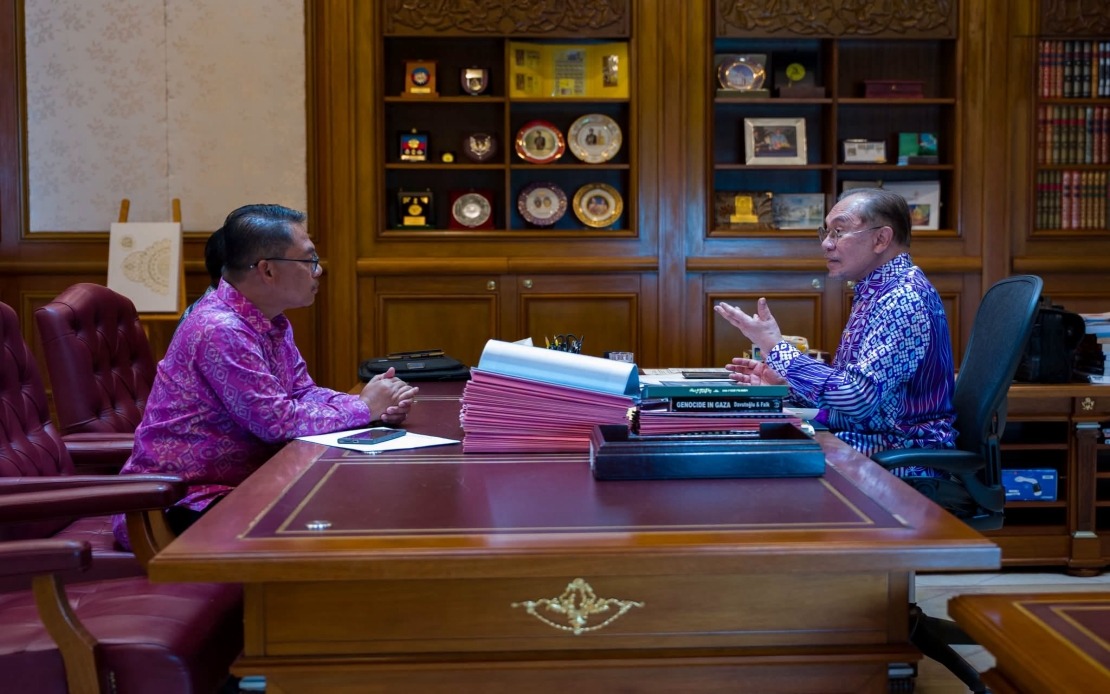
The Malaysian government has committed to enhancing its targeted fuel subsidy initiative across Sabah and Sarawak by actively incorporating feedback from communities and grassroots organisations. Datuk Mustapha Sakmud, the Minister in the Prime Minister's Department overseeing both eastern states, made this pledge during engagement sessions in Kota Kinabalu, signalling the administration's willingness to adapt the BUDI Diesel programme in response to implementation challenges and citizen concerns.
The refinement process will draw upon ongoing consultations involving diverse stakeholders, including representatives from state and federal agencies, to ensure the subsidy scheme operates effectively without compromising living standards across urban and rural populations. Mustapha emphasised that the government remains committed to smooth rollout of the initiative whilst maintaining its core objective of supporting households, particularly those in remote communities where fuel costs represent a substantial proportion of household budgets. The collaborative approach reflects recognition that localised conditions in Sabah and Sarawak differ significantly from peninsula Malaysia, necessitating context-specific implementation strategies.
Prime Minister Datuk Seri Anwar Ibrahim has personally engaged with affected communities to understand the practical difficulties encountered since the scheme's nationwide launch on July 1. His direct involvement underscores the administration's seriousness in addressing grassroots concerns and signals that senior government leadership remains receptive to field-level feedback. For residents across Sabah and Sarawak, this high-level attention suggests their specific challenges will receive priority consideration as the programme evolves.
The BUDI Diesel initiative represents a significant shift in Malaysia's fuel subsidy architecture, moving away from blanket subsidies towards a targeted approach that aims to reach those most in need whilst controlling government expenditure. Under the current framework, eligible private diesel vehicle owners receive a baseline monthly allocation of 200 litres at the subsidised price of RM2.10 per litre, representing a substantial discount relative to market rates. This structure encourages responsible consumption whilst ensuring affordability for essential users dependent on vehicles for livelihood and transportation.
Vehicle owners operating sports utility vehicles and pickup trucks may qualify for an additional 100 litres monthly, subject to meeting specific eligibility criteria established to prevent misuse and ensure resources reach intended beneficiaries. These supplementary quotas acknowledge that certain vehicle categories, often essential for commercial activities and rural operations, require higher fuel allocation to maintain economic viability. The differentiated quota system reflects policymakers' attempts to balance fiscal responsibility with economic necessity across diverse communities.
East Malaysian implementation presents particular challenges distinct from those encountered on peninsula Malaysia. Geographical dispersion, limited transportation infrastructure, and heavier reliance on personal vehicles for accessing services justify heightened government attention to how the scheme functions in these states. Communities in interior Sabah and Sarawak depend critically on reliable vehicle access, making fuel affordability central to economic participation and basic service access rather than merely a consumer convenience issue.
The government's emphasis on incorporating "the voice of the people" reflects broader MADANI framework principles prioritising citizen engagement in policy implementation. Rather than imposing fixed approaches, this methodology acknowledges that beneficiary communities possess valuable knowledge about practical obstacles that remote policy makers may overlook. Inviting structured feedback creates mechanisms for identifying design flaws, eligibility barriers, and administrative complications affecting service delivery efficiency.
Refinement discussions will likely address several recurring concerns raised during initial rollout phases. Questions surrounding verification mechanisms for eligible vehicles, processing timelines for additional quota applications, and integration between state-level fuel distribution networks and federal subsidy administration require coordination across multiple institutional actors. Ensuring equitable access across rural and urban settings demands explicit attention to service delivery accessibility and awareness campaigns reaching populations with limited digital engagement capacity.
For Malaysian policymakers, the BUDI Diesel experience provides instructive lessons regarding targeted subsidy design and implementation complexity. Moving from universal price controls to eligibility-based systems increases administrative burden substantially whilst creating potential equity concerns if application processes prove burdensome or lack transparency. The government's receptiveness to refinement suggestions indicates learning-oriented policymaking rather than rigid programme adherence regardless of ground-level experience.
Longer-term success of the targeted subsidy model depends on sustained stakeholder engagement and willingness to modify approaches based on evidence regarding scheme impacts. Monitoring how fuel subsidy spending translates into improved economic outcomes and cost-of-living relief remains crucial for evaluating whether targeting mechanisms effectively serve disadvantaged populations. Regular community consultation provides early warning mechanisms for detecting implementation drift or unintended consequences requiring prompt corrections.
For Sabah and Sarawak residents, the commitment to refinement offers reassurance that their concerns regarding programme design and administration will receive consideration. However, translating commitment into concrete policy adjustments requires clear timelines, transparent decision-making processes, and communication regarding how community input influenced final modifications. Building public confidence in subsidy administration remains essential for programme legitimacy and encouraging eligible beneficiaries to complete application processes.
The government's approach also reflects recognition that energy subsidy reform remains politically sensitive across Malaysia, particularly in states where personal vehicles represent critical economic assets. Rather than implementing standardised approaches insensitive to regional contexts, differentiated implementation enables greater policy flexibility and responsiveness to diverse economic circumstances. Sustaining this collaborative refinement process will shape how effectively targeted subsidies contribute to broader objectives of managing cost-of-living pressures and supporting economic participation across all Malaysian regions.

