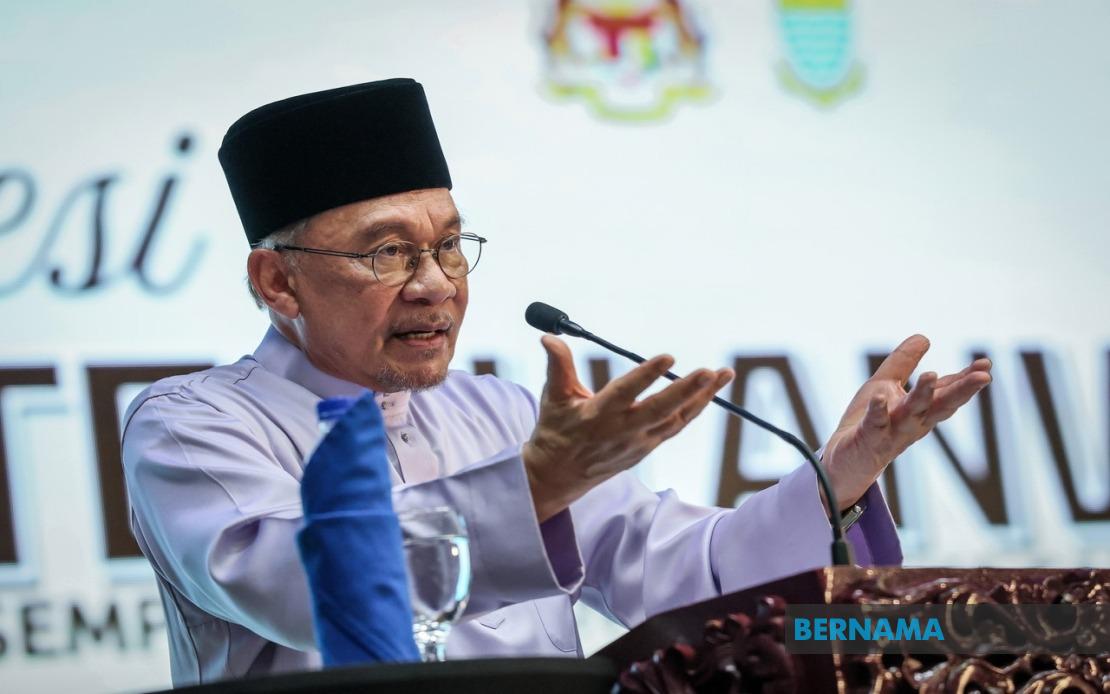
The Malaysian government will introduce a new allowance scheme for Form Six students when it tables Budget 2027 in October, Prime Minister Datuk Seri Anwar Ibrahim announced during a campus visit to Bukit Mertajam on Thursday. The decision represents a significant expansion of the nation's student financial assistance framework, which currently extends support across primary and secondary education through Form Five, as well as at tertiary institutions, but has historically overlooked pre-university level students pursuing their upper secondary studies.
Anwar, who concurrently holds the Finance Ministry portfolio, revealed that the policy shift emerged from direct consultation with pre-university students, during which he recognised a stark inconsistency in how the government distributes educational support. Students pursuing their studies from primary school through Form Five receive government allowances, and university-bound scholars similarly benefit from financial assistance programmes, yet those navigating the critical transition years of Form Six have received nothing. This gap has placed financial strain on families whose children are preparing for crucial examinations and university entrance, particularly among lower-income households where such assistance could materially influence educational outcomes.
The Prime Minister emphasised, however, that while the principle of introducing Form Six allowances has been settled, the quantum of the allocation remains subject to fiscal considerations. The government will determine the precise amount and structure of the allowance based on what the Treasury can sustainably fund at the time Budget 2027 is finalised, suggesting that implementation details and benefit levels may still undergo revision before the budget's October presentation. This conditional framing underscores the balancing act facing policymakers: addressing legitimate educational equity concerns while managing broader macroeconomic constraints and competing budgetary demands.
Education Minister Datuk Seri Fadhlina Sidek, who appeared alongside Anwar at the Tuanku Bainun Teacher Education Institute event, contextualised the allowance announcement within a broader student-driven agenda. She disclosed that the proposed allowance system ranked among twelve formal resolutions submitted at the MADANI Pre-University Congress held in Klang earlier that same morning, indicating that Form Six students themselves have been mobilising through official channels to press their concerns to government. The student-led nature of this proposal lends it considerable legitimacy and reflects genuine grassroots demand rather than merely top-down policy innovation.
The Education Ministry has formally accepted all twelve resolutions tabled by student delegates at the congress, signalling openness to the reform agenda. Fadhlina committed to conducting detailed assessments of each proposal to identify implementation pathways and identify potential refinements. This measured approach acknowledges that while student feedback identifies genuine concerns, translating such concerns into effective, well-designed policy requires careful study of fiscal implications, administrative feasibility, and potential unintended consequences. The ministry's willingness to undertake this work suggests serious intent behind the allowance commitment.
For Malaysian families with Form Six students, the potential introduction of this allowance addresses a real financial vulnerability. Form Six represents a critical juncture in a young person's academic trajectory, where examination results directly determine university placement and scholarship opportunities. The stress of academic performance is often compounded by financial pressures, particularly when families must simultaneously manage household expenses and educational costs. An allowance scheme could alleviate some of this pressure, particularly for students from economically disadvantaged backgrounds who might otherwise face barriers to accessing quality pre-university education.
The timing of this announcement also reflects broader policy trends under the current administration. The MADANI framework has emphasised inclusive growth and social protection, and expanding educational allowances aligns with those stated priorities. By addressing a gap that affects students during their most academically formative years, the government signals commitment to human capital development across the education lifecycle. From a human development perspective, targeted support at the pre-university level potentially yields significant returns, as students who receive such assistance may achieve better academic outcomes, which in turn influences their tertiary education prospects and long-term economic participation.
Regionally, Malaysia's approach to student allowances has long been viewed as relatively progressive within Southeast Asia, though gaps remain. Several neighbouring countries provide more limited or more fragmented student support systems. The introduction of Form Six allowances would further position Malaysia as a leader in recognising the state's responsibility to support students during key educational transitions. However, implementation quality will prove decisive; a poorly designed or inadequately funded allowance system could prove more tokenistic than transformative in addressing underlying educational inequality.
The announcement also carries implications for the broader fiscal framework. Budget 2027 is expected to navigate complex economic terrain, balancing commitments to social spending with fiscal sustainability concerns and debt management. The Form Six allowance represents an additional budgetary commitment, albeit one that Finance Minister Anwar has explicitly committed to funding. The decision to include this measure suggests that policymakers view pre-university education support as a priority worthy of competing for limited fiscal resources against other pressing demands for government spending.
From an implementation standpoint, several questions remain unresolved. The government has not yet specified whether the allowance will be universal or means-tested, paid monthly or as lump sums, or integrated with existing support mechanisms. These design choices will significantly affect both programme costs and its distributional impact. A targeted, means-tested system might better serve the most economically vulnerable students but risks creating administrative complexity and potential stigma. A universal approach would be simpler to implement and might achieve higher take-up but would incur substantially higher expenditure.
Looking ahead to Budget 2027's October presentation, stakeholders will scrutinise both the allowance amount and broader education funding announcements. Student groups that mobilised through the MADANI Pre-University Congress will likely expect concrete confirmation of their demands, while economists and fiscal analysts will assess whether the new commitment represents genuine policy priority or symbolic gesture. The allowance scheme's ultimate success will depend not merely on announcement, but on thoughtful design, adequate resourcing, and effective delivery mechanisms that ensure funds reach intended beneficiaries smoothly and predictably.

