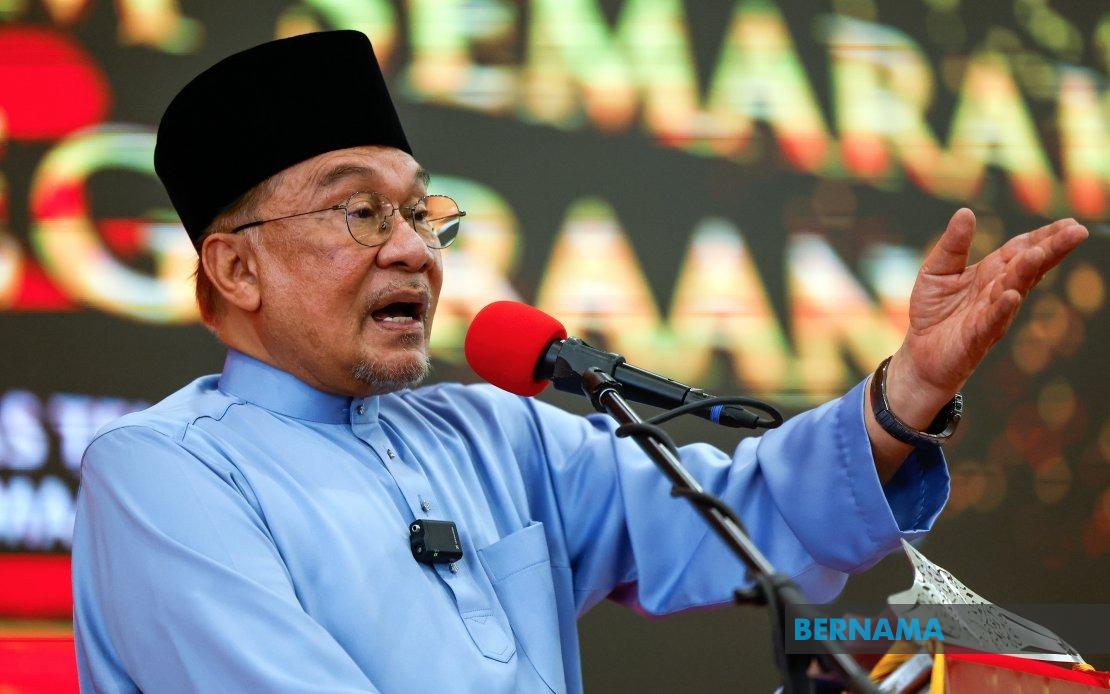
Prime Minister Datuk Seri Anwar Ibrahim has committed to repealing the Universities and University Colleges Act (AUKU) 1971, a landmark decision intended to significantly broaden the democratic space available to Malaysian students. The announcement came during his policy address at the 2026 PKR National Congress held at the Melaka International Trade Centre in Ayer Keroh, signalling a fundamental shift in the government's approach to student activism and campus governance.
The impetus for this transformative policy shift stems from sustained advocacy by student leaders across the nation. A formal memorandum and ongoing feedback from campus representatives had pressed the government to undertake comprehensive legislative reform rather than pursue incremental amendments to existing restrictions. This direct engagement between student bodies and the highest level of government reflects growing momentum within Malaysian higher education institutions for greater autonomy in political and social expression.
While previous amendments to AUKU had progressively loosened some constraints on student participation, Prime Minister Anwar emphasised that these piecemeal adjustments had proven insufficient to address the underlying concerns of the student population. The incremental approach, despite yielding tangible improvements in certain areas, left fundamental restrictions intact that many student leaders viewed as incompatible with contemporary democratic norms and Malaysia's broader education reform agenda.
The AUKU, enacted in 1971, has long been a contentious piece of legislation within Malaysian academia. The Act has traditionally placed significant restrictions on student political activities, including prohibitions on participation in political organisations, attending political meetings on campus, and engaging in partisan advocacy. These provisions were originally framed as necessary to maintain institutional neutrality and focus on academic pursuits, yet they have increasingly been viewed by successive generations of students as overly restrictive constraints on fundamental freedoms.
For Malaysian higher education, this repeal represents a potential watershed moment. Universities and university colleges have historically operated under tighter political constraints than their counterparts in many comparable democracies. The move signals confidence in the maturity of the Malaysian student body and implicit recognition that democratic participation, even when it involves political engagement, need not undermine academic integrity or institutional stability.
The implications for Southeast Asia are noteworthy as well. Malaysia has long positioned itself as a regionally influential democracy, yet restrictive legislation governing student expression has periodically invited international scrutiny regarding the depth of its democratic commitments. A repeal of AUKU could strengthen Malaysia's standing as a nation genuinely committed to democratic principles, particularly among younger populations across the region who increasingly expect institutions to uphold pluralistic values.
Prime Minister Anwar's framing of this decision emphasises alignment with the government's broader education reform initiatives. Rather than treating student freedom as a distinct issue isolated from other policy priorities, the government has positioned it as integral to modernising Malaysia's education system. This integration suggests that expanded democratic participation is viewed not as a potential distraction from academic excellence, but as a component of creating more engaged, critically thinking citizens prepared for leadership roles in a complex, globalised world.
The political calculus underlying this announcement also merits examination. The PKR, as the leading component of the ruling coalition, has traditionally positioned itself as champion of democratic values and social reform. By advancing this policy at its national congress, the party reinforces its ideological identity and appeals to younger voters, particularly university students and recent graduates, who form an increasingly significant demographic bloc in Malaysian electoral politics.
Implementing the repeal will require careful legislative drafting to address practical governance questions that AUKU currently regulates. Decisions about institutional discipline, standards of conduct, and conflict resolution within campus communities will need to be addressed through alternative frameworks that balance student freedoms with institutional responsibilities. The government will likely need to consult extensively with university leadership, student representatives, and legal experts to ensure a smooth transition that protects both democratic rights and academic functioning.
The timing of this announcement also reflects shifting social attitudes toward student activism. Younger Malaysians increasingly expect campus communities to serve not merely as venues for credentialing but as spaces where ideas circulate freely and diverse perspectives receive hearing. This demographic reality, combined with Malaysia's own history of student-led social movements, suggests that restrictive legislation has become increasingly difficult to sustain politically and practically.
International dimensions should not be overlooked. Academic freedom rankings and assessments of democratic health frequently reference restrictions on student political expression. Countries that maintain such constraints often face criticism from international civil society organisations and diplomatic actors. The repeal could improve Malaysia's profile on such metrics while demonstrating responsiveness to legitimate demands for expanded freedoms.
The student movement's success in securing this commitment also establishes a precedent for future advocacy campaigns. If structured institutional engagement with student leaders can yield tangible policy change at the highest levels of government, this may embolden campus communities to raise additional concerns regarding academic freedom, institutional governance, and related matters affecting university life and democratic participation.

