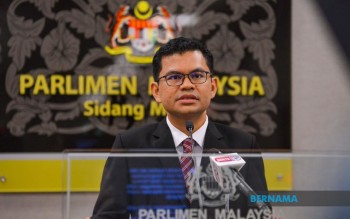
The National Economic Action Council has formally acknowledged proposals brought forward by the Malaysian Plastics Manufacturers Association, directing both the Ministry of Investment, Trade and Industry and the Economy Ministry to conduct a thorough examination of the recommendations. Economy Minister Akmal Nasrullah Mohd Nasir indicated during a briefing that the government views the plastics sector's difficulties as a matter requiring urgent attention, particularly in light of the external pressures now reshaping manufacturing economics across the region.
The plastics manufacturing segment has emerged as a critical concern for policymakers because of its role as a fundamental supplier to numerous downstream industries throughout Malaysia's economy. Industry representatives presented a detailed case outlining specific challenges related to cost structures and competitive disadvantages faced by manufacturers further down the production chain. A significant portion of their grievances centres on the disparity between raw material expenses incurred by Malaysian producers compared to their counterparts in neighbouring and competing economies, a structural imbalance that threatens long-term viability for smaller operators.
According to the Economy Minister, the sector generated sales valued at RM62.69 billion in 2025, a slight decline from RM64.78 billion recorded in 2024, signalling the mounting pressures on this important manufacturing pillar. The composition of the market reveals heavy concentration in two areas: packaging applications account for nearly half of all sales, while the electrical and electronics segment represents approximately 29 per cent of total output. This distribution underscores how disruptions to plastics supply directly reverberate through sectors critical to Malaysia's export performance and manufacturing reputation.
Given the complexity of balancing multiple stakeholder interests, the government's evaluation will necessarily weigh several competing considerations when assessing industry recommendations. Officials must simultaneously account for the survival of manufacturing enterprises, the maintenance of fiscal discipline, and the imperative to preserve Malaysia's competitive standing in an increasingly challenging global marketplace. The breadth of this analytical scope explains why multiple ministries have been tasked with the review rather than relying on a single departmental assessment.
A particularly significant element of the government's examination concerns the proposed adoption of Extended Producer Responsibility on a voluntary rather than mandatory basis. This regulatory framework would shift certain environmental and disposal obligations toward manufacturers, requiring careful calibration to avoid imposing unsustainable compliance burdens on small and medium enterprises already struggling with cost pressures. The Economy Minister flagged the need to evaluate not merely the theoretical merits of such a system but its practical implementation costs, the current readiness of Malaysia's recycling infrastructure, and whether enterprises possess sufficient capacity to absorb additional operational requirements.
The government has articulated a strategic vision whereby a well-executed circular economy model could substantially strengthen Malaysia's manufacturing resilience against future supply shocks. By increasing the proportion of recycled materials incorporated into production processes, manufacturers could diminish their vulnerability to volatile international raw material markets and reduce reliance on external supply sources subject to geopolitical volatility. The development of a robust domestic recycling ecosystem would simultaneously create supply alternatives less susceptible to the kinds of disruptions that have increasingly characterised global commodity markets since the pandemic.
Despite sectoral headwinds affecting the plastics industry, the Economy Minister expressed confidence that Malaysia's broader economic trajectory remains fundamentally sound. He pointed to the country's resilience in achieving first-quarter 2026 GDP growth of 5.4 per cent, a performance underpinned by domestic consumption patterns, consistent expansion in services and manufacturing, and sustained strength in electrical and electronics exports despite global uncertainties. These positive underlying indicators suggest that localised sectoral difficulties, while requiring attention, do not reflect systemic economic weakness.
Malaysia's monetary authorities have maintained inflation within desired parameters, with May 2026 consumer price increases registering at 2.0 per cent, a marginal rise from the 1.9 per cent recorded in April. This stability in price dynamics provides some breathing room for manufacturers attempting to manage cost pressures, as unexpected inflationary acceleration would further complicate their operational challenges. The controlled inflation environment also supports consumption patterns necessary for sustaining domestic demand that has become increasingly important for overall growth.
Trade performance data revealed during the briefing demonstrates Malaysia's continued strength as an export-driven economy, with total merchandise trade through May 2026 reaching nearly RM1.5 trillion, representing an 18.3 per cent expansion compared to the equivalent period in 2025. Export volumes expanded significantly, climbing 24.3 per cent to RM793.8 billion, while import levels rose at a more moderate 11.8 per cent to RM661.1 billion, generating a substantial trade surplus of RM132.8 billion. This configuration indicates that Malaysia has successfully maintained export competitiveness despite global challenges, though the underlying vulnerabilities affecting specific sectors like plastics manufacturing remain matters requiring policy attention.
The government has established a growth target range of 4.0 to 5.0 per cent for the full year 2026, with current performance trajectories suggesting this objective remains achievable. The preliminary second-quarter GDP estimate will be released on July 17, providing additional data points for assessing whether momentum can be sustained through the year. With official statistics arriving on August 14, policymakers will possess clearer visibility regarding whether emerging sectoral challenges warrant more comprehensive policy interventions or whether targeted reviews of specific industry recommendations will suffice.
The decision to undertake a deliberate, multi-ministry examination of plastics manufacturers' proposals reflects a measured approach to industrial policy. Rather than implementing immediate regulatory or fiscal changes, the government has opted to build an evidentiary foundation through systematic analysis, allowing officials to calibrate responses that address genuine sector needs while protecting broader economic objectives. This consultative methodology, while potentially slower than emergency interventions, provides greater likelihood that eventual policy decisions will achieve durable improvements without unintended consequences elsewhere in the economy.

