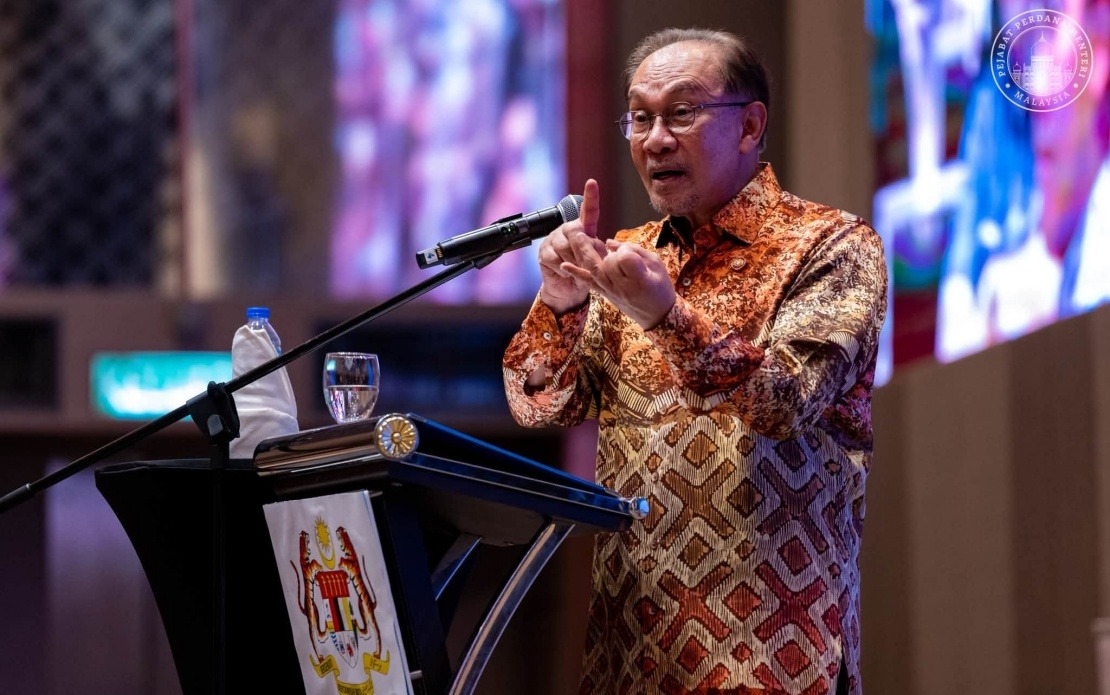
Prime Minister Datuk Seri Anwar Ibrahim has reaffirmed his administration's determination to leverage all available resources in supporting young Malaysians as they confront an increasingly intricate social and economic landscape. The commitment materialised following direct engagement with youth representatives at the "Temu Anwar" dialogue session and the inaugural ceremony of the 2026 International Youth Assembly (HAMKA) held in Klang, Selangor on August 20. Through a Facebook statement released that evening, the Prime Minister signalled that policymaking deliberations will incorporate the perspectives and counsel gathered from these youth-focused forums.
The Prime Minister articulated a nuanced understanding of the contemporary reality facing Malaysia's younger generation. He acknowledged that today's youths inhabit a world characterised by ideological pluralism and conceptual contestation, where divergent viewpoints and competing narratives have become commonplace. However, Anwar stressed that navigating these differences demands a foundation built on intellectual rigour, reasoned argumentation, and cultural civility rather than being driven by emotional impulses, divisive rhetoric, or sectional advantage. This framing positions the government's youth engagement strategy as fundamentally concerned with fostering a generation capable of thoughtful discourse and constructive dialogue.
The Prime Minister's emphasis on listening to youth voices underscores a shift towards participatory governance mechanisms within the current administration. By explicitly referencing the views and guidance solicited during the Klang engagement, Anwar demonstrated that youth input holds substantive weight in shaping government responses. This approach acknowledges that young Malaysians possess valuable insights into their own challenges, whether these relate to employment prospects, education quality, housing affordability, mental health support, or civic participation opportunities. The government's framing of its response as conditional upon "available capacity" does temper expectations, suggesting awareness of budgetary and resource constraints while maintaining optimistic intent.
The Prime Minister's choice to invoke the legacy of Abdul Malik Karim Amrullah—widely recognised as Hamka, the renowned 20th-century Islamic cleric, prolific author, and intellectual figure—carries symbolic weight. Hamka's historical role as a champion of knowledge dissemination, fearless intellectual expression, and ideological openness resonates with contemporary calls for youth empowerment through education and critical thinking. By drawing this connection, Anwar positioned the 2026 International Youth Assembly within a longer historical continuum of Islamic scholarship that values both learning and the courage to articulate original ideas. This invocation also subtly emphasises the compatibility between Islamic values and progressive thinking, a message particularly relevant for a diverse, multifaith nation like Malaysia.
The reference to Hamka's influence on younger generations during his lifetime provides important context for understanding the government's youth strategy. Hamka's pen and podium proved instrumental in shaping intellectual currents within his era, demonstrating how single figures can catalyse generational shifts through educational and oratorical engagement. The Prime Minister appears to be drawing a parallel: by creating platforms like HAMKA and conducting direct dialogues through "Temu Anwar" sessions, the current government seeks to influence and support the formation of Malaysia's emerging leaders and thinkers. This aspirational positioning frames government-youth relations as mentoring rather than purely regulatory.
For Malaysian readers, the Prime Minister's August statement carries both reassuring and cautionary implications. The reassurance lies in explicit acknowledgment of youth challenges and a stated commitment to address them through evidence-informed policymaking. Young Malaysians facing difficulties ranging from precarious employment in the gig economy to housing unaffordability to concerns about religious extremism or mental health crisis can reasonably expect that their voices are being registered at the highest levels of government. Simultaneously, the caveat regarding "available capacity" suggests that solutions may be incremental rather than transformative, reflecting real fiscal and institutional limitations.
Within the Southeast Asian context, Malaysia's government-led youth engagement represents one approach among various regional models. Singapore emphasises structured youth corps and meritocratic advancement; Indonesia has experimented with decentralised youth assemblies; Thailand has experienced youth-driven political activism with volatile outcomes. Malaysia's approach—combining direct dialogue with symbolic resonance to historical intellectual traditions—represents an attempt to channel youth energy through institutional participation while nurturing intellectual development. The success of this model will depend significantly on whether government commitments translated into tangible policy outcomes.
The timing of these remarks during August 2024 reflects Malaysia's broader political context. The nation has experienced significant youth-driven political movements over the past decade, from electoral engagement during the 2018 watershed election to activism around governance reform and social issues. Youth voters now constitute an increasingly decisive electoral bloc, making their concerns and perspectives matter considerably to policymakers. By emphasising government attentiveness to young people's perspectives, Anwar signals both responsiveness to democratic demands and recognition of demographic reality.
Moving forward, the substantive test of the government's commitment will emerge through implementation. Youth-focused policy areas—including skills training programmes, mental health services, affordable housing initiatives, civic participation mechanisms, and educational curriculum development—will reveal whether the rhetorical commitment translates into budgetary allocation and programmatic expansion. The inclusivity of dialogue matters equally; ensuring that marginalised youth voices, particularly those from lower-income communities, rural areas, and ethnic minorities, access these engagement platforms will determine the representativeness of policy responses. Malaysia's development trajectory increasingly depends on unleashing its human capital, making the nurturing of youth potential not merely a social imperative but an economic necessity that demands urgent, sustained attention from policymakers.

